






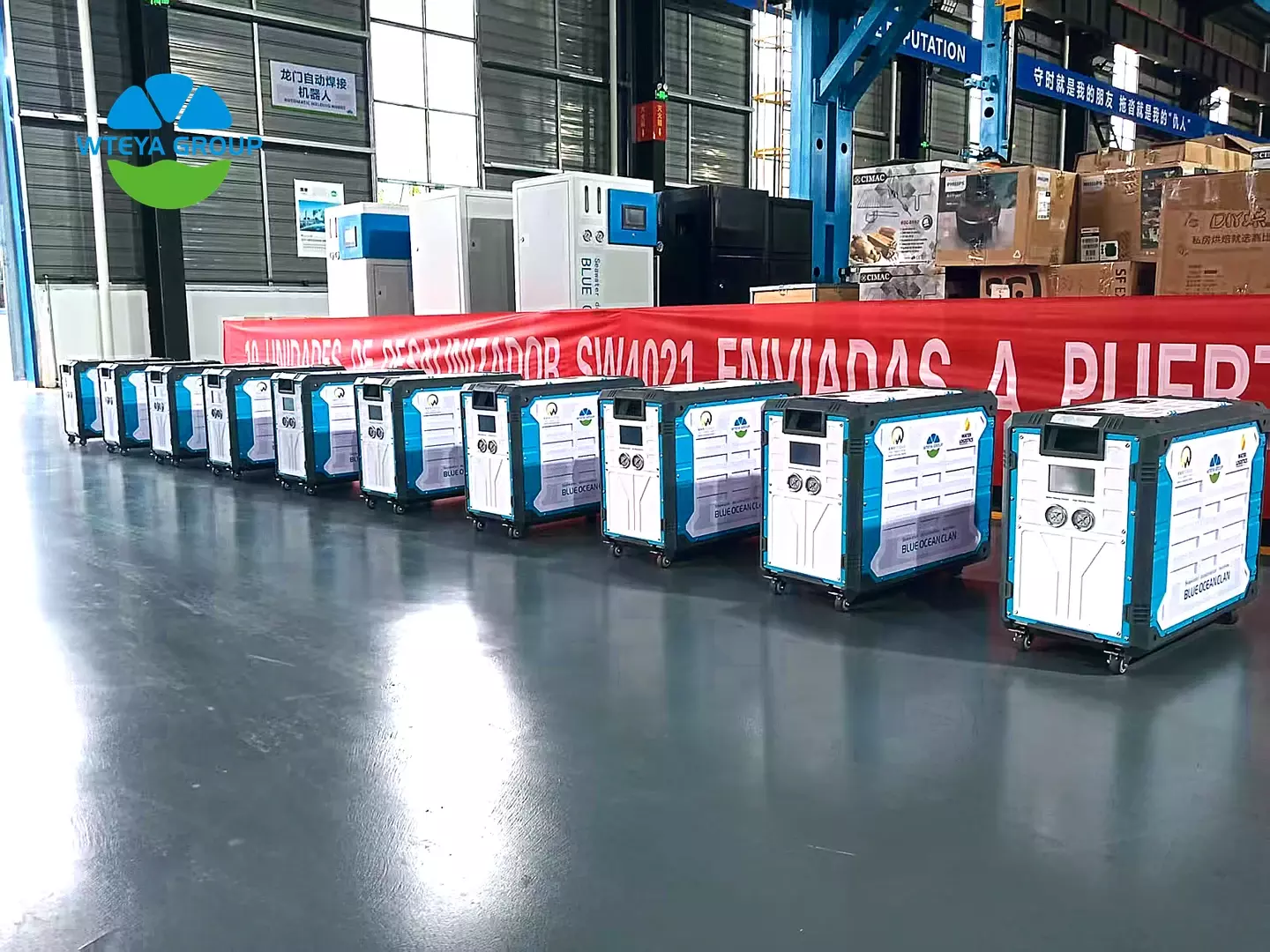
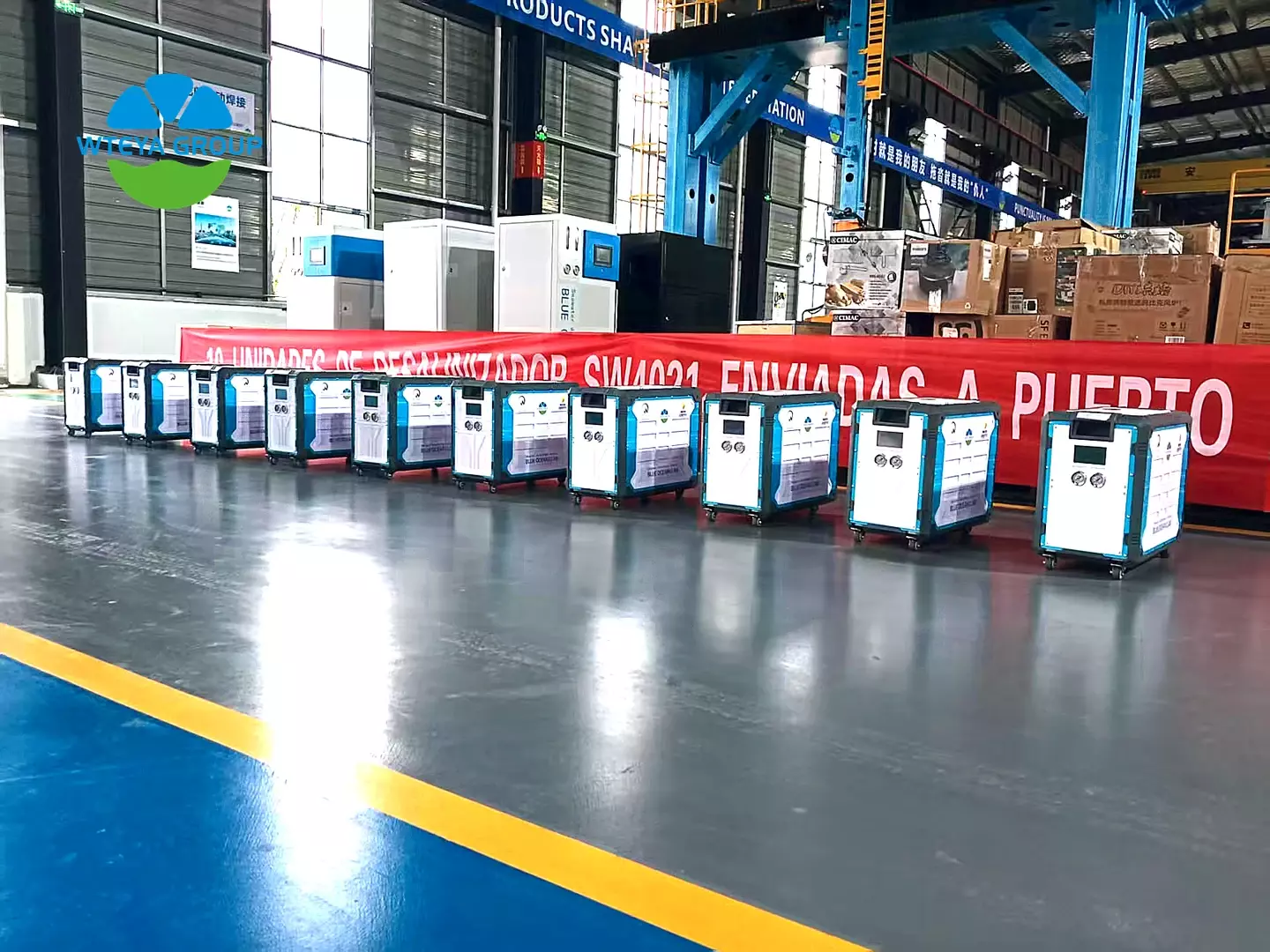
10 SWRO4021 Units for Puerto Rico Emergency Water Supply
A water service provider in Puerto Rico did not set out to buy ten desalination machines. It set out to answer a narrower question: how do you keep drinking water flowing to coastal communities that lose road access, grid power and well quality in the same 48 hours? The answer it settled on was a fleet of ten SWRO4021 portable desalination units from WTEYA, specified for emergency water supply, staged before the season and deployed where the island needed them. This case study follows the project from the first requirement through factory acceptance testing to the commissioning plan now in place.
🌊 The Challenge: Hurricane Season, Saline Wells and Broken Logistics
Puerto Rico's water supply is a coastal problem before it is a treatment problem. Communities along the south and east coasts draw from wells that have been steadily turning brackish, while the municipal network depends on pumping stations and roads that a hurricane can disable for weeks. During previous storm seasons the fallback was trucked water: slow, expensive, and limited by how many tankers can reach a site once bridges are inspected and cleared.
The client's operating team framed three requirements. First, equipment had to arrive complete, because a site without power and without a workshop cannot host an installation crew. Second, capacity had to be divisible, so that one machine could serve one community instead of a single plant serving all of them through a network that might not exist. Third, the machines had to be operable by local staff with limited training, since specialist engineers would not be able to fly in during a response.
Those three requirements rule out most of the conventional seawater desalination plant catalogue. A containerised high-capacity plant satisfies the first requirement but not the second; a trailer-mounted unit satisfies the second but often needs a generator and a trained operator to match the third. The specification that emerged pointed towards a small, self-contained, caster-mounted RO machine that could be handled with a forklift and started by one person.
🔍 Selecting a Portable Desalination System for Island Desalination
The evaluation compared four suppliers against a weighted list: footprint and weight, start-up time, feed water flexibility, spare parts availability, remote diagnostics, and the ability to run from solar. Weight and footprint decided the shortlist quickly — anything that needed a crane at destination was eliminated, because crane availability after a storm is the single most contested resource on the island.
The SWRO4021 scored on start-up time and on the fact that the same machine accepts seawater and brackish feed. That flexibility matters more than a datasheet headline: a unit can be moved from a brackish well in the interior to a seawater intake on the coast without changing membranes or returning to a workshop. The LCD panel and the fault-code log addressed the third requirement, giving a local operator a readable status rather than a locked controller.
The client also weighed serviceability. A distributed fleet of ten machines only works if a failed pump or a fouled membrane can be handled on site. Standard cartridges, standard seals and a documented cleaning procedure were therefore treated as pass-or-fail criteria rather than nice-to-haves, and the spare parts list was agreed before the purchase order was signed.
📦 Factory Acceptance, Crating and Staged Deployment
The order was built as one batch so that all ten units share an identical configuration. Before crating, the client's technical representative reviewed factory acceptance test records for each machine: hydrostatic pressure holding, low-pressure leak checks, pump performance and product water conductivity. All ten units were run-tested on site at the factory and shipped with their individual test records, which meant the receiving team could compare machines against each other rather than against a generic datasheet.
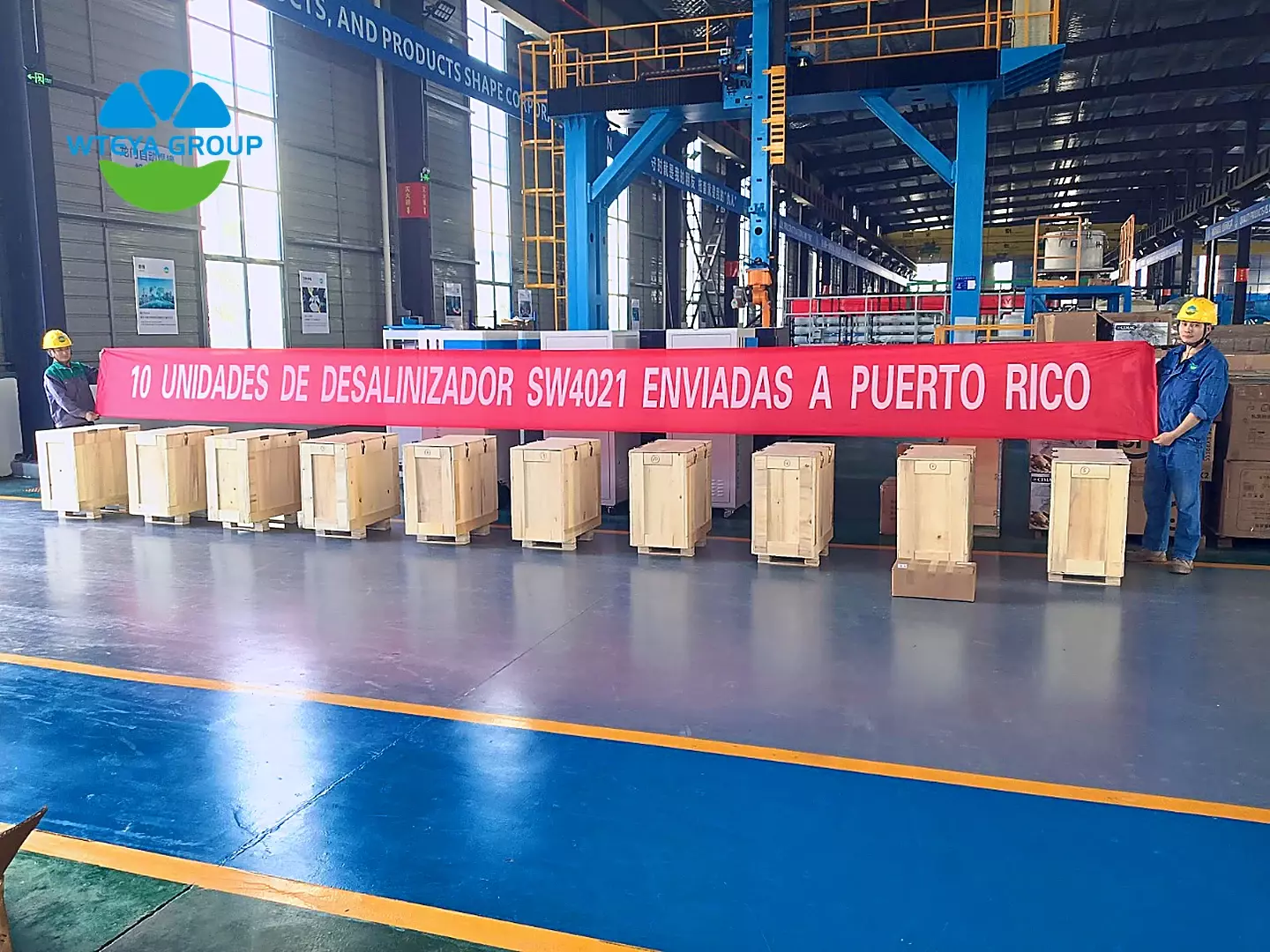
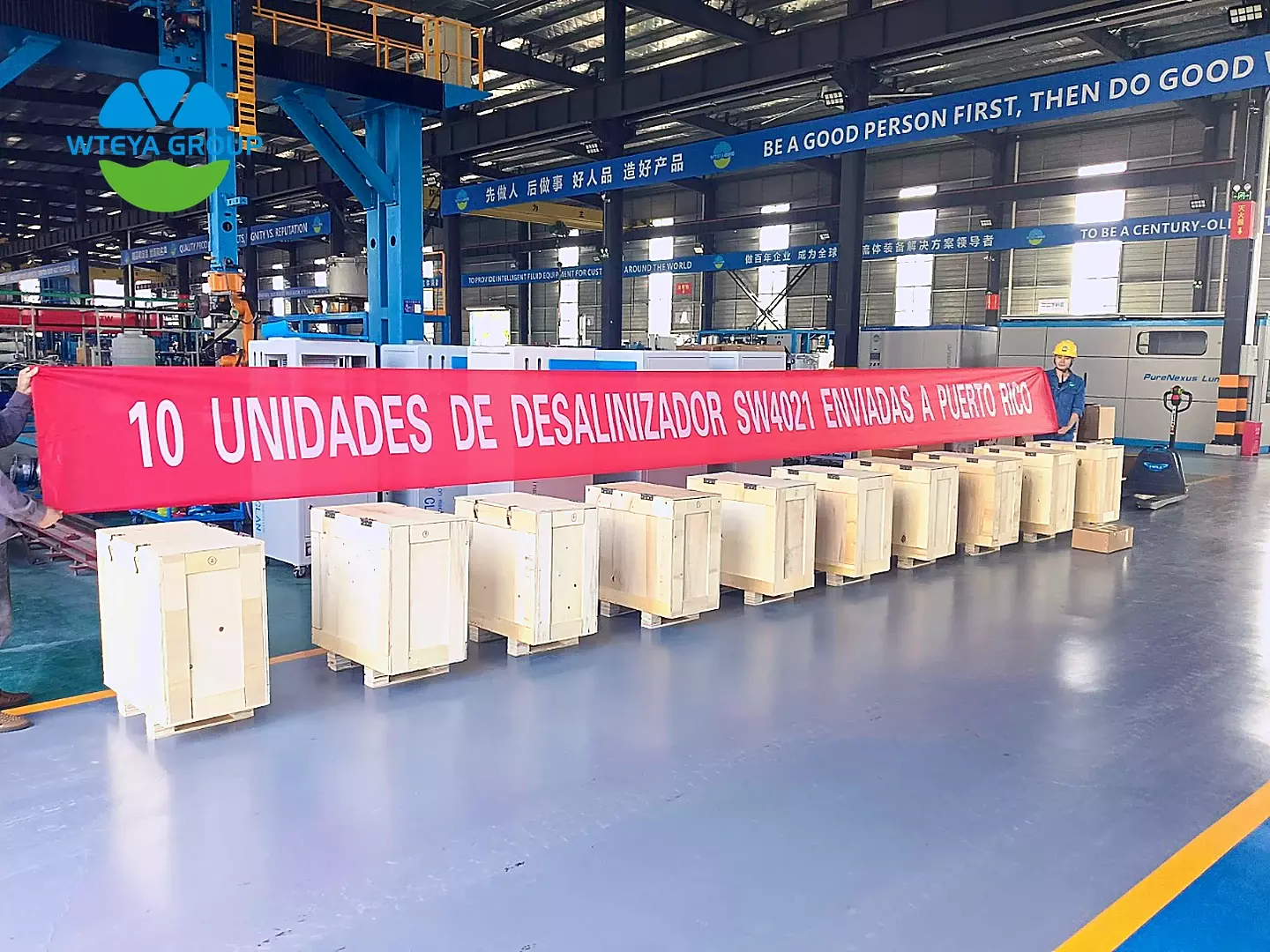
Packing followed the deployment plan rather than convenience. Each unit was crated with its own hose kit, startup checklist and Spanish-language operating labels, so a crate that reached a community centre contained everything needed to start production that day. Ten crates fit a single 20-foot container, and the discharge sequence was agreed in advance so that units for the most exposed sites came off first.
Deployment is staged in three waves. The first units go to depots that already have a concrete pad, a power connection and a stored intake line; the second wave follows to sites where a small photovoltaic array and a buffer tank are being installed alongside; the third wave stays in reserve, crated, ready to be trucked wherever the season demands. That reserve is the point of buying ten rather than eight — it converts a fixed asset into a mobile one.
📈 Commissioning Plan and the Metrics That Matter
Commissioning is deliberately short and instrumented. A unit is set on its pad, the intake and brine lines are run, power is connected, the membranes are flushed and the machine is brought up to operating pressure. The operator records feed conductivity, operating pressure, permeate flow, permeate conductivity and specific energy consumption at the end of the first shift, and those five numbers become the baseline for every later comparison.
The client tracks four indicators across the fleet: specific energy consumption per cubic metre, normalised permeate flow, product water conductivity against the local drinking water standard, and uptime during a response window. Normalised flow is the early warning for membrane fouling; specific energy is the early warning for a worn pump or a blocked pretreatment stage. Because the units are identical, a machine that drifts away from the fleet average can be flagged before it fails.
Where a site has no reliable grid, the same units are paired with solar powered desalination packages: a photovoltaic array, a battery buffer and an inverter feeding the existing control cabinet. The pump drive ramps with available power, so production follows the sun instead of stopping when a generator runs out of fuel. For daytime-only community demand this removes the fuel convoy from the response plan altogether.
💡 Five Lessons for Emergency Water Supply Planning
First, buy divisible capacity. Ten small machines survived the planning process because they could be split across ten sites; one large plant would have failed the same test. Second, insist on factory acceptance testing per unit — a fleet is only as good as its least-identical member. Third, standardise the model across the fleet, so that spares, training and procedures apply to every machine on the island.
Fourth, pre-position before the season, not after the storm. Equipment that is still in a supplier's warehouse when the port closes is not emergency equipment. Fifth, design for local operation: readable displays, standard consumables and a documented startup checklist are worth more in a response than an extra stage of automation that nobody on site can override.
For operators comparing options, the practical starting point is a mobile water treatment plant configuration sized to the smallest community that must be served independently, then multiplied by the number of sites that must survive a simultaneous outage. That arithmetic, rather than a capacity headline, is what determines whether a fleet is useful when the roads are closed.
Schedule a video call with our engineers to explore your options.
📲 WhatsApp: +86-1800 2840 855
📧 Email: info@wteya.com
🌐 Website: www.wteya.com