







Seawater Desalination Plant Cost: What Drives the Price
Almost every desalination enquiry opens with the same question: what does the plant cost? The honest answer is a band, not a number, because a plant is a train of equipment rather than a single machine — and two quotes for the same capacity can differ by half.
This page sets out the reference price bands WTEYA works to for containerized seawater reverse osmosis plants, the five variables that move a quotation, and the one component that should never be value-engineered out: the energy recovery device.
🏗 What the Number Actually Covers
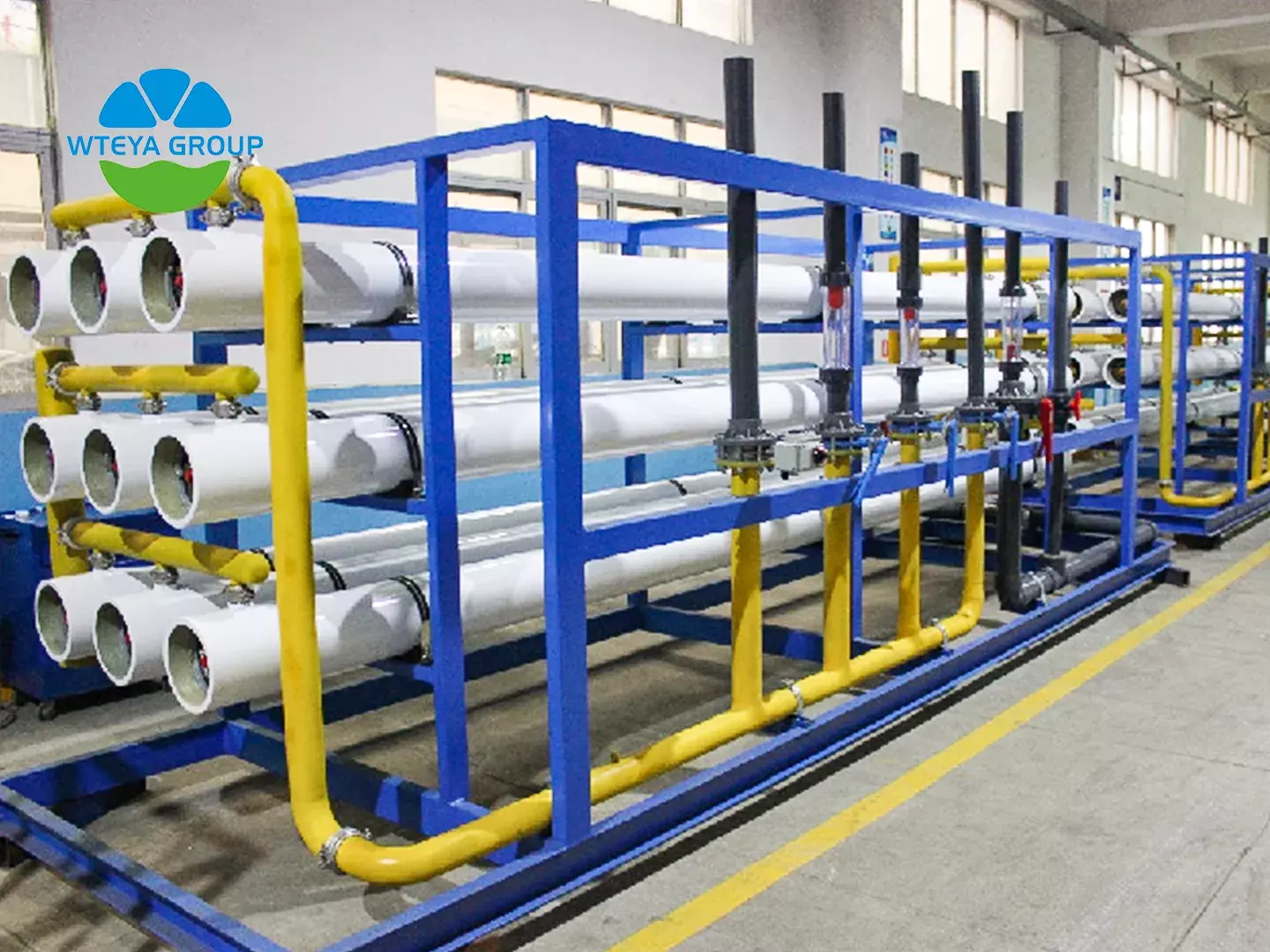
A plant price is not just the RO skid. A complete quotation covers the feed pump, pretreatment (media filtration, sometimes ultrafiltration), cartridge filters, the high-pressure pump, the energy recovery device, the membrane racks, post-treatment and mineralisation, plus installation and commissioning on site.
What usually sits outside the figure is civil work: foundations, the intake structure, the brine outfall, the product water tank and the grid connection. That boundary is the single most common reason two buyers comparing “the same plant” are actually comparing different scopes.
For orientation: a 5 t/h plant (about 120 m³/day) sits in the RMB 400,000–800,000 band (roughly USD 55,000–110,000), and a 10 t/h plant (about 240 m³/day) in the RMB 700,000–1,300,000 band (USD 95,000–180,000) — equipment plus installation and commissioning, civil works excluded.
💰 Why Doubling Capacity Does Not Double the Price
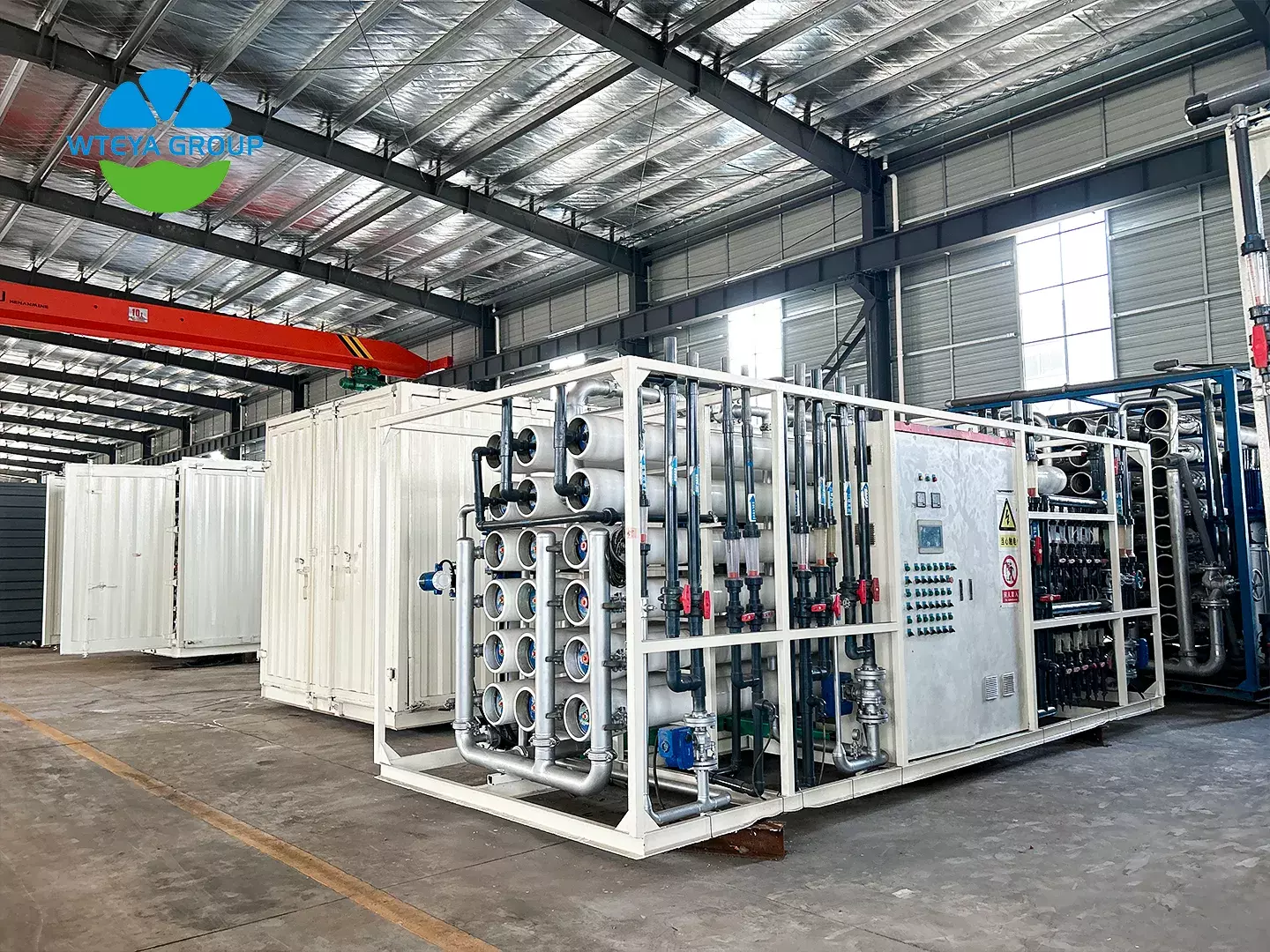
The 10 t/h unit carries roughly 1.5 to 2 times the price of the 5 t/h unit, not twice. Membrane count, high-pressure pump and energy recovery device all scale up, but the control system, chemical dosing skid, frame and engineering effort are largely shared.
That is why a single 10 t/h train is usually cheaper per cubic metre than two 5 t/h trains. The exception is redundancy: if the site cannot stop for maintenance, two smaller trains running in parallel may be worth the premium.
Ask for the quotation broken into equipment list, civil scope, transport, commissioning and warranty. A quote that arrives as one lump sum cannot be compared with anything.
⚙️ Five Factors That Move the Quotation
Feed water quality. High turbidity or high sand content forces an additional coagulation or ultrafiltration stage; clean, stable seawater may only need media filtration and cartridge filters.
Membrane brand and count. Imported premium membranes and domestic membranes carry materially different prices, and the membrane is a recurring cost because it is replaced every five to seven years.
Automation level. A PLC-controlled plant with remote monitoring costs more up front than manual control, and usually pays that back through fewer operator hours and steadier operation.
Corrosion protection. Island and salt-fog sites need upgraded coatings and materials; skimping here shows up as rust within two or three years.
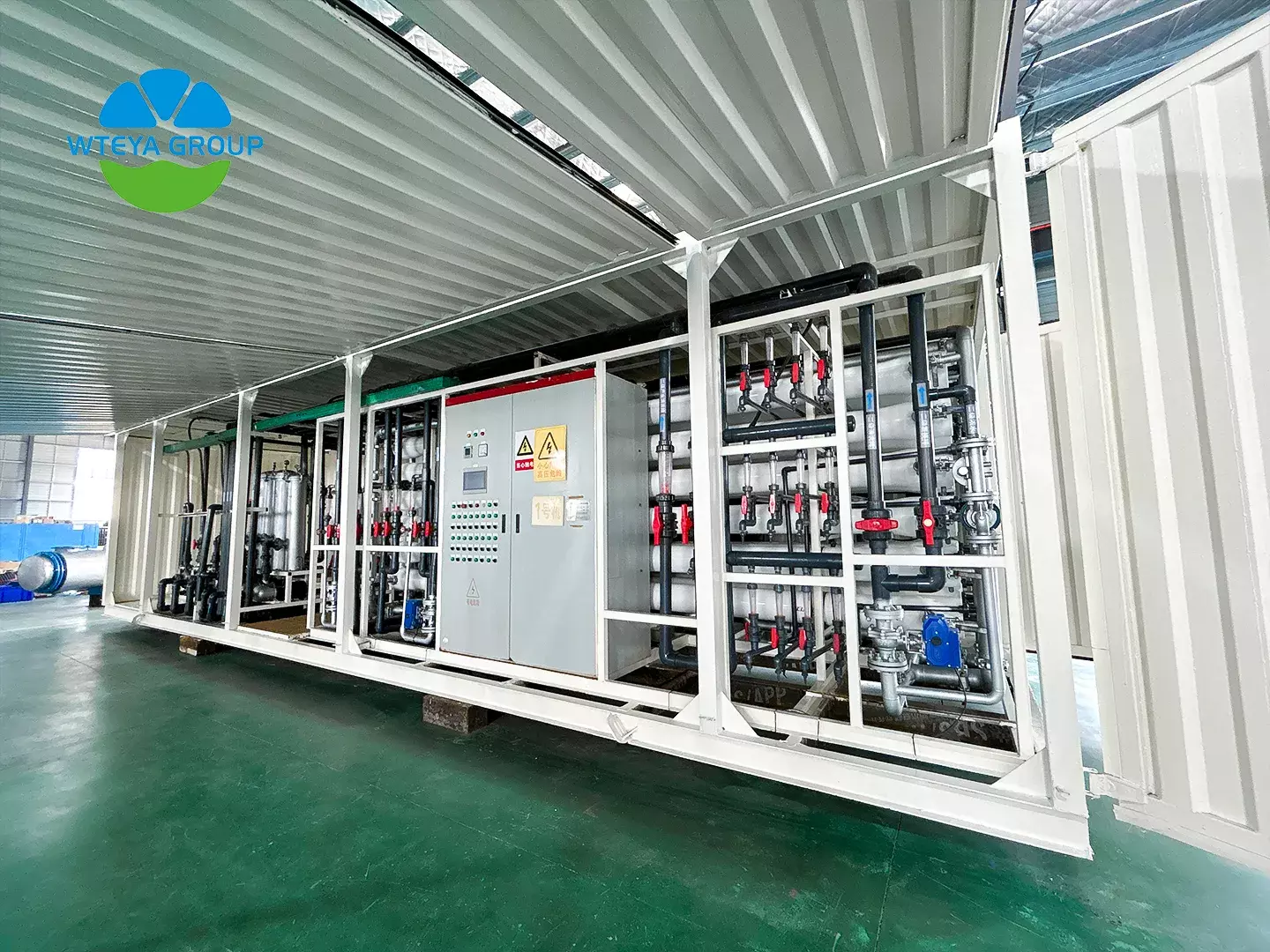
Configuration. Skid, containerized and mobile variants carry different steel, insulation and lifting provisions. Containerized units ship faster and need only a flat pad and a power connection, which often offsets the higher unit price.
🔌 The Component That Must Not Be Cut
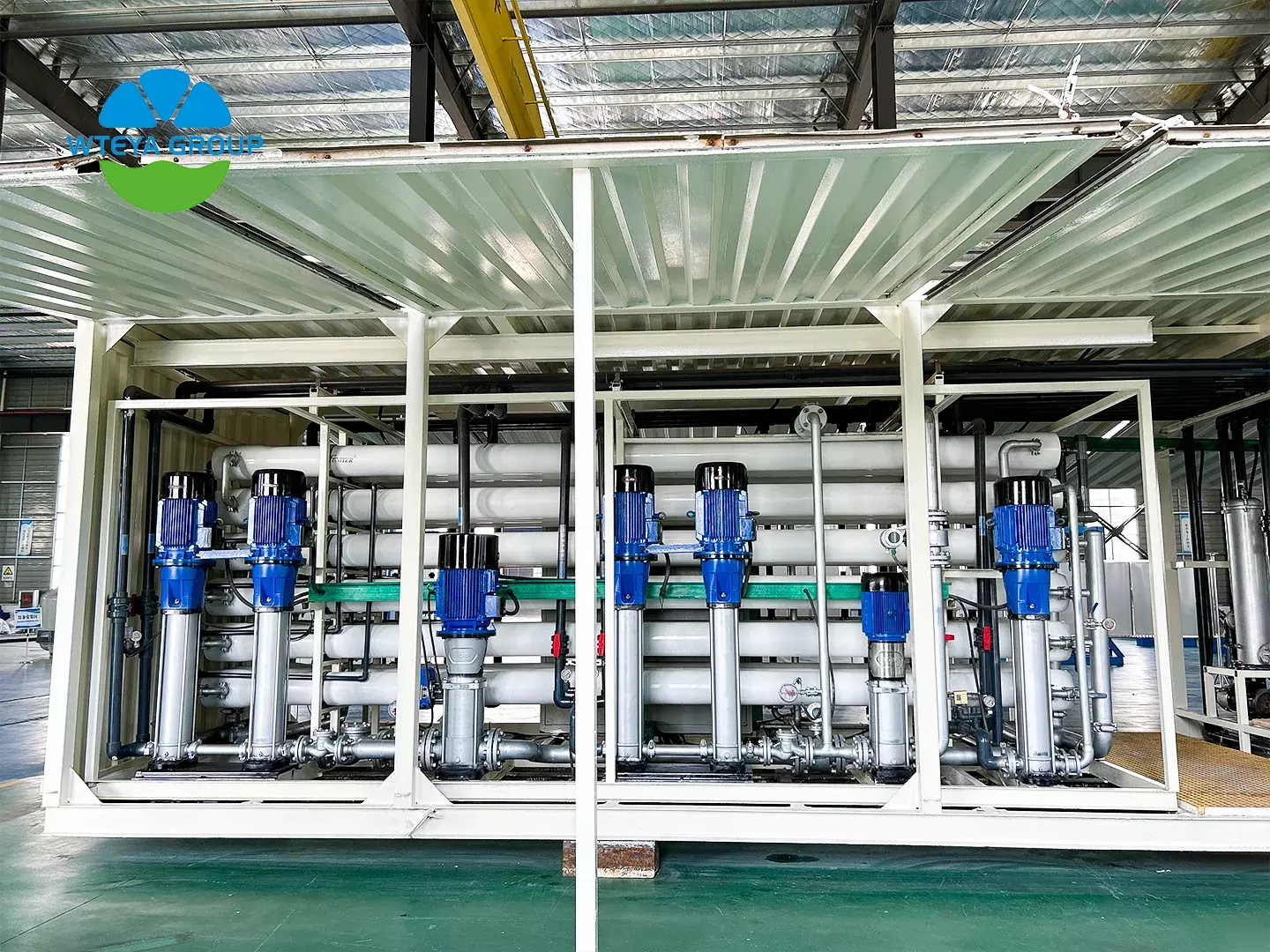
The energy recovery device is where a cheap quotation usually hides its cost. Without energy recovery, specific power for seawater RO climbs to 5–7 kWh per m³. With a properly sized device it settles at 3–5 kWh per m³ — roughly a 30% saving on the largest operating cost line.
Over a ten-year run that difference dwarfs any saving made on the purchase price. When comparing offers, check whether the energy recovery device is listed, what type it is, and what specific power the supplier guarantees in writing.
📊 From Capex to the Cost of a Cubic Metre
Purchase price is only the entry ticket. Total water cost for a well-designed seawater RO plant typically lands at RMB 4–8 per tonne (about USD 0.55–1.10 per m³), and the investment is normally recovered in three to five years against trucked or purchased water.
That figure bundles power, membrane replacement, chemicals, labour and maintenance. It moves with the local electricity tariff far more than with the equipment price, which is why the same plant can be economic on one island and marginal on another. Membrane replacement alone is a recurring line item, which is why the reverse osmosis system design should be judged on flux and cleaning margin, not on membrane count alone.
The practical test is to model total cost of ownership over ten years at your own tariff, not to compare headline equipment prices. Our engineers will run that model against your feed analysis before any commitment.
✅ What to Send for a Firm Quotation
Seven data points turn a range into a number: required capacity in m³/day or t/h; feed TDS and turbidity; feed temperature range; target product water TDS; available power supply (voltage, capacity, grid or generator); site conditions including altitude, ambient temperature and salt exposure; and the automation level expected.
With those in hand, WTEYA can quote a containerized or skid-mounted plant, or a mobile water treatment plant where the water source moves. Solar-powered configurations are available where the grid is absent or unreliable.
Every quotation we issue states the scope boundary explicitly — what is included, what is excluded, and what specific power and recovery the plant will achieve.
❓ Related Questions
How Much Energy Does a Seawater Desalination Plant Use?
Desalination Plant Construction Timeline: Phase by Phase
Can a Desalination Plant Treat Brackish Water?
Frequently Asked Questions
Does the price include civil works and the intake?
No. Foundations, intake structure, brine outfall, product tank and grid connection are normally excluded; the quoted band covers equipment, installation and commissioning. Confirm the boundary in writing, because it is the largest source of budget overrun in desalination projects.
Is a containerized plant more expensive than a skid?
The equipment cost is somewhat higher, but total installed cost is often lower: the unit arrives pre-assembled and tested, needs only a flat pad and a power connection, and is commissioned in days rather than weeks.
How long does delivery take?
For standard capacities in the 5–10 t/h range, production is typically 8–12 weeks from confirmed drawings, followed by one to three weeks of site installation and commissioning depending on local conditions.
Become a WTEYA authorized dealer. Exclusive territories, competitive pricing, and full factory support.
Schedule a video call with our engineers to explore your options.
📲 WhatsApp: +86-1800 2840 855
📧 Email: info@wteya.com
🌐 Website: www.wteya.com
Previous: Do Manual Handheld Desalination Devices Really Work?
Next: No More