







How Effective Are Reverse Osmosis Membranes for Seawater Desalination?
The main challenge in seawater desalination is producing a reliable supply of fresh water from highly saline feedwater. Unlike conventional thermal desalination methods, seawater reverse osmosis (SWRO) relies on pressure-driven membrane separation to remove dissolved salts. This technology is now widely used in island water supply, coastal industrial facilities, ships, and offshore engineering projects.
So, how effective are reverse osmosis membranes for seawater desalination? In practical applications, reverse osmosis offers strong salt rejection performance and flexible system design. However, the final water quality and operating performance depend on more than the membrane elements alone. Seawater quality, pretreatment, high-pressure pumps, operating pressure, and membrane fouling control all influence the overall performance of the desalination system.
1. Why Are Reverse Osmosis Membranes Suitable for Seawater Desalination?
Seawater contains high concentrations of dissolved salts, along with potential contaminants such as suspended solids, colloids, organic matter, and microorganisms. A reverse osmosis membrane is a selectively permeable membrane that allows water molecules to pass through while rejecting most dissolved salts and other dissolved substances.
Under high pressure, water passes through the membrane, while most salts remain on the feed side and become concentrated in the brine stream.
A typical seawater reverse osmosis process follows this sequence:
Seawater Intake → Pretreatment → High-Pressure Pump → Reverse Osmosis Membrane → Desalinated Water + Concentrated Brine
The key mechanism is not simple filtration. Instead, the system applies sufficient pressure to overcome the osmotic pressure of seawater, allowing water to pass through the reverse osmosis membrane. After separation, part of the feedwater becomes desalinated product water, while the remaining stream contains a higher concentration of salts. This pressure-driven separation process is one of the main differences between seawater reverse osmosis systems and conventional water purification equipment.
2. How Effective Are Reverse Osmosis Membranes in Seawater Desalination?
Seawater reverse osmosis has a well-established technical foundation and is widely used in commercial desalination projects. Its main advantages include effective salt rejection, modular system design, and the ability to accommodate different water production requirements.
Key characteristics of seawater reverse osmosis include:
• Core technology: Pressure-driven membrane separation
• Main treatment targets: Dissolved salts and other dissolved substances in seawater
• Primary power source: Electricity to drive the high-pressure pumping system
• Main outputs: Desalinated product water and concentrated brine
• System characteristics: Modular configuration and flexible operation
• Typical applications: Island communities, coastal industries, ships, and offshore engineering projects
However, good membrane performance does not mean that untreated seawater can always enter the system directly and produce the desired results. Seawater temperature, salinity, suspended solids, and organic matter content can vary significantly. These factors affect membrane flux, operating pressure, and product water quality.
For this reason, evaluating a seawater desalination system requires more than examining the membrane's salt rejection performance. The entire treatment process must be properly designed to match the feedwater conditions and the required product water quality.
3. What Factors Affect Seawater Desalination Performance Beyond the Membrane?
Reverse osmosis membranes require suitable feedwater conditions to maintain stable, long-term operation. If suspended solids, colloids, organic matter, and microorganisms are not adequately controlled, they can accumulate on the membrane surface and contribute to fouling. Under certain conditions, inorganic scale can also form.
Therefore, pretreatment is an essential part of a seawater reverse osmosis system.
Depending on the raw water quality, pretreatment may include coagulation, filtration, ultrafiltration, or other suitable processes. These treatments reduce the contaminant load entering the reverse osmosis membrane.
Well-designed pretreatment helps maintain stable membrane performance and can reduce the frequency of chemical cleaning and other maintenance requirements.
Operating pressure is another critical factor. Insufficient pressure may limit water production, while excessive pressure can increase energy consumption and place additional loads on system components.
Water recovery must also be carefully controlled. A higher recovery rate is not always better. The appropriate operating range depends on seawater salinity, brine concentration, and the risk of scaling and other operating problems.
A well-designed seawater reverse osmosis system therefore requires coordination across several stages:
Feedwater Conditions → Pretreatment → High-Pressure System → Reverse Osmosis Membrane → Post-Treatment → Brine Management
Each stage affects the others. If feedwater quality is not adequately controlled, the membrane system may struggle to maintain stable performance over time.
4. What Applications Are Suitable for Seawater Reverse Osmosis?
Seawater reverse osmosis is widely used in locations where conventional freshwater resources are limited or insufficient. Common applications include island water supply, coastal industrial facilities, ships, offshore engineering projects, and municipal water supply systems.
For industrial users, desalinated water can also serve as feedwater for additional treatment processes. Depending on the final water quality requirements, further purification may be necessary to produce process water, boiler makeup water, or other types of industrial water.
This means that no single seawater desalination configuration is suitable for every project. Raw water quality, required production capacity, final water quality standards, and brine management requirements all influence the system design.
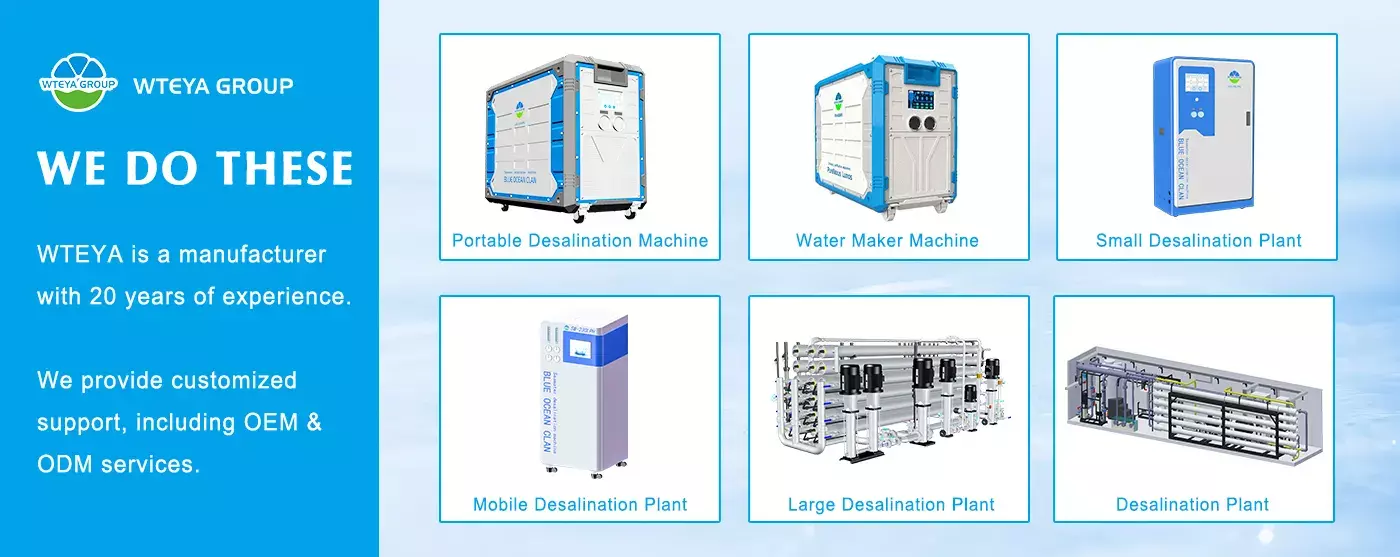
WTEYA can develop seawater desalination equipment and integrated system solutions based on different seawater conditions and water supply requirements. Depending on project needs, the system design can incorporate suitable pretreatment processes, reverse osmosis membrane units, and downstream water treatment technologies.
In practical engineering applications, the reverse osmosis membrane is only one core component of the overall system. Proper coordination between pretreatment, membrane separation, operating parameters, and post-treatment is essential for balancing product water quality, operational stability, and long-term operating costs.
Ultimately, reverse osmosis membranes can deliver effective results in seawater desalination. However, the actual performance of a project depends on how well the entire seawater reverse osmosis system is designed, configured, and operated.
Why Partner with WTEYA?
• Nearly 20 years of industry experience
• Trusted by global leaders including Foxconn, Huawei, Ganfeng Lithium, Ronbay Technology
• 100+ success cases worldwide
• OEM & ODM customization available
Become a WTEYA Distributor!
We are expanding global partnerships:
• Preferential policies
• Professional training
• Full technical support
Let us help you achieve exceptional water quality and operational sustainability!
📲 WhatsApp: +86-1800 2840 855
📧 Email: info@wteya.com
🌐 Website: www.wteya.com
Previous: Portable vs Containerized Desalination: How to Choose
Next: No More