






Portable vs Containerized Desalination: How to Choose
Portable and containerized desalination are usually presented as two price points on the same quotation sheet. In practice they answer different questions. A portable unit asks how little water can be produced reliably at the point of use; a containerized plant asks how fast a full-scale supply can be commissioned with minimal site work. Choosing well comes down to four variables: daily demand, available power, site readiness and who will operate the system.
🌊 Start With Daily Demand, Not the Equipment
Daily demand sets the floor and the ceiling. A portable machine in the 4021 class produces around 300 gallons per day, roughly 1,135 litres, which covers a household, a small crew or a remote outpost. A containerized seawater plant typically starts at 5 tonnes per hour and scales to 10 tonnes per hour or more, equivalent to 120-240 m³ per day. Between those two bands there is a gap: below roughly 50 m³/day, the civil works and operator cost of a containerized plant are hard to justify, and above 20 m³/day a single portable unit stops being practical.
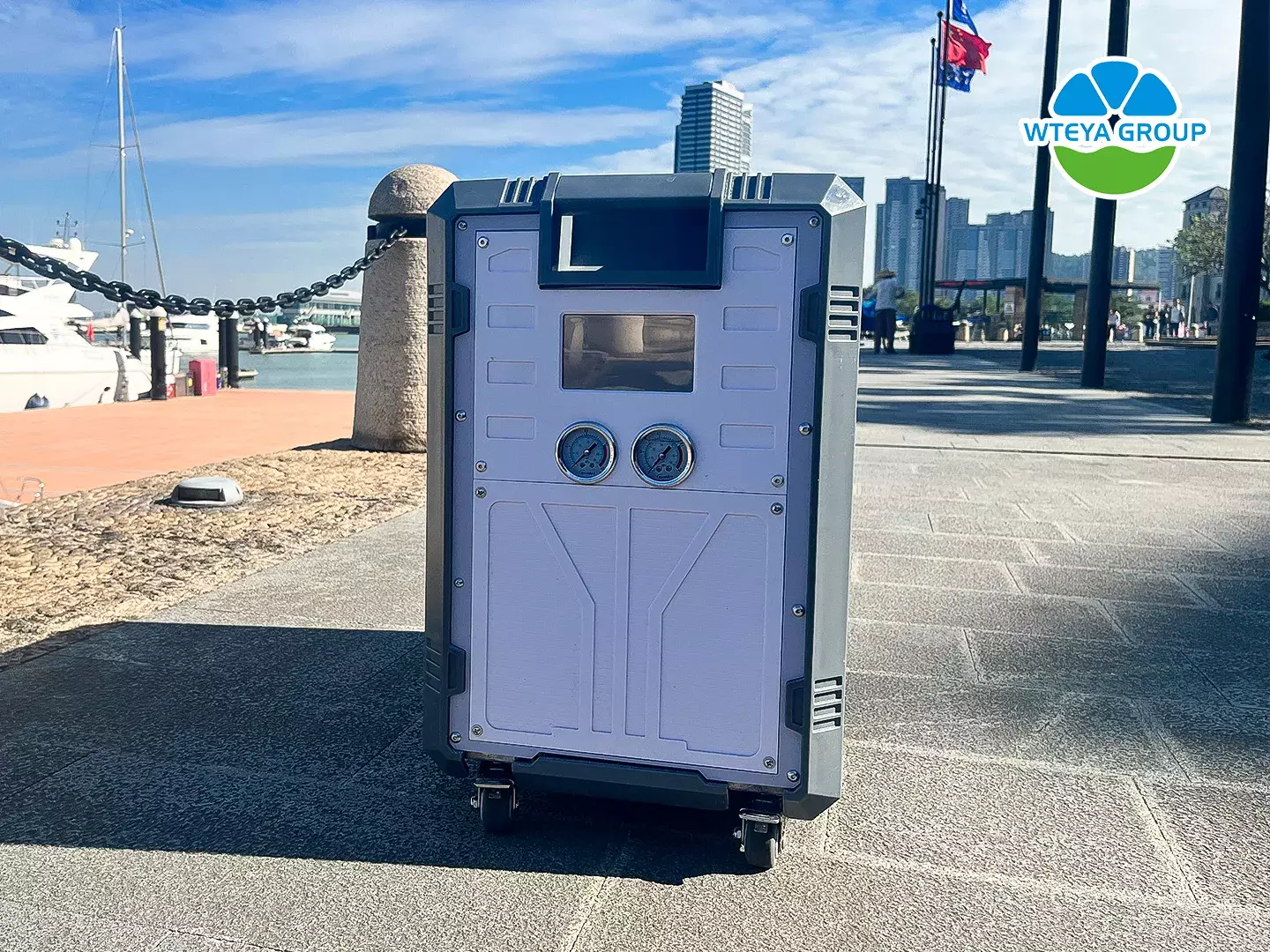
📦 What a Portable Unit Really Delivers
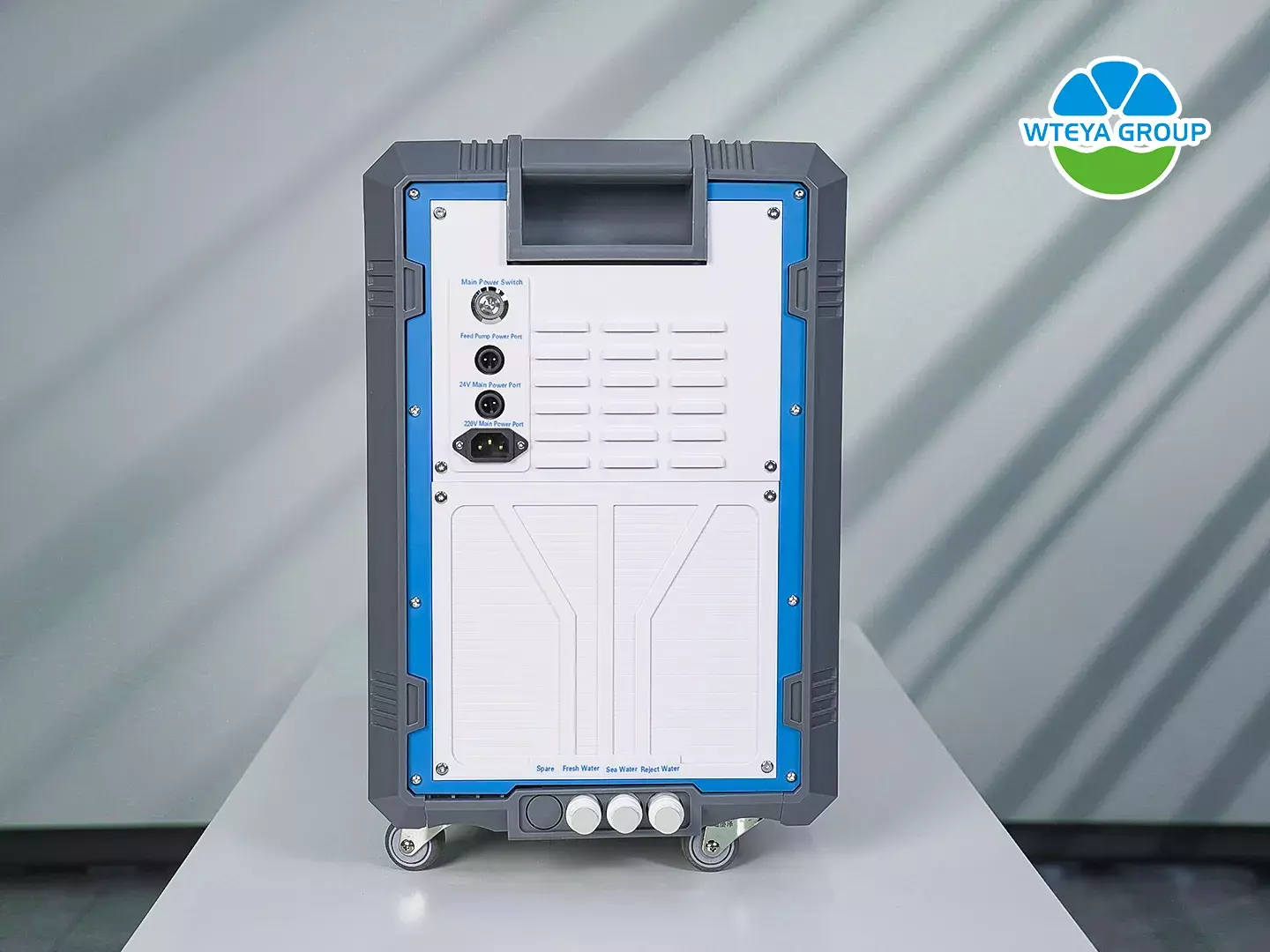
A portable seawater desalination machine is a complete RO train on a skid: feed pump, pre-filtration, high-pressure pump, membrane element and controls. Typical performance is 99.5% salt rejection from feed water up to 35,000 ppm TDS, with product water under 200 ppm. Specific energy sits at 3-4 kWh per m³, which a 1.35 kW unit can supply from 24V DC, 220V AC or a solar array. The whole skid measures about 610 × 320 × 497 mm and weighs around 40 kg, so two people can move it and commissioning takes hours rather than weeks.
The trade-off is consumables and attention. Pre-treatment cartridges are replaced on a 5-60 hour duty cycle for the primary element and every 15-30 days for the secondary, and the membrane itself is expected to last 3-5 years or about 3,600 operating hours. On an intermittent duty cycle that is acceptable; on continuous duty it becomes a weekly maintenance task.
🏭 What a Containerized Plant Changes
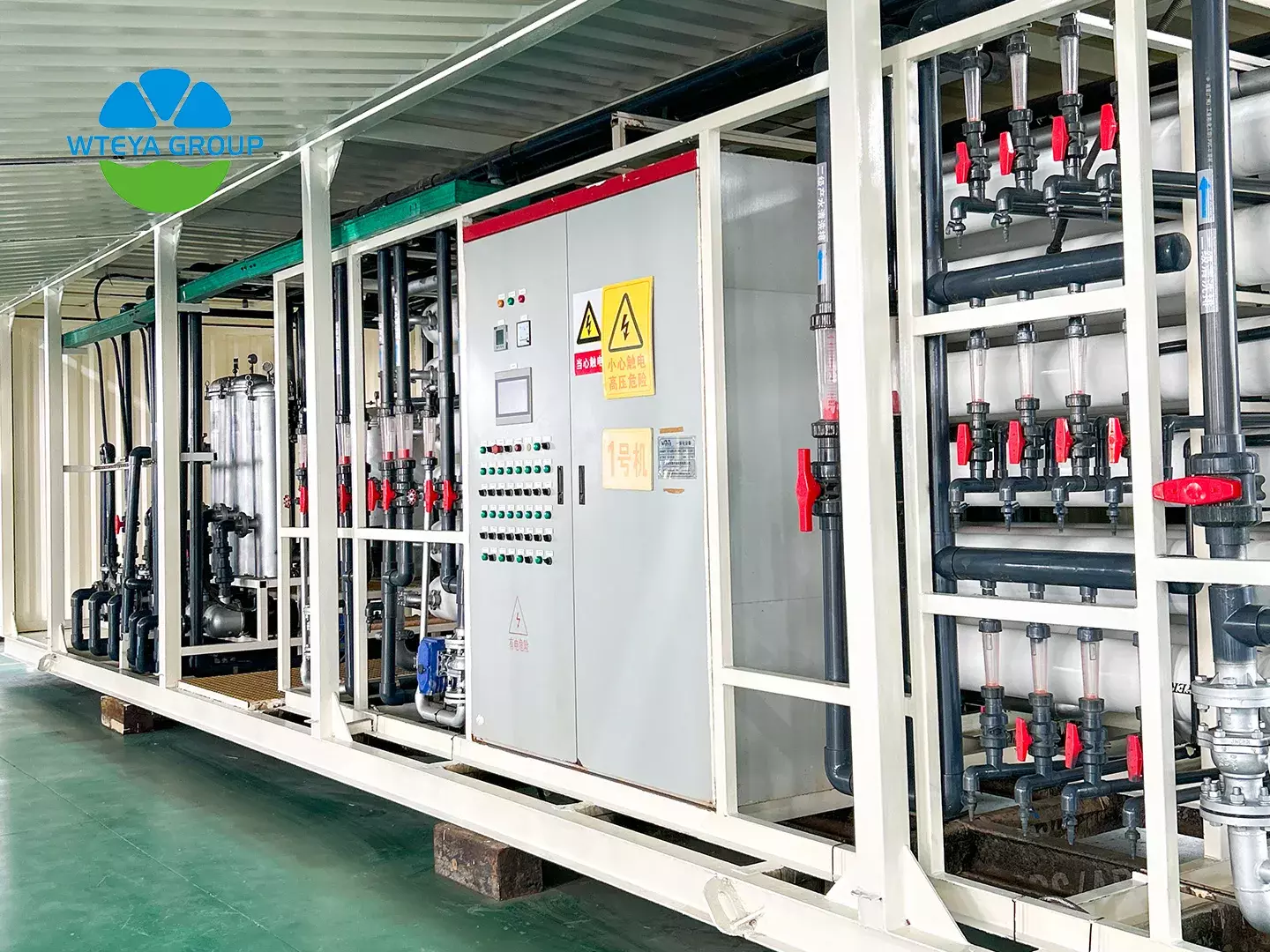
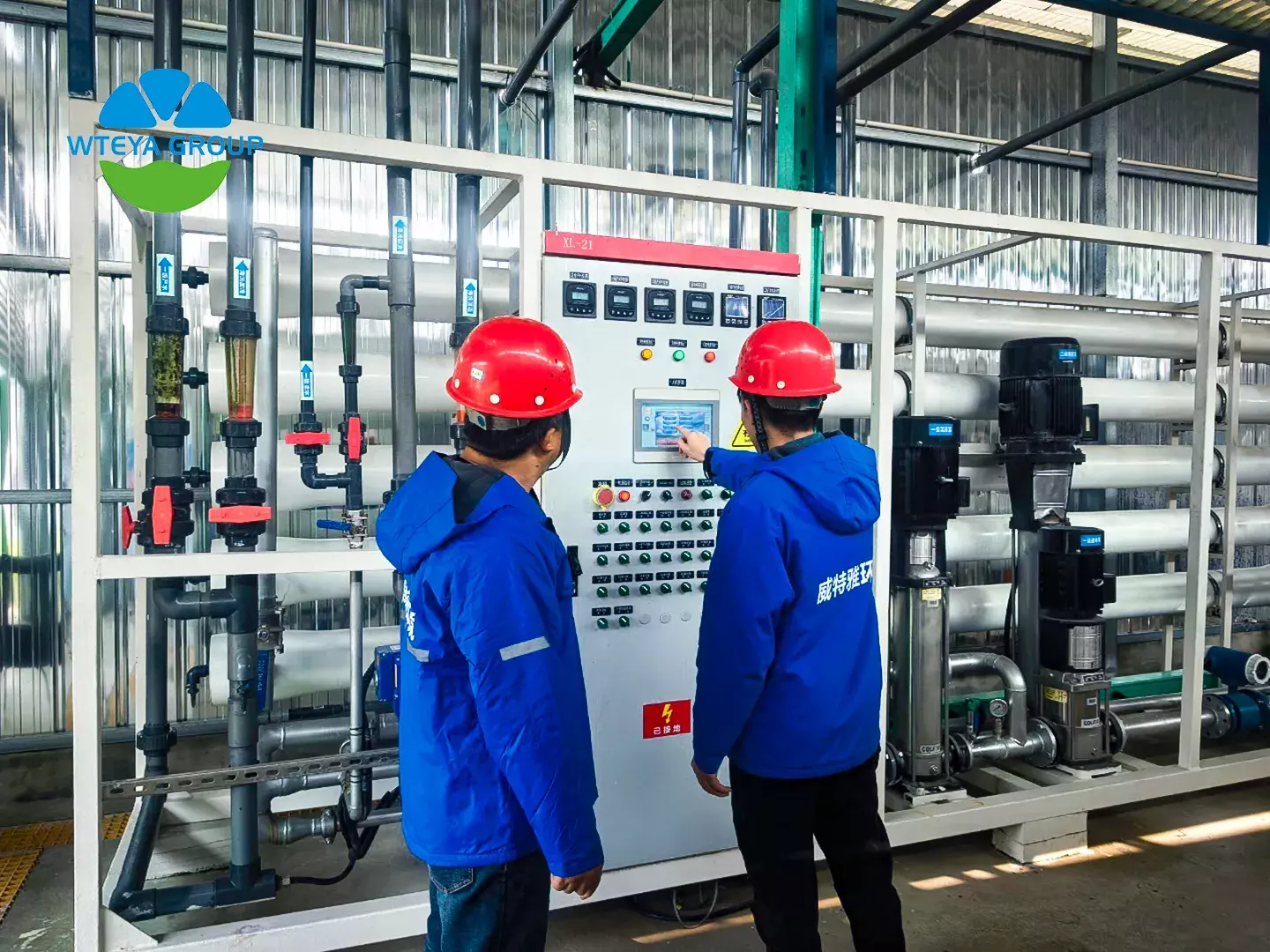
A containerized plant moves the same process into a 20ft or 40ft ISO frame, with membrane racks, pumps, energy recovery, CIP tank and the control room pre-piped and pre-tested in the factory. Recovery for seawater is typically 35-45%, with product TDS held below 500 ppm. What changes is not the chemistry but the site work: foundations, intake and outfall, and a power connection are the only major civil items, so commissioning takes 1-2 weeks instead of the 4-8 weeks a stick-built plant needs.
Footprint is another factor that is easy to underestimate. A 5 t/h containerized train occupies roughly 30-60 m² including maintenance access, against a stick-built plant of the same capacity that needs a building, separate chemical dosing area and a control room. For a resort, mine camp or coastal community with limited land, that difference often decides the project.
⚡ Energy and Operating Cost Compared
On a per-cubic-metre basis the two configurations are closer than their price tags suggest. Both use RO, and both land at 3-4 kWh per m³ when an energy recovery device is fitted; without recovery, seawater RO climbs to 5-6 kWh per m³. The real divergence is in the fixed cost per m³: a portable unit spreads its capital over a few cubic metres a day, so capital dominates, while a containerized plant spreads it over hundreds and operating labour becomes the largest line item.
Consumables follow the same logic. Cartridges, antiscalant and membrane cleaning chemicals scale with volume, but the labour to change them does not, which is why small plants usually cost more per cubic metre to run even when the equipment itself is cheaper.
🧰 Maintenance and Operator Skill
A portable unit is designed to be operated by the people who use the water: start, stop, flush, replace a cartridge. A containerized plant expects a shift operator who reads pressures and conductivity, logs recovery, and runs a CIP cycle every 1-3 months depending on feed quality. Membranes in either case are replaced on a 3-5 year cycle, and pump seals and instrument calibration are the recurring mechanical items.
Where projects go wrong is in assuming a containerized plant can be left unattended because it is automated. PLC control handles sequencing and protection, but fouling and scaling are trends, not alarms - someone has to look at the trend before output drops.
📍 Site Conditions That Decide the Case
Four site facts usually settle the choice. First, power: a portable unit can run from a solar array or a small generator, while a 5 t/h containerized plant needs a 30-45 kW supply. Second, foundation: a portable skid needs a flat hardstanding, a container needs a levelled concrete pad and lifting access. Third, feed water: turbidity and algae blooms push up pre-treatment on both, but a container has room for media filters and a larger CIP system. Fourth, brine: disposal or dilution capacity has to be designed for either option, and it is the item most often left out of the budget.
🏆 Why Choose WTEYA
WTEYA has built desalination and evaporation equipment for nearly 20 years, serving 2,000+ clients with close to 200 patents and equipment availability of 99% or higher. Both configurations come from the same engineering team, so the recommendation follows your water analysis and site survey rather than the product line we would prefer to sell. Every unit is factory-tested before shipment, and portable or containerized, the membrane elements, pumps and controls are specified for the feed water you actually have.
❓ Frequently Asked Questions
Can a portable desalination machine be a permanent solution?
Yes, for small and intermittent demand. A 300 GPD unit is a legitimate permanent supply for a household, a boat or an outpost; the constraint is consumable changes every few weeks, not equipment life.
What is the smallest containerized desalination plant?
Standard frames start at 5 t/h, about 120 m³ per day. Below that, a skid-mounted or portable arrangement is usually cheaper to install and easier to operate.
How long does installation take?
A portable unit is running within hours of delivery. A containerized plant needs a concrete pad, power and pipe connections, then 1-2 weeks of commissioning, compared with 4-8 weeks for a stick-built plant of the same capacity.
Become a WTEYA authorized dealer for desalination equipment. Exclusive territories, competitive pricing, and full factory support - including training for teams new to water treatment.
Schedule a video call with our engineers to explore your options.
📲 WhatsApp: +86-1800 2840 855
📧 Email: info@wteya.com
🌐 Website: www.wteya.com