






Salt Recovery from Wastewater by Evaporation Crystallization
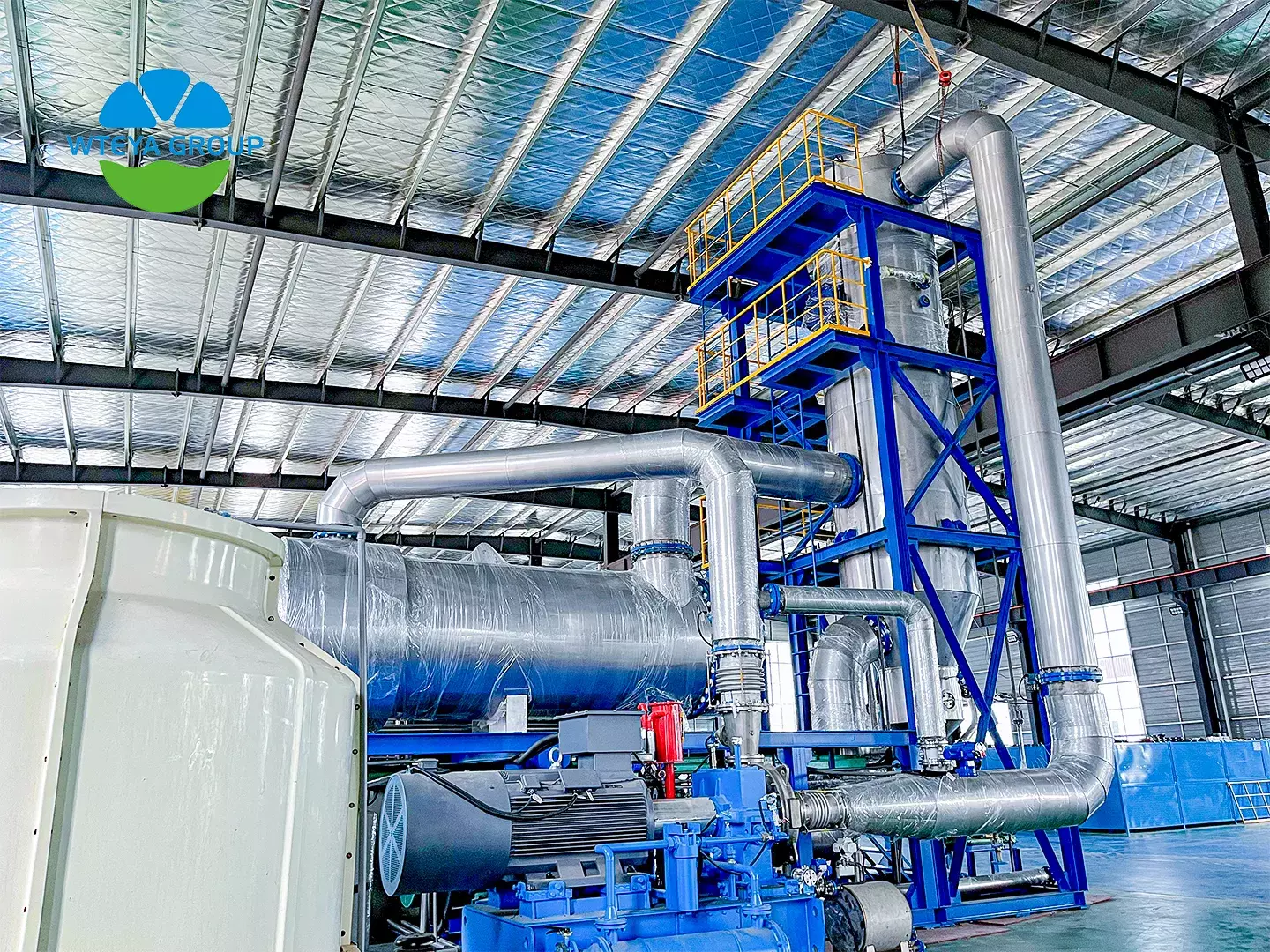
Salinity is the part of industrial wastewater that refuses to disappear. Biological treatment removes organics, membranes remove most of the water, but the dissolved salts stay behind as a brine that is expensive to transport and increasingly difficult to discharge. Evaporation crystallization reverses that equation: instead of paying to dispose of the salt, the plant recovers it as a saleable solid and returns the water to the process.
For plants facing high disposal fees or strict zero liquid discharge permits, salt recovery is often the difference between a treatment line that drains the budget and one that pays part of its own way.
💧 Why Salt Recovery Changes the Economics of Wastewater Treatment
A brine stream is usually priced as waste. Hauling it away costs money per ton, and every ton removed from the process still contains water that had to be bought, softened and pumped. Crystallizing the salt changes three things at once: the volume that leaves the site drops to a fraction of the original brine, the condensate can be reused, and the solid salt becomes a product rather than a liability.
The value depends on the salt. Industrial-grade sodium chloride and sodium sulfate trade at modest but real prices; in some regions the avoided disposal cost alone justifies the plant, with the salt revenue as a bonus. The engineering question is therefore not whether salt can be crystallized, but which salt can be separated cleanly enough to sell.
Recovery also changes the permit conversation. A site that once discharged a continuous brine stream becomes a site that ships dry solid a few times a month, which is a far easier operation to defend during an inspection.
⚙️ How Evaporation Crystallization Recovers Salt
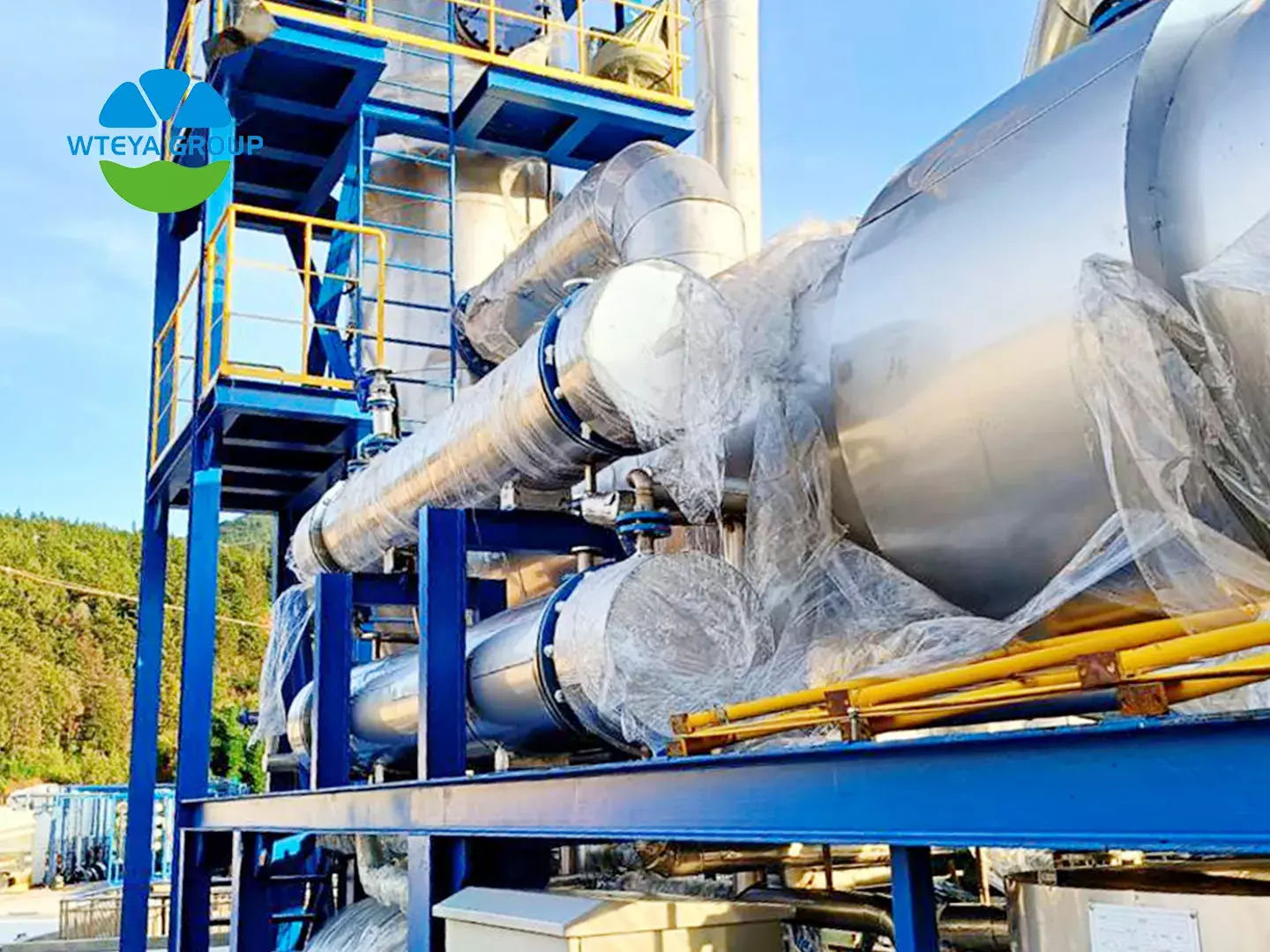
Evaporation and crystallization are the same physical process run at two different points on the solubility curve. While a solution is below saturation, boiling simply removes water and the salt concentration rises. Once the solution passes saturation, continued evaporation forces salt out of the liquid as crystals. The whole discipline of crystallizer design is controlling where and how those crystals form.
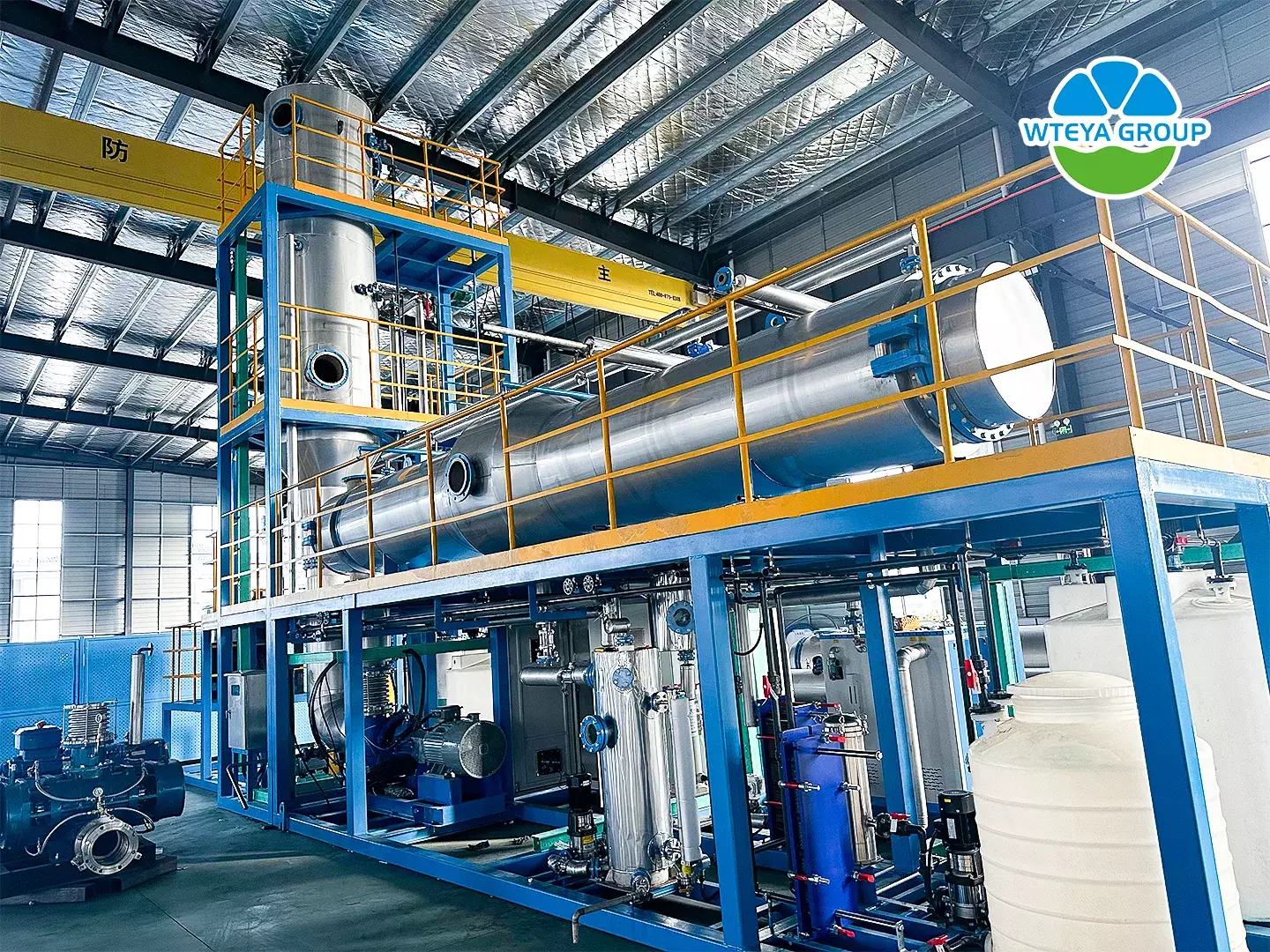
An industrial line normally runs in four stages. First, a pre-concentration step, usually a falling film evaporator or a membrane concentrator, lifts the brine to near saturation at low cost. Second, a crystallizer, most often forced circulation, drives the final evaporation and grows crystals to a filterable size. Third, a centrifuge or filter separates the crystals from the mother liquor. Fourth, a dryer brings moisture down to the specification the buyer expects.
The condensate from the evaporator is the second product. It is distilled water in all but name, and after polishing it is routinely returned to the front of the plant, which is why salt recovery projects usually improve the site water balance as well as the waste balance.
🧪 Separating Mixed Salts: The Role of the Solubility Curve
Most brines contain more than one salt, and mixed crystals are difficult to sell. Separation exploits the fact that salts do not respond to temperature in the same way. Sodium sulfate solubility climbs from roughly 19.5 g per 100 mL at 20 °C to more than 42 g at 100 °C, while sodium chloride stays almost flat at 35.7 to 39.1 g per 100 mL across the same range.
That difference supports a hot dissolution and cooling crystallization route. The mixed salt is dissolved at high temperature, where sodium sulfate is fully soluble, then cooled; sodium sulfate crystallizes out first while most of the chloride remains in the mother liquor. Repeating the cycle raises purity. Where the mixture is sodium chloride and potassium chloride, the same logic works with a different temperature window.
When the salts cannot be separated economically, the honest answer is to produce a mixed salt for the cement or road-salt market rather than pretend to deliver two pure products. A realistic separation study at the start of a project saves years of operating frustration.
📐 Process Design: From Brine to Bagged Salt
Design starts with a full water analysis, not just the headline salinity. Sodium, potassium, calcium, magnesium, sulfate, chloride, fluoride, silica, COD and TOC all matter, because each one decides whether the recovered salt meets specification and whether the heat exchanger fouls in the first month.
Crystal size is controlled by supersaturation, not by residence time alone. Forced circulation crystallizers typically run at a circulation velocity of 1.5 to 2.5 m/s to keep crystals suspended without breaking them, and the evaporation rate is trimmed so that the brine stays inside a narrow metastable band. Seeding helps when the feed composition shifts.
Material selection follows the chloride content. 316L is adequate for low-chloride sulfate streams, duplex 2205 handles moderate chloride, and titanium is the safe choice for chloride-rich brines where pitting corrosion would otherwise dictate the maintenance budget. Elastomers and gaskets deserve the same attention as the shell.
Instrumentation is part of the design, not an accessory. Density or conductivity on the crystallizer loop, level control on the salt leg, and a reliable torque signal on the centrifuge are what keep a crystallizer stable between shifts.
⚡ Energy Demand and Operating Cost
Evaporation is energy-intensive by nature, and crystallization is the most energy-intensive step because it must boil water out of an already concentrated solution. A well-designed MVR crystallization loop consumes roughly 20 to 50 kWh per ton of evaporated water, depending on boiling point elevation and compressor efficiency. A multi-effect arrangement needs about 0.35 to 0.4 tons of steam per ton of evaporated water and is the better choice when cheap steam is available.
Boiling point elevation is the hidden cost. A saturated sodium sulfate brine may boil several degrees above pure water, and the compressor must lift that extra temperature. This is why feed pretreatment to remove organics and hardness often pays back through the energy bill rather than through product quality alone.
Operating cost then splits into three parts: power for the compressor or steam for the effects, maintenance of the centrifuge and dryer, and the periodic wash that removes scale from the heating surfaces. Plants that log brine density and compressor differential pressure daily catch fouling before it becomes a shutdown.
🏭 Where Salt Recovery Pays Off: Typical Applications
Chemical and dye intermediate plants are the classic case: their brine carries a usable sodium sulfate or sodium chloride fraction, and disposal is expensive. Coal chemical and fertilizer sites produce large volumes of high-salinity water where a
industrial wastewater treatment line with crystallization is often the only route to a zero liquid discharge permit.Lithium and rare earth processing recover not only salt but also value from the mother liquor, and metallurgical plants use crystallization to turn acid regeneration residues into a handleable solid. Textile dyeing and printing operations use the same
evaporation system to close the loop on dye-laden brine. In each case the MVR evaporator or multi-effect evaporator is selected against the site steam and power balance, not against a catalogue preference.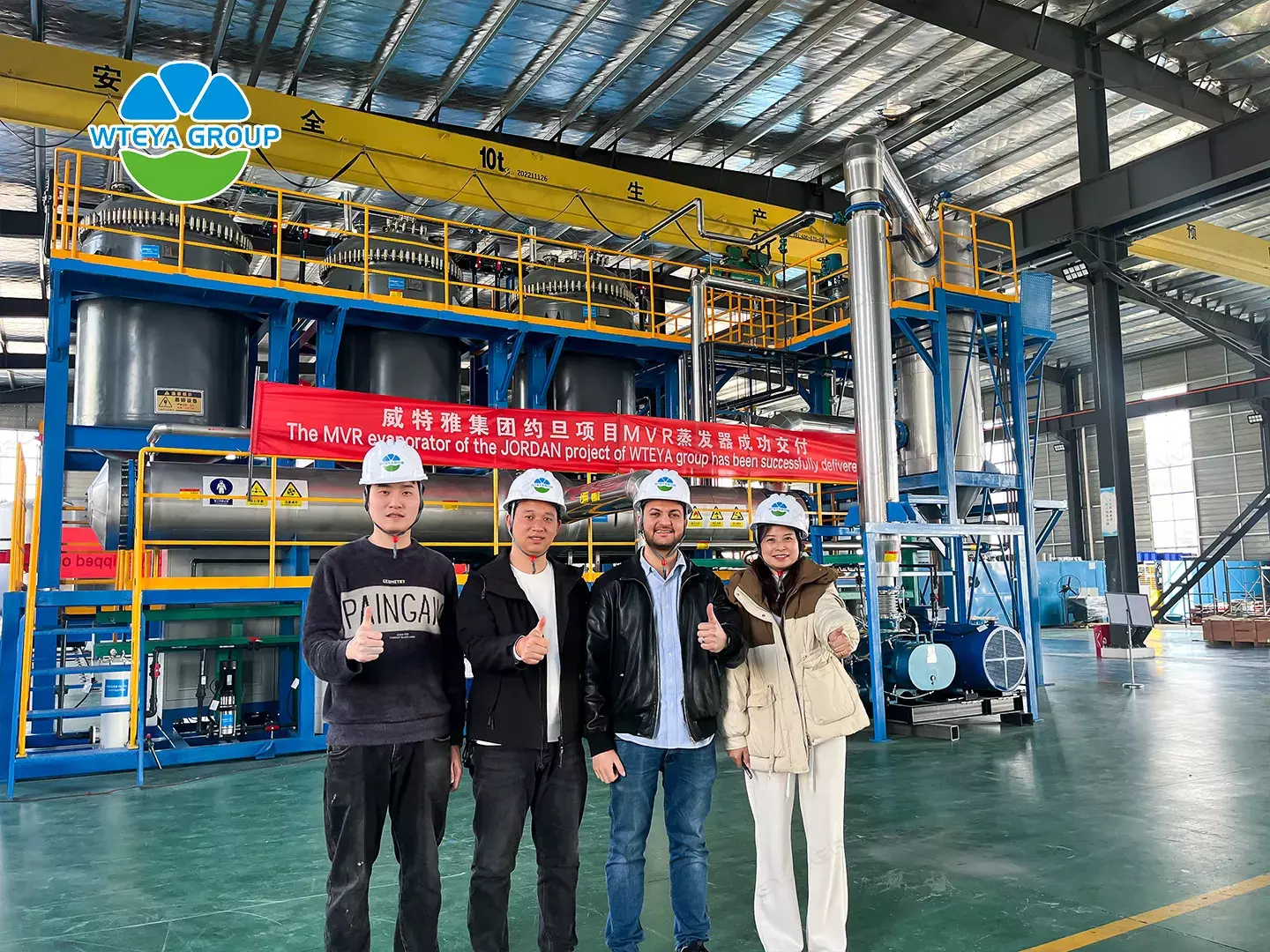
🔧 Common Problems and How to Avoid Them
Scaling on the heating surface is the most common failure, and it almost always traces back to supersaturation that was allowed to run too high. A crystallizer that is pushed for output will deposit salt on the tubes instead of growing crystals in the slurry. The fix is a lower evaporation rate and better control, not a bigger acid wash.
Foaming appears when the feed carries organics or surfactants; it carries liquid into the condensate and lifts salt into the demister. Antifoam is a temporary measure, while oxidation or a pre-treatment step is the real solution. Fine crystals are the third recurring issue: they pass through the centrifuge, raise moisture and lower purity, and are usually a sign that nucleation is outrunning crystal growth.
Corrosion and erosion are a matter of materials and velocity. Running a chloride brine through 304 stainless steel will produce a failure that no maintenance schedule can prevent. Reviewing the water analysis against the metallurgy at the design stage is the cheapest reliability measure available.
❓ Frequently Asked Questions
Can every salt in wastewater be recovered?
No. Streams with high organic load, heavy metals or mixed contaminants need pretreatment before crystallization, and some mixtures are better volume-reduced than separated. A pilot test on real brine is the only reliable answer.
What purity can recovered salt reach?
Industrial grades of 92 to 98 percent are realistic with washing and good crystal control. Higher grades need additional refining, and the economics should be checked against the local market before the design is fixed.
Is salt recovery viable for small flows?
Below a few cubic meters per hour, the capital cost per ton of salt usually favors volume reduction over full recovery. Containerized and skid-mounted systems have narrowed that gap, but the decision still belongs to a proper mass and energy balance.
Schedule a video call with our engineers to explore your options.
📲 WhatsApp: +86-1800 2840 855
📧 Email: info@wteya.com
🌐 Website: www.wteya.com