






How Can Photovoltaic Wastewater Be Treated Efficiently?
The rapid growth of the photovoltaic industry has brought significant environmental challenges. Processes such as silicon wafer cutting, cleaning, and texturing generate large volumes of wastewater containing high concentrations of organic compounds, suspended solids, fluoride, and acidic or alkaline pollutants. These characteristics make photovoltaic wastewater particularly difficult to treat. According to industry estimates, China's photovoltaic sector generates more than 500 million tons of wastewater each year. How to treat this wastewater efficiently and recover it for reuse has therefore become an important challenge for the industry.
This article examines the water quality characteristics and treatment challenges of photovoltaic wastewater, reviews the major treatment technologies currently used in the industry, and introduces an integrated pretreatment + biological treatment + membrane separation + evaporation and crystallization process that has been applied in engineering projects.
1. Where Does Photovoltaic Wastewater Come From?
Photovoltaic wastewater can generally be divided according to the production process, including wastewater generated during monocrystalline and polycrystalline silicon production. Major sources include wastewater from silicon rod cutting, grinding, wafer slicing, as well as auxiliary chemical solutions and cleaning wastewater generated during wafer grinding, etching, polishing, and related processes.
One of the main characteristics of photovoltaic wastewater is that its composition varies significantly between production stages. Different wastewater streams can have very different pollutant profiles.
• Fluoride-containing wastewater: Mainly generated during texturing and cleaning processes. It may contain high concentrations of hydrofluoric acid, nitric acid, and other acidic solutions.
• High-COD organic wastewater: Mainly generated during texturing processes. It can contain organic compounds such as isopropyl alcohol and ethanol. Isopropyl alcohol wastewater remains a particular treatment challenge.
• Silicon-containing wastewater: Mainly generated during wafer cutting and grinding. It can contain large quantities of silicon powder, silicon carbide, and other suspended solids.
Typical Pollutant Characteristics
| Pollutant | Typical Concentration | Main Sources |
|---|---|---|
| COD | Several thousand to tens of thousands of mg/L | Isopropyl alcohol, polyethylene glycol, and other organic compounds |
| Suspended Solids | High concentration | Silicon powder, silicon carbide particles |
| Fluoride | Several hundred to several thousand mg/L | Hydrofluoric acid cleaning solutions |
| pH | Strongly acidic to strongly alkaline | Hydrofluoric acid, nitric acid, alkaline solutions |
The combination of these pollutants makes photovoltaic wastewater particularly challenging to treat. The wastewater may contain high concentrations of difficult-to-degrade organic compounds, fluoride, and suspended solids at the same time. It may also have high salinity and a low carbon-to-nitrogen ratio.
In addition, photovoltaic production often involves intermittent discharge. As a result, both wastewater flow and water quality can fluctuate considerably, creating additional hydraulic and pollutant-loading shocks for the treatment system.
2. Conventional Treatment Processes
Given the complex characteristics of photovoltaic wastewater, conventional treatment systems generally follow a separate collection and segregated treatment strategy.
2.1 Treatment of Fluoride-Containing Wastewater
Chemical precipitation is one of the commonly used methods for treating fluoride-containing wastewater. Lime or calcium chloride can be added to the wastewater to react with fluoride and form calcium fluoride precipitates. Coagulation and sedimentation then separate the solids from the treated water. The clarified water flows into subsequent treatment units, while the fluoride-containing sludge undergoes dewatering and compliant disposal.
For high-fluoride wastewater, some systems use two-stage precipitation to achieve a more stable fluoride removal performance. Proper control of chemical dosage and reaction pH can significantly improve fluoride removal efficiency.
2.2 Treatment of High-COD Organic Wastewater
High-COD wastewater containing isopropyl alcohol is one of the major treatment challenges in photovoltaic manufacturing.
The conventional treatment approach generally combines pretreatment with biological treatment.
Pretreatment: For wastewater containing high concentrations of isopropyl alcohol, Fenton oxidation can provide an effective pretreatment option. Hydroxyl radicals generated during the process oxidize organic compounds and reduce COD to a level more suitable for biological treatment.
Some projects also use thermal evaporation to recover isopropyl alcohol. This approach can reduce the organic load while providing an opportunity for resource recovery.
Biological treatment: After pretreatment, the organic wastewater enters a biological treatment system. A combination of hydrolysis-acidification and biological contact oxidation is commonly used. Hydrolysis-acidification improves biodegradability, while aerobic microorganisms in the biological contact oxidation stage remove a large portion of the remaining organic pollutants.
2.3 Treatment of Silicon-Containing Wastewater
Wastewater containing silicon powder and silicon carbide mainly requires suspended-solids removal. A common approach combines coagulation and sedimentation with media filtration. The process removes suspended silicon particles and other solid contaminants before the wastewater enters downstream treatment units.
3. From Discharge Compliance to Zero Liquid Discharge
As environmental requirements become increasingly stringent and the photovoltaic industry continues to pursue low-carbon development, wastewater treatment is gradually moving from simple discharge compliance toward water reuse, resource recovery, and zero liquid discharge (ZLD).
An integrated process combining pretreatment + biological treatment + membrane separation + evaporation and crystallization has become an established approach for comprehensive photovoltaic wastewater treatment.
3.1 Front-End Pretreatment: Preparing the Water for Downstream Systems
The main purpose of pretreatment is to remove suspended solids, hardness, silica, and fluoride before the wastewater enters membrane and evaporation systems.
• Silica and hardness removal: Photovoltaic wastewater can contain relatively high levels of silica and hardness ions. If these contaminants enter membrane systems directly, they can cause serious scaling. Chemical precipitation can remove a large portion of silica and hardness ions before membrane treatment.
• Fluoride precipitation: Calcium salts react with fluoride to form calcium fluoride precipitates, which can then be separated through sedimentation.
• Equalization: Photovoltaic wastewater can fluctuate significantly in both flow and composition. An adequately sized equalization tank, typically providing around 12–24 hours of retention time, can help stabilize the loading conditions for downstream treatment units.
3.2 Biological Treatment: Removing Organic Matter and Total Nitrogen
After pretreatment, the wastewater enters the biological treatment system. A multi-mode AO process, consisting of anaerobic and aerobic stages, can use microbial activity to remove organic matter and total nitrogen. Photovoltaic wastewater often has a very low carbon-to-nitrogen ratio. For projects that require stronger nitrogen removal, an MBBR (Moving Bed Biofilm Reactor) can be added after the AO process to enhance biological denitrification performance.
3.3 Membrane Separation and Concentration: Advanced Treatment and Water Reuse
The biological effluent then enters the advanced treatment system, which can include the following processes:
• Ozone advanced oxidation: Ozone provides strong oxidation capacity and can break down residual organic compounds that are difficult for conventional biological treatment to remove.
• Ultrafiltration + reverse osmosis: Ultrafiltration removes colloids and fine particles, while reverse osmosis retains dissolved salts and trace contaminants. The resulting permeate can meet industrial water reuse requirements and return to the production line.
3.4 Evaporation and Crystallization: Managing the Concentrate
The concentrated brine generated by the membrane system, which typically accounts for around 5% of the total treated flow, can enter the evaporation and crystallization system.
• Nanofiltration for salt separation: Nanofiltration can separate monovalent salts such as sodium chloride from divalent salts such as sodium sulfate.
• Separate crystallization: Sodium chloride and sodium sulfate can enter separate evaporation and crystallization systems to produce industrial-grade salt products.
The condensate generated during evaporation and crystallization can be recovered for production reuse. The crystallized salts can also serve as industrial raw materials where appropriate. This approach helps move the treatment system toward both zero liquid discharge and resource recovery.
4. WTEYA — A Professional Wastewater Treatment Solution Provider for the Photovoltaic Industry
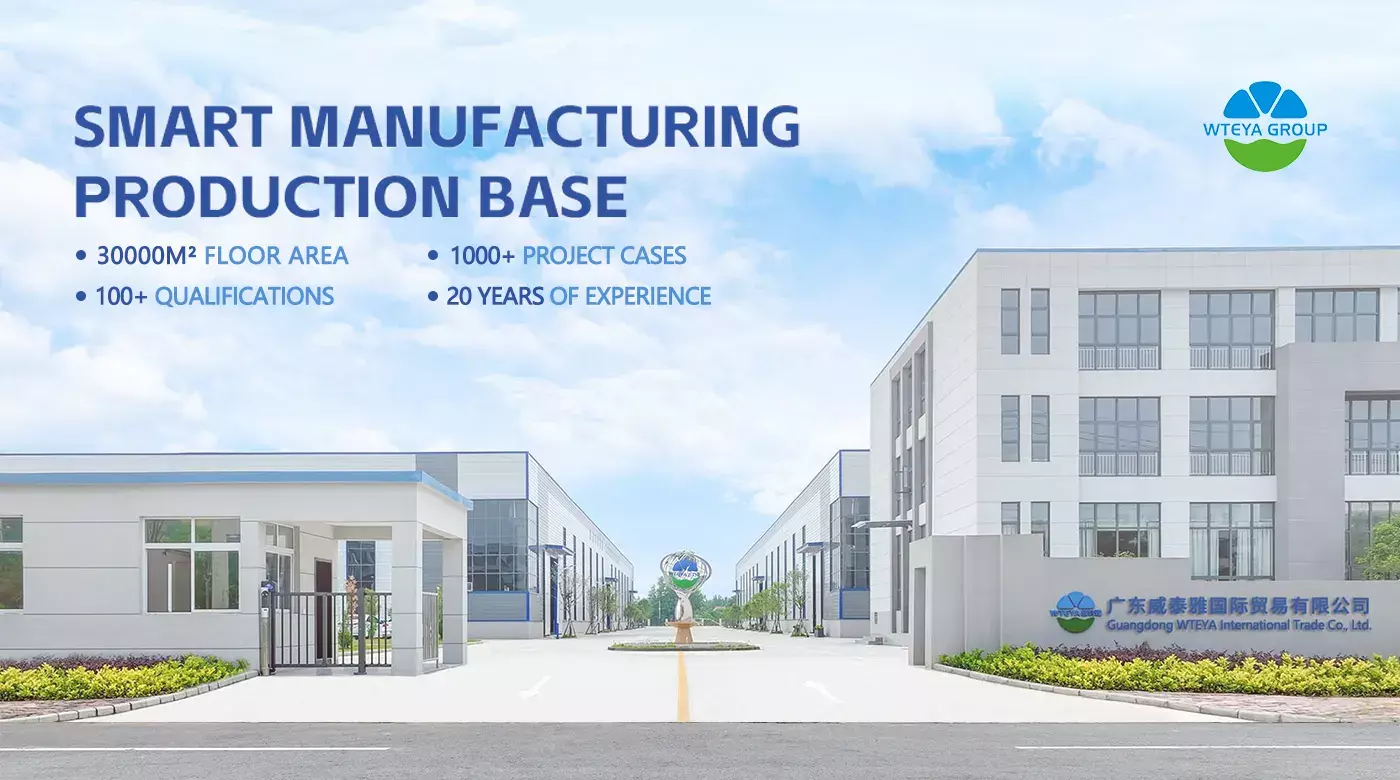
WTEYA has more than ten years of experience in industrial wastewater treatment and focuses on wastewater treatment and resource recovery solutions for photovoltaic manufacturing.
The company operates modern equipment manufacturing facilities in several locations across China and has a technical research, engineering, and operation support team of more than 300 professionals.
For photovoltaic wastewater treatment, WTEYA provides integrated solutions covering pretreatment, biological treatment, membrane separation and concentration, and MVR evaporation and crystallization.
Its services include:
• Process design: WTEYA develops customized treatment processes based on the specific wastewater characteristics of each photovoltaic manufacturing project, covering pretreatment, biological treatment, membrane systems, and evaporation and crystallization.
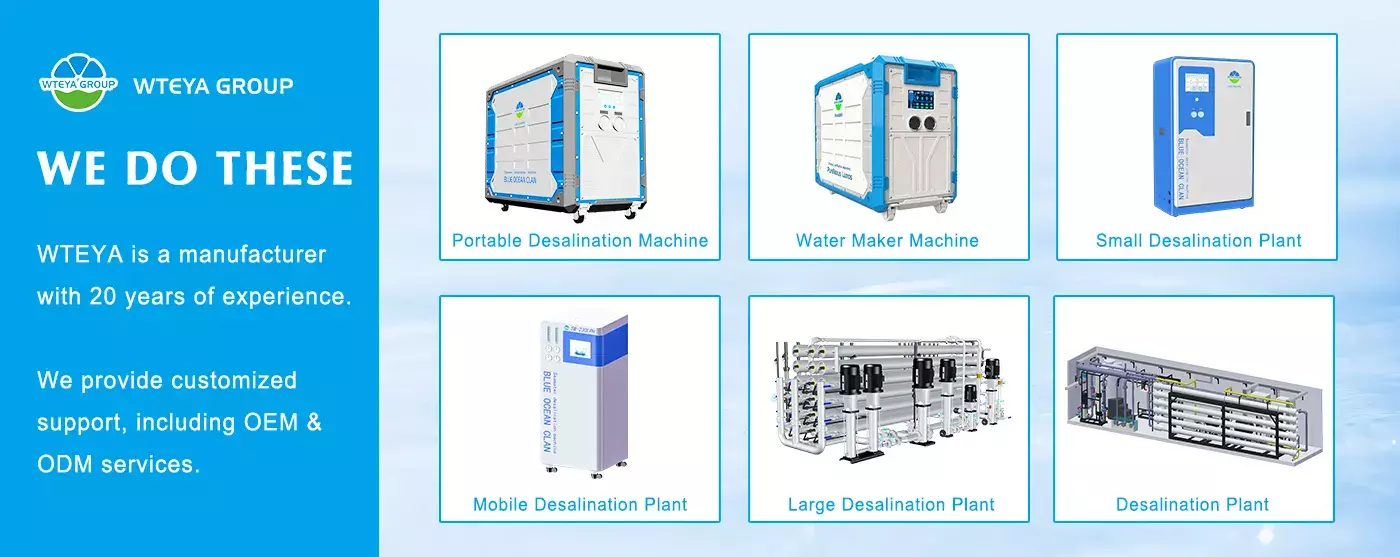
• Equipment manufacturing: WTEYA manufactures RO membrane systems and complete MVR evaporation and crystallization units, with integrated salt separation and crystallization technologies.
• EPC services: From water quality analysis and process design to equipment manufacturing, installation, commissioning, and operation support, WTEYA provides integrated project services.
Conclusion:
Photovoltaic wastewater contains a complex mixture of pollutants and can present significant treatment challenges. However, mature treatment technologies now provide practical solutions for different wastewater streams.
Conventional separate collection and segregated treatment can address specific pollutants at the source. For projects targeting comprehensive treatment, water reuse, and zero liquid discharge, the integrated pretreatment + biological treatment + membrane separation + evaporation and crystallization process provides a more complete treatment pathway.
In suitable projects, treated water can return to production processes, while recovered salts can potentially serve as industrial raw materials. This changes wastewater treatment from a pure environmental cost into part of a resource recovery strategy.
For photovoltaic manufacturers, the key is not simply selecting individual treatment equipment. The overall process needs to match the wastewater characteristics, production conditions, water reuse requirements, discharge standards, and resource recovery targets of the project.
WTEYA provides integrated wastewater treatment solutions from water quality analysis and process design to equipment manufacturing and project delivery. Contact WTEYA to discuss a customized treatment solution for your photovoltaic wastewater project.
Why Partner with WTEYA?
• Nearly 20 years of industry experience
• Trusted by global leaders including Foxconn, Huawei, Ganfeng Lithium, Ronbay Technology
• 100+ success cases worldwide
• OEM & ODM customization available
Become a WTEYA Distributor!
We are expanding global partnerships:
• Preferential policies
• Professional training
• Full technical support
Let us help you achieve exceptional water quality and operational sustainability!
📲 WhatsApp: +86-1800 2840 855
📧 Email: info@wteya.com
🌐 Website: www.wteya.com