






MVR System Retrofits: Upgrading Old Evaporators
Plenty of factories are still running the evaporator they installed years ago: a single-effect unit that eats steam, or a multiple-effect train whose first effect depends on an external steam supply every single day. Rising steam prices, tighter discharge rules and higher production volumes push those units past their design point long before the vessels themselves are worn out.
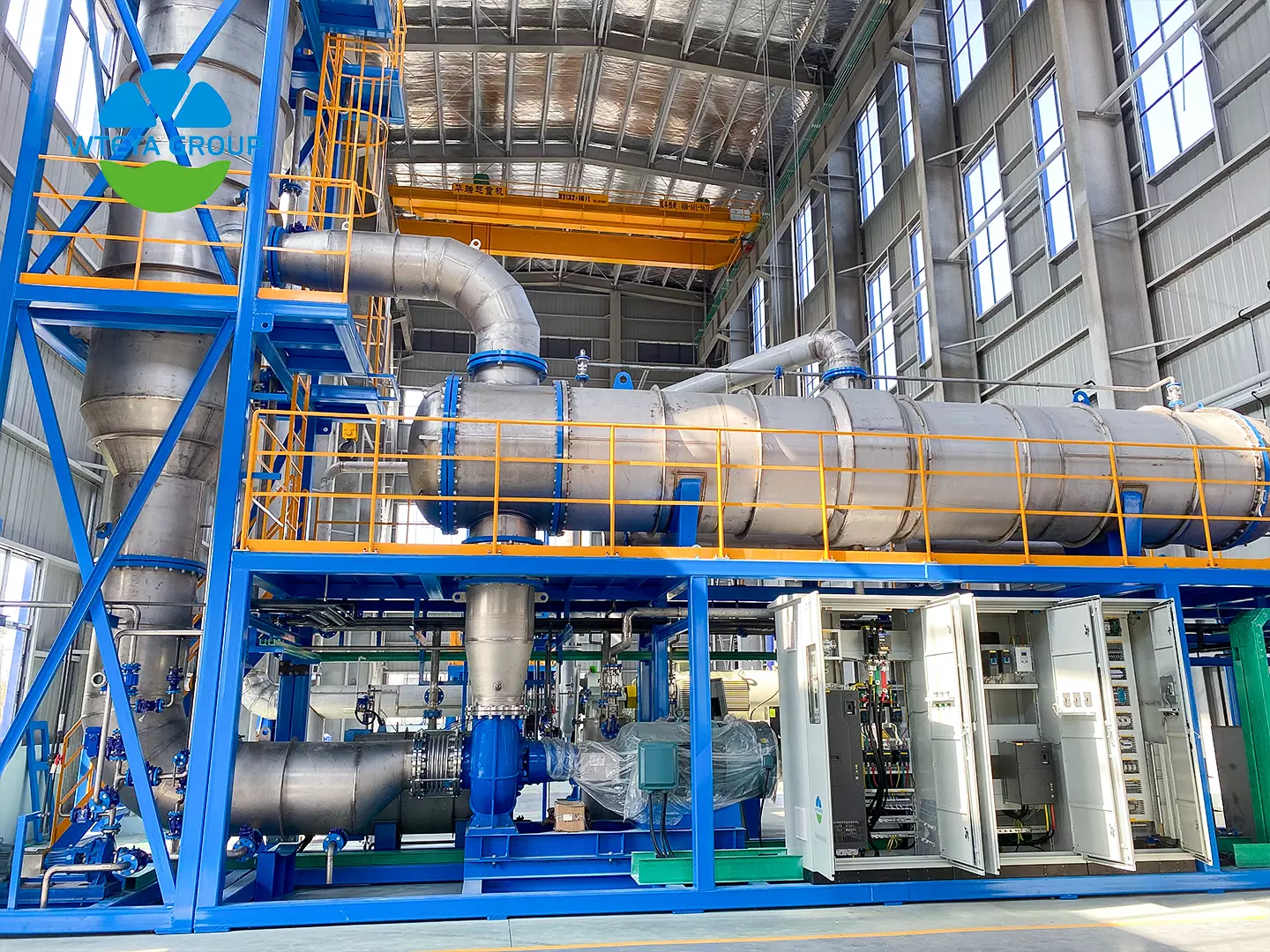
A retrofit puts a mechanical vapour compressor where the steam duty used to be. The secondary vapour boiled off inside the evaporator is compressed and returned to the heating side as the heat source, so an MVR evaporator needs little or no continuous fresh steam once it is running. Compared with a traditional multiple-effect evaporator, that change cuts energy consumption by 30% to 50% — usually without scrapping the vessels already on the foundation.
🌡️ Why Old Evaporator Trains Reach Their Limit
The energy problem is structural. In a single-effect evaporator, roughly 1 ton of fresh steam is consumed for every ton of water evaporated, because the vapour produced is sent to a condenser and rejected. A multiple-effect train reuses that vapour as the heating medium for the next effect, but the first effect still needs an external steam supply, and the benefit shrinks with every added effect — the step from one effect to two is large, while the step from three to four is small.
Scaling is the second limit. Calcium, magnesium and silica concentrate as water evaporates, and once they pass their solubility limits they deposit on heat-transfer surfaces. In a multiple-effect train the first effect runs at the highest temperature and therefore faces the highest scaling risk; as deposits build up, the available temperature difference falls and capacity drops with it, until the plant has to shut down for cleaning.
Add a capacity increase or a stricter discharge limit and the old train simply cannot deliver. That is the point at which a retrofit becomes cheaper than living with the losses.
⚙️ What an MVR Retrofit Actually Changes
A vapour compressor is added. A Roots-type or centrifugal steam compressor draws the secondary vapour and raises its pressure and saturation temperature by roughly 5 to 20°C, which is enough to reuse it as the heating medium in the same evaporator body.
The vapour circuit is re-piped. Instead of going to the condenser, secondary vapour goes to the compressor and back to the heating chamber, where it condenses and releases latent heat to evaporate more wastewater. The condensate is recovered as high-purity distilled water.
Existing vessels and heat exchangers are usually retained when their materials, wall thickness and pressure rating pass inspection — the retrofit scope then covers the compressor, vapour piping, vapour-liquid separator, forced-circulation pump, vacuum system and a PLC control package.
Circulation and separation are upgraded. A forced-circulation pump keeps fluid velocity high through the heat-transfer tubes, which limits scale adhesion and growth, while a properly sized separator controls droplet carry-over that would otherwise damage the compressor impeller.
📊 Retrofit Economics at a Glance
Energy: converting from traditional multiple-effect evaporation to MVR reduces consumption by 30% to 50%. Operating energy shifts from steam to electricity driving the compressor, with fresh steam needed only for startup and preheating.
Capital: the compressor is the core component and a significant share of the total investment — its efficiency, reliability, material selection and corrosion resistance determine the service life of the whole system. That is also why MVR carries a higher initial cost than conventional multiple-effect evaporation.
Marginal gains: because each extra effect on an old train saves less than the one before it, adding a fourth or fifth effect to an ageing unit usually costs more per unit of energy saved than converting the train to mechanical vapour recompression.
Footprint and automation: an MVR system is more compact than an equivalent multiple-effect train and can be delivered with a high degree of automation, which matters when an existing building has no room for additional effects.
🛠️ Retrofit or Replace: How to Decide
Start with the vessels. If the existing shells, tube bundles and materials can hold the required pressure and temperature and still have corrosion allowance left, reusing them is the fastest route to a lower energy bill.
Where steam is cheap, or where the site already has usable waste heat, a hybrid arrangement makes sense: keep part of the train as a pre-concentration stage and apply multiple-effect evaporation follow-up duty only where it is genuinely economic, with the compressor handling the high-salinity final stage.
Protect the machine you are installing. Hardness and silica removal upstream, a properly tuned antiscalant program and stable filtration keep the compressor working in its design window instead of fighting scale and entrainment. A retrofit is also the right moment to review materials of construction against the real water analysis rather than the assumption made years ago.
🏭 Where Retrofits Pay Off Fastest
Plants with continuous evaporation duty and a real steam bill see the fastest payback: chemical production, metallurgy, electroplating and surface treatment, lithium battery material processing, landfill leachate treatment and textile dyeing all run long evaporation hours where every kilogram of steam saved shows up on the monthly energy statement.
Sites facing a discharge upgrade gain twice — the retrofit lowers energy consumption and raises concentration performance at the same time, which is exactly what a zero liquid discharge system needs from its evaporation stage.
🏆 Why Choose WTEYA
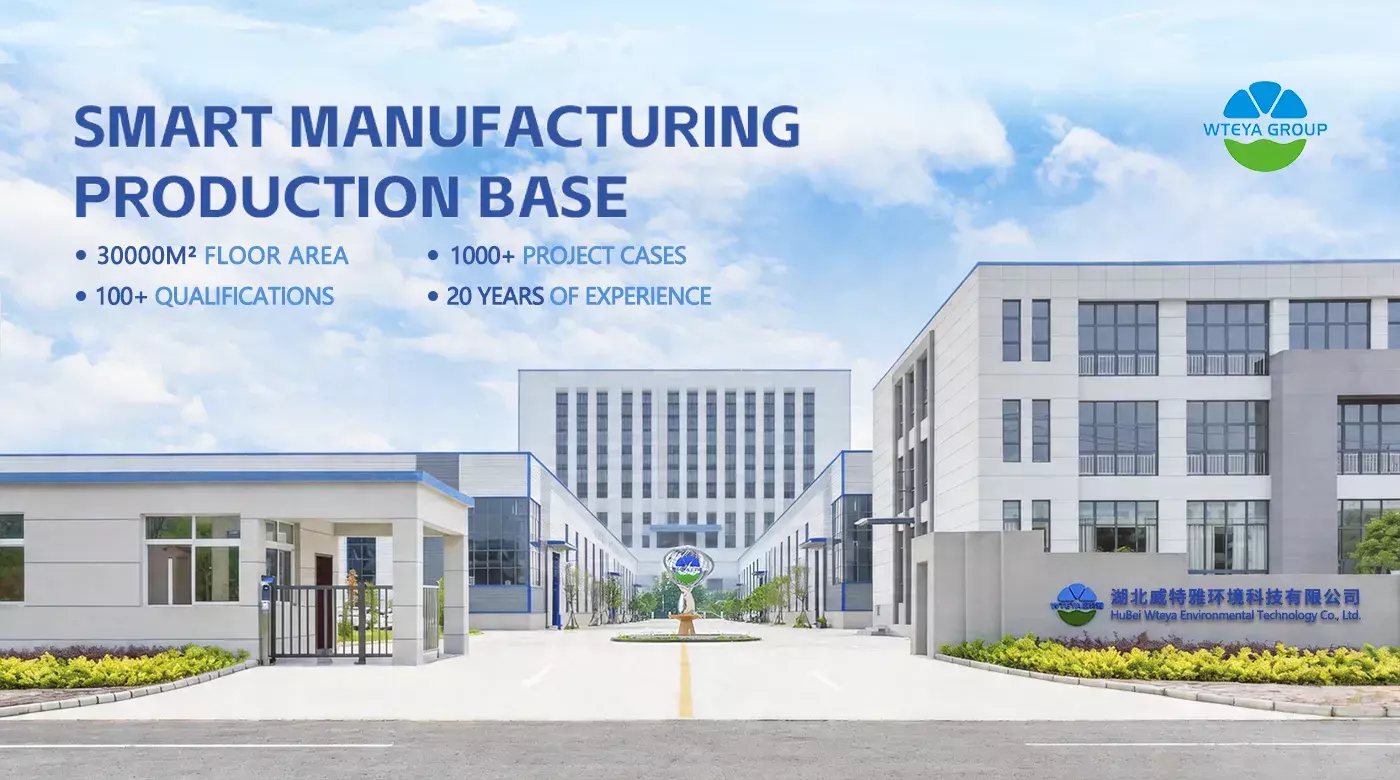
WTEYA has been manufacturing evaporation and crystallization equipment for nearly 20 years, serving more than 2,000 customers. Retrofit projects are engineered around what the site already owns: existing vessels, available space, steam supply and water analysis, not around a standard catalogue item.
Compressor and heat exchanger are sized together as one thermal system, so the retrofit delivers the energy saving it promises. WTEYA supplies the full scope — compressor, separator, circulation, controls and commissioning support — as well as customized designs and full OEM & ODM services.
❓ Frequently Asked Questions
Can an existing multiple-effect evaporator be converted to MVR?
In most cases yes, provided the vessels and heat exchangers pass an inspection for pressure rating, wall thickness and corrosion allowance. The retrofit replaces the steam duty with a mechanical vapour compressor and re-pipes the secondary vapour loop; where the existing bodies cannot take the temperature lift, a hybrid configuration keeps part of the train as a pre-concentration stage and adds the compressor on the final stage.
How much energy does an MVR retrofit actually save?
Converting from traditional multiple-effect evaporation to MVR reduces energy consumption by 30% to 50%. A single-effect unit is even more wasteful: it consumes roughly 1 ton of fresh steam per ton of water evaporated, because the vapour is condensed and thrown away instead of being reused.
Do I have to replace the whole evaporation system?
Usually not. A typical retrofit scope covers the vapour compressor, vapour piping, vapour-liquid separator, forced-circulation pump, vacuum system and PLC controls, while reusing the existing evaporator vessels and heat exchangers. That keeps both capital cost and site disruption well below the cost of a complete new train.
WTEYA is a professional evaporation equipment manufacturer with nearly 20 years of experience. We provide customized retrofit solutions and full OEM & ODM services for high-salinity wastewater projects.
📲 WhatsApp: +86-1800 2840 855
📧 Email: info@wteya.com
🌐 Website: www.wteya.com