






An In-Depth Analysis of Treatment Technology Routes for High-Strength Industrial Wastewater
Abstract: High-strength industrial wastewater has a complex composition, contains a large number of refractory substances, and exhibits significant variations in water quality. A single treatment method cannot easily achieve stable compliance with discharge standards. This article systematically analyzes the mainstream treatment technology routes for high-strength industrial wastewater from four perspectives: technology positioning, process combinations, typical treatment routes, and key factors affecting compliance. Particular attention is given to the application principles and limitations of the combined anaerobic–aerobic treatment process.
1. Key Challenges of High-Strength Industrial Wastewater
High-strength industrial wastewater generally refers to wastewater with a COD concentration ranging from several thousand to tens of thousands of mg/L or even higher. It may contain refractory organic compounds, toxic and hazardous substances, high salt concentrations, and significant fluctuations in water quality. The main treatment challenges fall into four categories:
1. High organic loading
Direct aerobic treatment requires a large amount of oxygen, resulting in high energy consumption and substantial sludge production. It is also prone to sludge bulking.
2. Poor biodegradability
A low B/C ratio indicates poor biodegradability. Microorganisms have difficulty utilizing these compounds directly, making pretreatment necessary to improve biodegradability.
3. Toxicity inhibition
Heavy metals, phenolic compounds, cyanides, halogenated hydrocarbons, and other substances can inhibit microorganisms or even cause toxicity-related damage.
4. Significant fluctuations in water quality
Changes in production batches, raw materials, and manufacturing processes can cause substantial fluctuations in pH, COD, salinity, and toxic substance concentrations, placing high demands on the system's resistance to shock loads.
Therefore, high-strength industrial wastewater treatment is not a matter of "selecting one method." Instead, it requires a complete treatment technology chain covering pretreatment, primary biological treatment, and advanced treatment.
2. The Roles and Limitations of Four Types of Treatment Technologies
High-strength wastewater treatment technologies can be divided into four categories: biological treatment, physical treatment, chemical treatment, and physicochemical treatment. These technologies are not alternatives that replace one another; rather, they perform different functions according to the characteristics of the pollutants.
| Technology Type | Main Functions | Typical Treatment Units | Role in High-Strength Wastewater Treatment |
|---|---|---|---|
| Biological treatment | Organic pollutant degradation, nitrogen and phosphorus removal | Anaerobic treatment, aerobic treatment | Main treatment stage for substantial COD reduction |
| Physical treatment | Removal of suspended solids and oils, water quality adjustment | Sedimentation, flotation, filtration, equalization tanks | Pretreatment or post-treatment |
| Chemical treatment | Destruction of refractory structures, detoxification, pH adjustment | Advanced oxidation, neutralization, chemical reduction | Pretreatment or advanced treatment |
| Physicochemical treatment | Adsorption, coagulation, membrane separation | Coagulation–sedimentation, activated carbon, UF/RO | Pretreatment, advanced treatment, or water reuse |
Key judgment: Biological treatment is the primary treatment method. However, high-strength industrial wastewater can rarely achieve stable compliance through biological treatment alone. Physical, physicochemical, and chemical methods must be used as supplementary processes.
3. Combined Anaerobic–Aerobic Treatment: Why Has It Become a Mainstream Process Route?
3.1 The Role of Anaerobic Treatment: Not Just "Pretreatment," but a Major COD Reduction Process
The value of anaerobic treatment in high-strength organic wastewater treatment is often underestimated. It does not simply break down large molecules; it also undertakes the task of substantially reducing COD.
The main advantages of anaerobic treatment include:
• High-load tolerance: It can handle COD concentrations reaching tens of thousands of mg/L, far exceeding the typical concentrations suitable for direct aerobic treatment.
• Degradation of refractory substances: It can break down certain aromatic compounds and long-chain fatty acids through ring-opening and chain-breaking reactions.
• Improvement of biodegradability: It converts refractory macromolecules into smaller organic acids, alcohols, and other compounds, significantly increasing the B/C ratio.
• Low energy consumption and low sludge production: It does not require aeration, and its excess sludge production is much lower than that of aerobic treatment.
• Energy recovery: It produces biogas, enabling energy recovery.
Common anaerobic reactors:
| Reactor Type | Characteristics | Applicable Conditions |
|---|---|---|
| UASB | Upflow Anaerobic Sludge Blanket reactor | Medium- to high-strength wastewater with relatively low suspended solids |
| IC | Internal Circulation anaerobic reactor | Extremely high-strength organic wastewater |
| EGSB | Expanded Granular Sludge Bed reactor | Wastewater containing toxic substances and requiring strong shock-load resistance |
| ABR | Anaerobic Baffled Reactor | Small- to medium-scale wastewater treatment and wastewater containing suspended solids |
Limitations of anaerobic treatment:
• The effluent COD remains relatively high and generally cannot meet discharge standards directly.
• The process is sensitive to temperature, pH, and toxic substances.
• The start-up period is long, and cultivating granular sludge can be challenging.
Its ability to remove nitrogen and phosphorus is limited.
3.2 The Role of Aerobic Treatment: Advanced Purification and Stable Compliance
Aerobic treatment follows anaerobic treatment to further remove low- to medium-concentration organic pollutants and achieve nitrogen and phosphorus removal.
The main advantages of aerobic treatment include:
• Good effluent quality: It can substantially reduce COD and BOD.
• Nitrogen and phosphorus removal: Nutrient removal can be achieved through processes such as A/O, A²/O, and SBR.
• Stable operation: It is highly effective at removing low concentrations of organic pollutants.
Limitations of aerobic treatment:
• Direct treatment of high-strength wastewater requires substantial oxygen input and high energy consumption.
• Its ability to remove refractory substances is limited.
• Sludge production is relatively high.
3.3 The Logic Behind Combined Anaerobic–Aerobic Treatment
The essence of combined anaerobic–aerobic treatment is staged treatment and complementary advantages.
Anaerobic stage: Reduces COD under high organic loading, improves biodegradability, and reduces the load on subsequent aerobic treatment.
Aerobic stage: Further purifies the wastewater under lower organic loading, removes residual organic pollutants, and achieves nitrogen and phosphorus removal.
Overall result: Strong resistance to shock loads, relatively controllable operating costs, and effluent that can consistently meet discharge standards.
This is why combined anaerobic–aerobic treatment has become one of the most widely used and technically mature mainstream treatment routes for high-strength organic wastewater.
4. "Anaerobic + Aerobic" Is Not a Universal Solution
In the following situations, anaerobic–aerobic treatment alone may have difficulty achieving stable compliance. Additional pretreatment or advanced treatment is required.
| Problem Type | Typical Industries | Additional Treatment Units Required |
|---|---|---|
| Refractory organic compounds | Textile dyeing, pharmaceuticals, pesticides, coking | Advanced oxidation, including Fenton oxidation, catalytic ozonation, electrochemical oxidation, and wet oxidation |
| Toxic substances | Electroplating, coking, pharmaceuticals, chemical manufacturing | Chemical precipitation, chemical reduction, adsorption, and dilution or equalization |
| High salinity | Chemical manufacturing, pesticides, dye intermediates | Dilution, evaporation, membrane concentration, and acclimation of salt-tolerant microorganisms |
| High ammonia nitrogen | Landfill leachate, fertilizer production, livestock farming | Ammonia stripping, MAP precipitation, enhanced nitrification and denitrification |
| High color and high suspended solids | Textile dyeing, papermaking | Coagulation–flotation, sedimentation, and filtration |
| Stringent discharge standards | Sensitive receiving waters, water reuse applications | BAF, activated carbon, ozonation, MBR, and reverse osmosis |
5. Typical Treatment Technology Routes for High-Strength Industrial Wastewater
Route 1: High-Strength Organic Wastewater with Good Biodegradability
Process flow:
Equalization Tank → Anaerobic Treatment (UASB/IC) → Aerobic Treatment (A/O) → Sedimentation → Discharge in Compliance with Standards
Applicable to: Food processing, brewing, livestock farming, and certain types of chemical wastewater.
Route 2: High-Strength Organic Wastewater Containing Refractory Compounds
Process flow:
Equalization Tank → Physicochemical Pretreatment (Coagulation/Flotation) → Advanced Oxidation → Anaerobic Treatment → Aerobic Treatment → Advanced Treatment → Discharge in Compliance with Standards
Applicable to: Textile dyeing, pharmaceutical manufacturing, pesticide production, and coking wastewater.
Route 3: High-Salinity, High-Strength Organic Wastewater
Process flow:
Equalization Tank → Dilution/Evaporation → Anaerobic Treatment → Aerobic Treatment → Membrane Treatment → Discharge in Compliance with Standards or Water Reuse
Applicable to: Chemical manufacturing, pesticides, and dye-intermediate wastewater.
Route 4: High-Ammonia-Nitrogen, High-Strength Organic Wastewater
Process flow:
Equalization Tank → Ammonia Stripping/MAP Precipitation → Anaerobic Treatment → Aerobic Treatment (A²/O) → Advanced Treatment → Discharge in Compliance with Standards
Applicable to: Landfill leachate, fertilizer production, and livestock wastewater.
6. Key Factors Determining Whether Effluent Can Meet Discharge Standards
| Key Factor | Specific Considerations |
|---|---|
| Wastewater characteristics | COD, BOD, B/C ratio, toxicity, salinity, pH, and nutrient ratio |
| Process matching | Anaerobic reactor selection, aerobic process selection, recycle ratio, and retention time |
| Adequacy of pretreatment | Whether refractory compounds have been broken down and toxicity has been eliminated |
| Operational control | pH, temperature, dissolved oxygen, sludge concentration, and nutrient dosing |
| Completeness of advanced treatment | Additional removal of residual COD, color, ammonia nitrogen, and total phosphorus |
| Shock-load resistance design | Equalization tank volume, emergency storage tank, recycle dilution, and online monitoring |
Conclusion:
Biological treatment is the primary approach for high-strength industrial wastewater treatment, and combined anaerobic–aerobic treatment is a mainstream process route.
Anaerobic treatment is responsible for reducing COD under high organic loading, improving biodegradability, and degrading certain refractory substances. Aerobic treatment is responsible for advanced purification, nitrogen and phosphorus removal, and stable compliance with discharge standards.
However, it is important to recognize that "anaerobic + aerobic" is not a universal solution. For high-strength industrial wastewater containing refractory compounds, toxic substances, high salt concentrations, or high ammonia nitrogen, physicochemical and chemical pretreatment must be added upstream, and advanced treatment must be incorporated downstream where necessary to achieve stable compliance with discharge standards.
A truly reliable treatment solution does not simply apply a standard process configuration. Instead, it establishes a systematic treatment technology chain of "pretreatment → anaerobic treatment → aerobic treatment → advanced treatment" based on the actual characteristics of the wastewater, with dynamic operational adjustments as conditions change.
This is the fundamental principle behind achieving compliance with discharge standards in high-strength industrial wastewater treatment.
Why Partner with WTEYA?
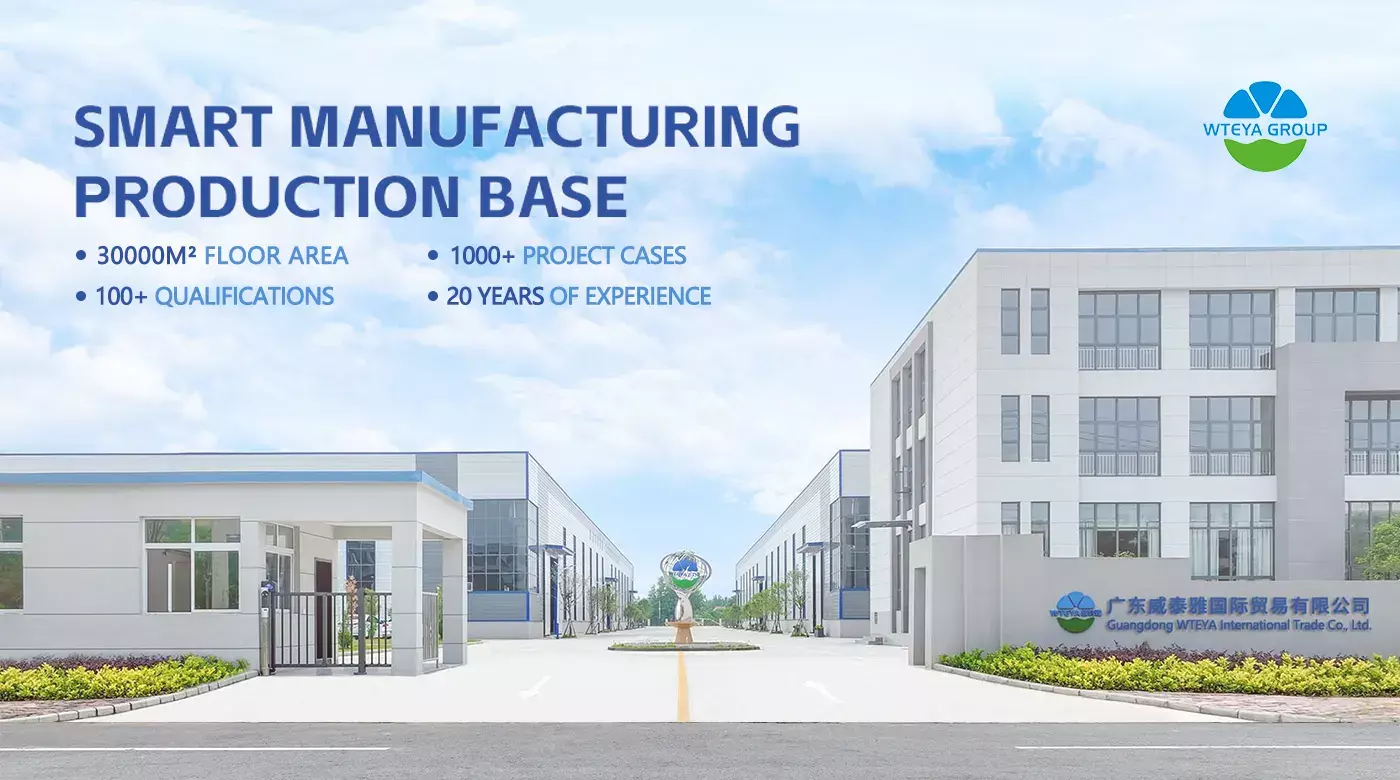
• Nearly 20 years of industry experience
• Trusted by global leaders including Foxconn, Huawei, Ganfeng Lithium, Ronbay Technology
• 100+ success cases worldwide
• OEM & ODM customization available
Become a WTEYA Distributor!
We are expanding global partnerships:
• Preferential policies
• Professional training
• Full technical support
Let us help you achieve exceptional water quality and operational sustainability!
📲 WhatsApp: +86-1800 2840 855
📧 Email: info@wteya.com
🌐 Website: www.wteya.com