






Why Is High-Concentration Wastewater Increasingly Difficult to Treat? Understanding Concentration, Scaling, and Resource Recovery?
High-concentration wastewater presents a distinctive challenge: reducing pollutant levels in the early stages of treatment does not necessarily make downstream treatment easier. In industries such as chemicals, new energy, electronics manufacturing, and food processing, wastewater often undergoes pretreatment, biological treatment, or membrane separation to progressively remove contaminants and recover water. However, salts, organic compounds, hardness-forming substances, and other dissolved constituents tend to become increasingly concentrated in the remaining stream.
By the final treatment stage, what was once a large volume of wastewater may have become a much smaller stream with a significantly higher concentration and more complex composition.
This is one of the main challenges in high-concentration wastewater treatment. The problem is not necessarily that upstream treatment has failed, but that a substantial portion of the remaining pollutants has been concentrated into the final reject stream.
Why Does a Higher Pollutant Concentration Increase Treatment Challenges?
High-concentration wastewater rarely contains just one type of contaminant. A single wastewater stream may contain high chemical oxygen demand (COD), elevated salinity, suspended solids, hardness, and specific industrial pollutants. Although upstream treatment can remove some of these contaminants, it cannot eliminate all dissolved substances simultaneously.
This becomes particularly important during membrane treatment. As water passes through the membrane and is recovered, salts and other substances that are retained by the membrane accumulate in the concentrate. As the concentration factor increases, the concentrate may exhibit higher osmotic pressure, greater salinity, and an increased tendency to form scale.
Membrane systems can therefore improve water recovery while creating another challenge: how should the resulting concentrate be treated?
Conventional biological treatment may have limited effectiveness when dealing with highly saline streams or concentrated pollutants, depending on the wastewater composition and the microorganisms involved. Direct discharge may also be unacceptable under applicable environmental regulations or zero liquid discharge (ZLD) requirements.
These challenges often make targeted end-of-pipe concentration and treatment technologies necessary.
What Really Affects Evaporation Systems Besides Salt Content?
When discussing evaporation and concentration, it is easy to focus primarily on evaporation capacity. In actual industrial applications, however, the long-term stability of an evaporation system often depends more on the composition of the incoming wastewater than on the evaporator's nominal capacity.
Substances such as calcium, magnesium, silica, and certain sulfates and carbonates can reach supersaturated conditions during concentration. These compounds may then precipitate and gradually accumulate on heat-transfer surfaces.
Once scaling develops, heat-transfer efficiency can decline, evaporation performance can deteriorate, and energy consumption may increase. Severe or persistent deposits can also lead to more frequent cleaning, unplanned downtime, and reduced operational availability.
High concentrations of organic matter may introduce additional challenges, including foaming, increased viscosity, and changes in heat-transfer performance.
For these reasons, wastewater often requires targeted pretreatment before entering an evaporation system. Removing scale-forming substances and other components that interfere with evaporation is generally more effective than relying solely on a larger or more powerful evaporator.
Effective pretreatment is essential for maintaining stable evaporation performance and controlling long-term operating costs.
Why Does High-Concentration Wastewater Often Require a Combined Treatment Process?
A well-designed industrial wastewater treatment project rarely relies on a single piece of equipment to address every challenge. Different treatment units serve different purposes, and their effectiveness depends on how well they work together.
• Pretreatment reduces suspended solids, hardness, and specific contaminants that could interfere with downstream processes.
• Biological treatment removes biodegradable organic pollutants under suitable operating conditions.
• Membrane separation recovers additional water and reduces the volume of wastewater requiring final treatment.
• Evaporation treats concentrated streams containing high levels of dissolved salts and other nonvolatile substances.
• Crystallization and solid-liquid separation facilitate the recovery or separation of dissolved solids from the concentrated stream.
• Depending on the wastewater characteristics, a typical treatment train may follow this sequence:
Source Segregation → Equalization → Pretreatment → Biological Treatment → Advanced Treatment → Membrane Separation → Concentrate → Evaporation → Crystallization / Solid-Liquid Separation
Not every project requires every unit operation listed above. The most appropriate process configuration should be determined by wastewater composition, flow rate, treatment objectives, discharge requirements, water reuse targets, and the characteristics of the final concentrate.
A properly integrated treatment system can improve water recovery, reduce the burden on downstream equipment, and make the entire process more manageable.
MVR Technology Addresses Energy Consumption, Not Every Water Quality Challenge
Once high-concentration wastewater reaches the evaporation stage, energy consumption becomes a major factor in the project's overall economics.
Mechanical vapor recompression (MVR) technology reduces the demand for external steam by compressing secondary vapor generated during evaporation. This increases the vapor's pressure and saturation temperature, allowing it to be reused as a heat source in the evaporation process.
For industrial projects with relatively large treatment capacities and long operating hours, MVR can offer significant energy-saving potential compared with conventional evaporation configurations. Actual performance depends on the operating conditions, system design, heat integration, and available energy sources.
However, MVR does not eliminate the need for effective feedwater management.
If wastewater entering the evaporator contains substantial quantities of scale-forming substances, adopting MVR alone will not prevent deposits from accumulating on heat-transfer surfaces. Scaling can still reduce heat-transfer efficiency, increase cleaning requirements, and compromise operational stability.
In other words, MVR improves energy utilization, while pretreatment helps maintain stable operating conditions inside the evaporator. These two aspects must be considered together when designing an industrial wastewater treatment system.
Where Does the Wastewater Go After Evaporation?
This is one of the most important questions to address when designing a high-concentration wastewater treatment system.
Evaporation does not make pollutants disappear. Instead, it separates water from nonvolatile or less volatile components.
The vapor generated during evaporation is condensed into distillate or condensate. Depending on its quality, the recovered water may undergo additional treatment before being reused in industrial production.
Meanwhile, salts and other nonvolatile substances remain in the concentrated liquid or are transferred into solid products through subsequent crystallization and solid-liquid separation.
The end-of-pipe treatment system therefore redistributes the original wastewater components into different streams:
• Recovered water: Condensate that may be reused after meeting the relevant water quality requirements.
• Concentrated liquid: A residual stream requiring further concentration, treatment, or disposal.
• Crystallized solids: Solid products that may be recovered, processed further, or managed as waste, depending on their composition and quality.
If certain components in the concentrate have sufficient purity and commercial value, additional crystallization, salt separation, or purification may make resource recovery feasible.
However, if the solids contain substantial impurities or mixed salts, further separation may be technically challenging or economically unattractive.
Resource recovery should therefore not be regarded as an automatic outcome of evaporation. It must be evaluated based on wastewater composition, concentration factors, crystallization conditions, product purity requirements, and the feasibility of downstream utilization.
The Core of Zero Liquid Discharge Is Effective Concentrate Management
For industrial facilities, zero liquid discharge (ZLD) involves much more than simply installing an evaporator. The fundamental challenge is to establish a complete and reliable strategy for managing water flows and pollutant destinations throughout the treatment system.
Consider a facility that generates a large volume of production wastewater every day. After pretreatment and membrane separation, a substantial proportion of the water may be recovered, but a smaller volume of concentrated wastewater remains.
The downstream evaporation system is designed to treat this concentrate rather than the entire original wastewater flow.
This distinction directly affects evaporator capacity, energy consumption, capital investment, and the quantity of solids ultimately produced.
A comprehensive material balance should therefore be established during the project design stage to answer several essential questions:
• What is the total wastewater inflow?
• How much water can be recovered through upstream treatment?
• How much concentrate is generated by the membrane system?
• What volume of concentrate must be evaporated?
• How much crystallized solid will be produced?
• Where will the recovered condensate be reused?
• How will the final concentrate and solid residues be managed?
Once these parameters are established, the appropriate equipment specifications, process configuration, and operating strategy can be determined on a sound engineering basis.
Without a reliable material balance, it becomes difficult to accurately evaluate system performance, estimate operating costs, or verify whether the intended ZLD objectives can be achieved.
High-Concentration Wastewater Treatment Requires a Controlled Concentration Process
The primary difficulty in treating high-concentration wastewater is not simply the presence of large amounts of pollutants. It is the gradual transformation of wastewater from a high-volume, relatively dilute stream into a low-volume, highly concentrated stream.
Without proper integration between treatment stages, this concentration process can lead to scaling, blockage, higher energy consumption, and difficulties in managing the final concentrate or solid residues.
A more effective approach is to reduce the major pollutant load through appropriate pretreatment and biological treatment where feasible, recover as much water as practical through membrane separation, and then select suitable evaporation, crystallization, or alternative end-of-pipe technologies for the remaining concentrate.
WTEYA Environmental can provide integrated process design solutions based on the wastewater characteristics of industries such as chemicals, new energy, electronics manufacturing, and food processing. Depending on project requirements, these solutions may incorporate pretreatment, membrane separation, MVR evaporation, multi-effect evaporation, and crystallization technologies.
Different projects may have different priorities. Some focus primarily on reducing the volume of high-salinity concentrate. Others prioritize water reuse rates, while some require further evaluation of salt recovery or the utilization of other valuable components.
The ultimate objective is not simply to remove wastewater from the production process. It is to establish a practical system in which water, salts, and other substances are separated, recovered, treated, or disposed of through clearly defined and technically appropriate pathways.
Conclusion: Choosing the Right Strategy for High-Concentration Wastewater Treatment
High-concentration wastewater treatment ultimately tests a system's ability to manage the continuous accumulation of pollutants throughout the treatment process.
From variations in upstream water quality to the removal of organic matter and salts, followed by membrane concentration, evaporation, and crystallization, every stage can influence operating costs, treatment stability, and overall system performance.
When selecting a treatment process, it is more effective to begin with the actual wastewater characteristics and the desired treatment outcomes than to rely on a single technology as a universal solution.
A well-engineered combination of treatment technologies can help maintain stable operation, recover reusable water, and establish a clear treatment or resource recovery pathway for the final concentrate and solid residues.
When concentrate generation is effectively controlled, recovered water consistently meets the required quality standards, and residual materials have a defined management strategy, high-concentration wastewater becomes a more manageable industrial stream rather than an uncontrolled environmental burden.
Why Partner with WTEYA?
• Nearly 20 years of industry experience
• Trusted by global leaders including Foxconn, Huawei, Ganfeng Lithium, Ronbay Technology
• 100+ success cases worldwide
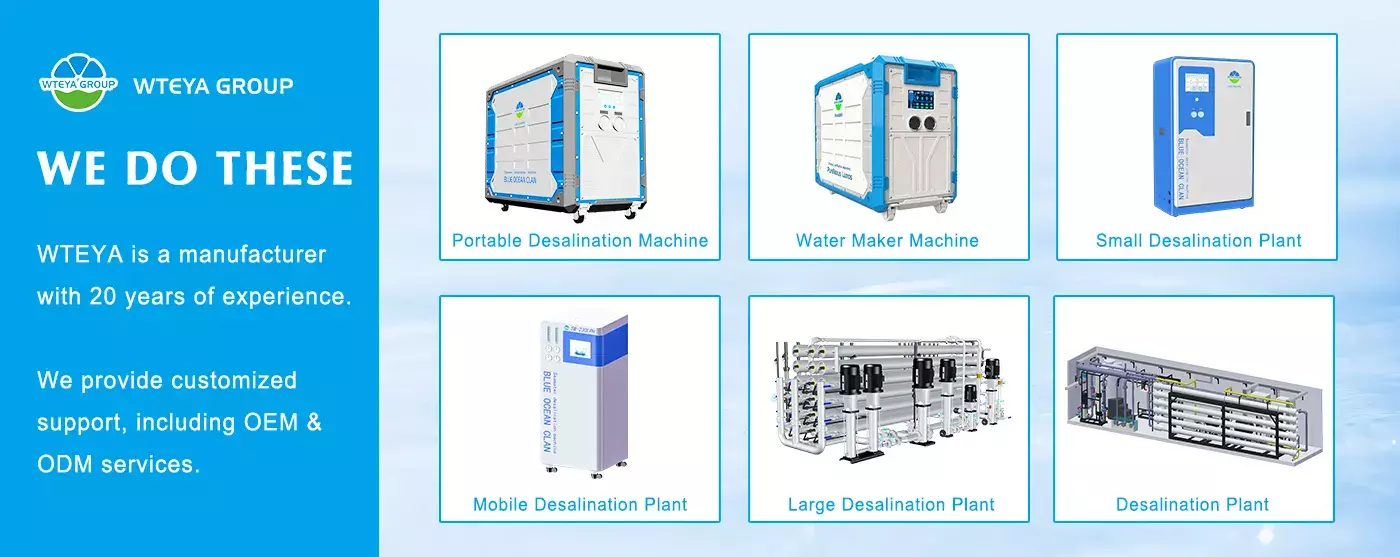
• OEM & ODM customization available
Become a WTEYA Distributor!
We are expanding global partnerships:
• Preferential policies
• Professional training
• Full technical support
Let us help you achieve exceptional water quality and operational sustainability!
📲 WhatsApp: +86-1800 2840 855
📧 Email: info@wteya.com
🌐 Website: www.wteya.com