






How Much Energy Does a Seawater Desalination Plant Use?
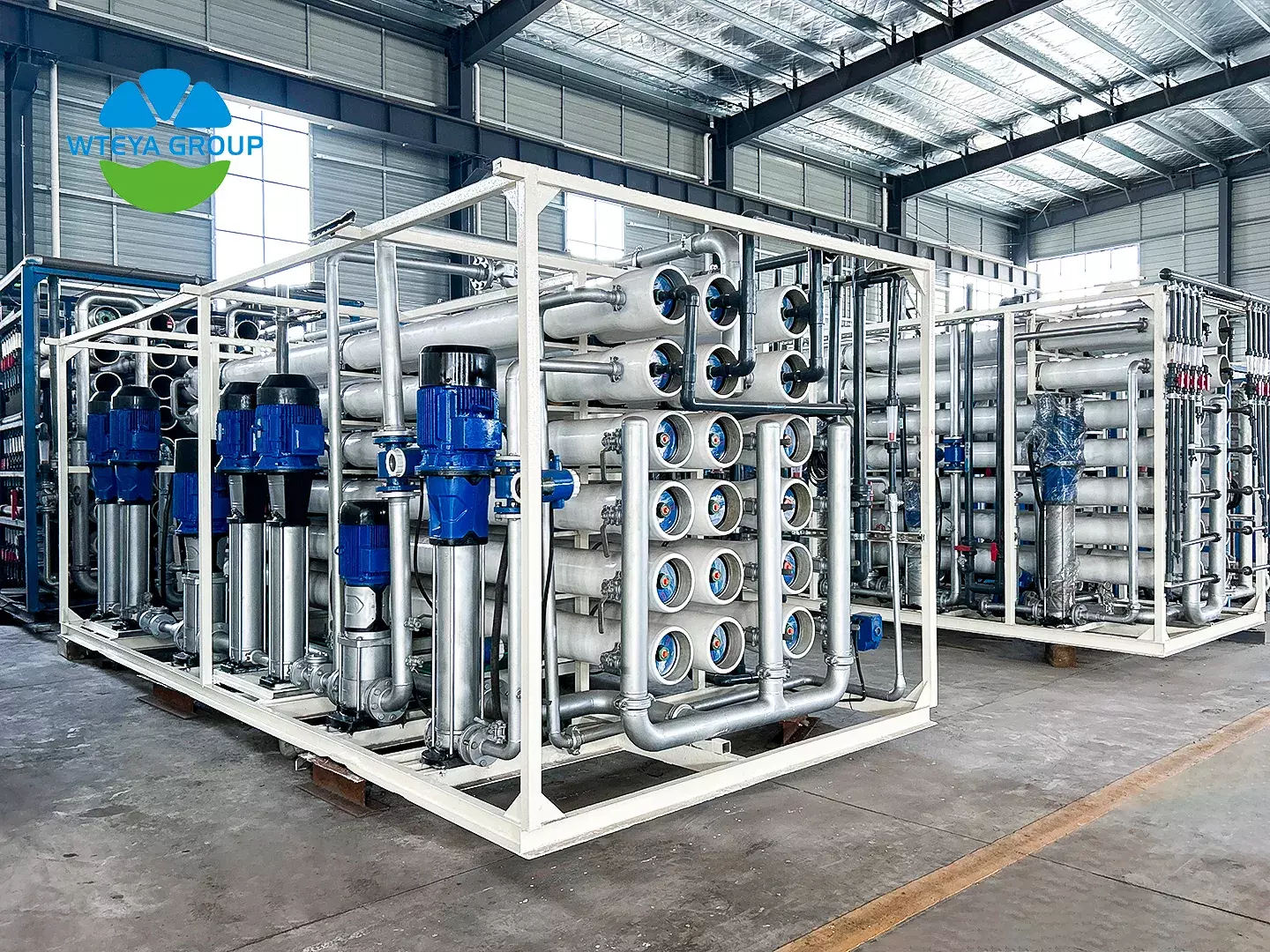
A seawater desalination plant based on RO membrane technology consumes about 3 to 4 kWh per cubic meter of fresh water produced, including intake, pretreatment, high-pressure pumping and energy recovery. This is more than 70% lower than traditional thermal distillation, which typically needs 10 to 15 kWh/m³ for MED and 15 to 20 kWh/m³ for MSF.
🔋 Where the Energy Goes
The high-pressure pump that drives reverse osmosis is the largest energy consumer, accounting for 60% to 70% of total power use. Intake pumps take 10% to 15%, pretreatment filtration 5% to 10%, and controls and cleaning the remaining 5% to 10%.
💡 How Energy Recovery Cuts Power Use
The concentrate stream leaving the RO membranes still carries about 90% of the feed pressure. An energy recovery device (ERD) transfers this pressure to the incoming feed, cutting high-pressure pump energy by about 30% and bringing total specific power consumption down to 3 to 4 kWh/m³. High-efficiency pumps above 85% and variable-frequency drives tuned to actual demand add further savings.
📊 Energy Comparison by Technology
RO with energy recovery: 3 to 4 kWh/m³. RO without energy recovery: 4 to 6 kWh/m³. Multi-effect distillation (MED): 10 to 15 kWh/m³. Thermal multi-stage flash (MSF): 15 to 20 kWh/m³.
Because seawater temperature and salinity shift both pressure and output, actual consumption varies with site conditions — cold, high-salinity water needs more energy. WTEYA configures energy recovery and high-efficiency pumping as standard to keep operating costs at the lower end of the range.
❓ Frequently Asked Questions
Does a desalination plant need a lot of electricity? Modern RO plants with energy recovery use only 3 to 4 kWh per cubic meter — roughly the same electricity a typical household uses in one day for a full day of drinking water for a large community.
Can a plant run on solar power? Yes. WTEYA offers solar-powered configurations where the plant runs on PV with battery storage, suitable for islands and off-grid coastal sites, though the solar array must be sized for the pumping load.
Why is thermal desalination so much more energy-intensive? Thermal processes boil water to produce steam for condensation, and phase change consumes far more energy than pressure-driven membrane separation — which is why RO has become the standard for new seawater desalination plants.
📚 Related FAQs
How Does a Seawater Desalination Plant Work?
How Much Power Does a Small Seawater Desalination Unit Need?
Can a Portable Seawater Desalination Machine Run on Solar Power?
Schedule a video call with our engineers to explore your options.
📲 WhatsApp: +86-1800 2840 855
📧 Email: info@wteya.com
🌐 Website: www.wteya.com