






How Does a Seawater Desalination Plant Work?
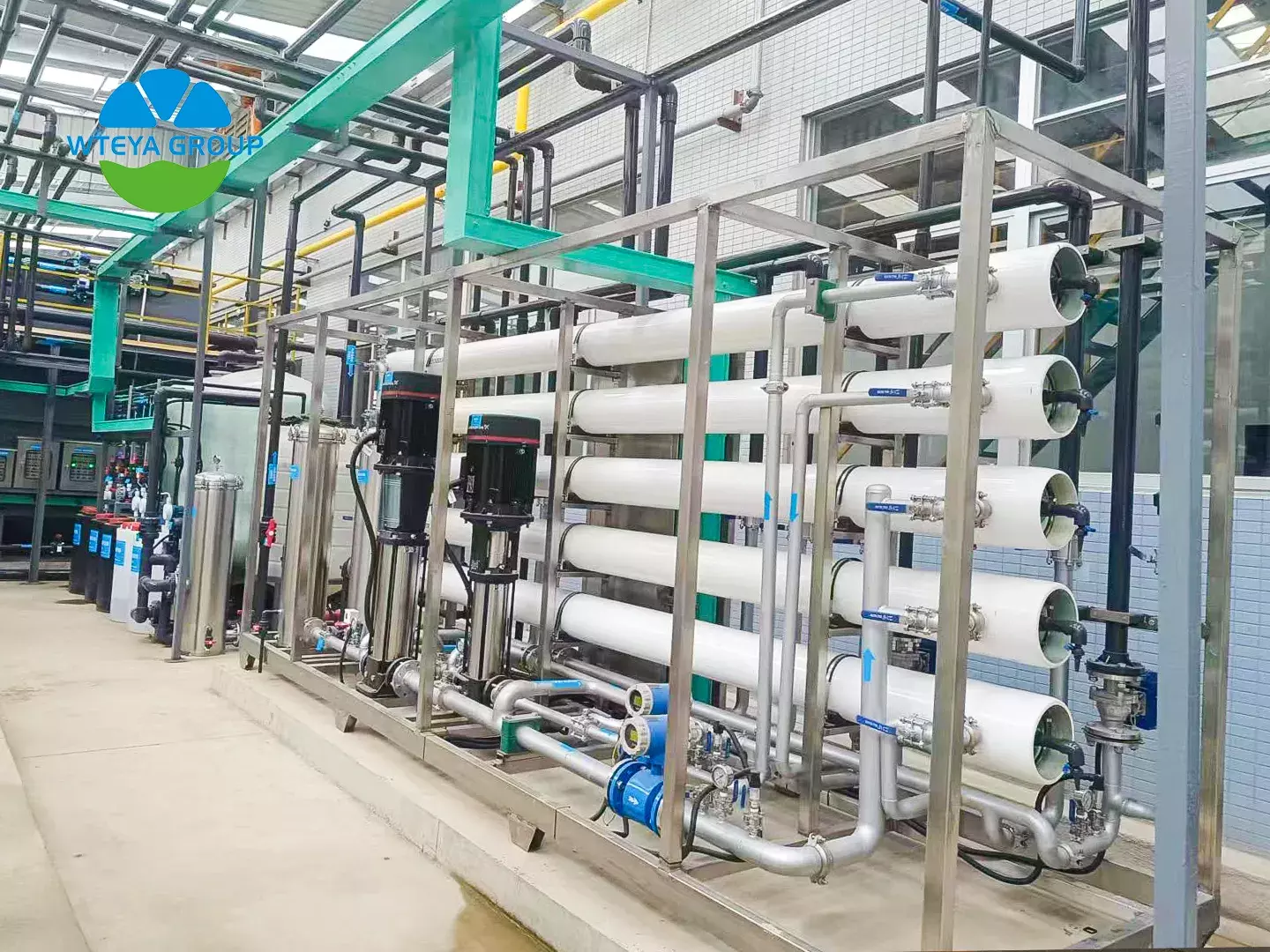
A seawater desalination plant produces fresh water by reverse osmosis (RO) desalination: high-pressure pumps force seawater through semi-permeable membranes, water molecules pass through while salt is rejected. The complete process chain is intake, pretreatment, high-pressure pumping, RO membrane separation, energy recovery, and remineralization.
🚰 Step 1: Seawater Intake
Submersible pumps draw seawater from the intake point while bar screens stop seaweed, floating debris and large particles. The screened seawater then flows into the pretreatment system.
🧪 Step 2: Pretreatment with Multi-Media Filtration
Seawater passes through multi-media filters (quartz sand and anthracite) and a 5-micron cartridge filter to remove suspended solids, colloids and fine particles. Scale inhibitor, reducing agent and biocide are dosed to protect the RO membranes from scaling and fouling. Pretreatment effluent stays below 1 NTU turbidity with an SDI under 5.
💪 Step 3: High-Pressure Pumping
The high-pressure pump pressurizes pretreated seawater to 5.5-7.0 MPa to overcome the natural osmotic pressure of seawater, which carries a TDS of about 35,000-45,000 mg/L. This pressure provides the driving force for reverse osmosis separation.
🌀 Step 4: RO Membrane Separation (The Core)
Pressurized seawater flows across the surface of the RO membranes inside pressure vessels. Water molecules pass through the membrane to the product side, while salt ions such as Na+ and Cl- are rejected at a desalination rate of 99.5%. Product water TDS drops below 200 ppm, meeting WHO drinking water standards, and the concentrated brine is discharged.
⚡ Step 5: Energy Recovery
The brine stream still carries about 90% of the feed pressure. An energy recovery device (ERD) transfers that pressure to the incoming seawater, recovering most of the energy and cutting system consumption by about 30%, so specific power use falls to 3-4 kWh per cubic meter of fresh water.
💎 Step 6: Remineralization and Final Treatment
RO product water contains almost no minerals, so calcium and magnesium are re-dosed and the pH is adjusted to a weakly alkaline level. This improves taste and reduces pipe corrosion, producing final drinking water that meets WHO standards.
🏆 Why Choose WTEYA
WTEYA designs and builds seawater desalination plants with nearly 20 years of water treatment experience, covering intake, pretreatment, RO trains, energy recovery and post-treatment as one integrated solution. We also welcome distributor partnerships — exclusive territories, competitive pricing, and full factory support are available for qualified partners.
🔗 Related FAQs
How Much Power Does a Small Seawater Desalination Unit Need?
How Much Does a Portable Seawater Desalination Machine Cost?
Can a Portable Seawater Desalination Machine Run on Solar Power?
Schedule a video call with our engineers to explore your options.
📲 WhatsApp: +86-1800 2840 855
📧 Email: info@wteya.com
🌐 Website: www.wteya.com