






How Much Power Does a Small Seawater Desalination Unit Need?
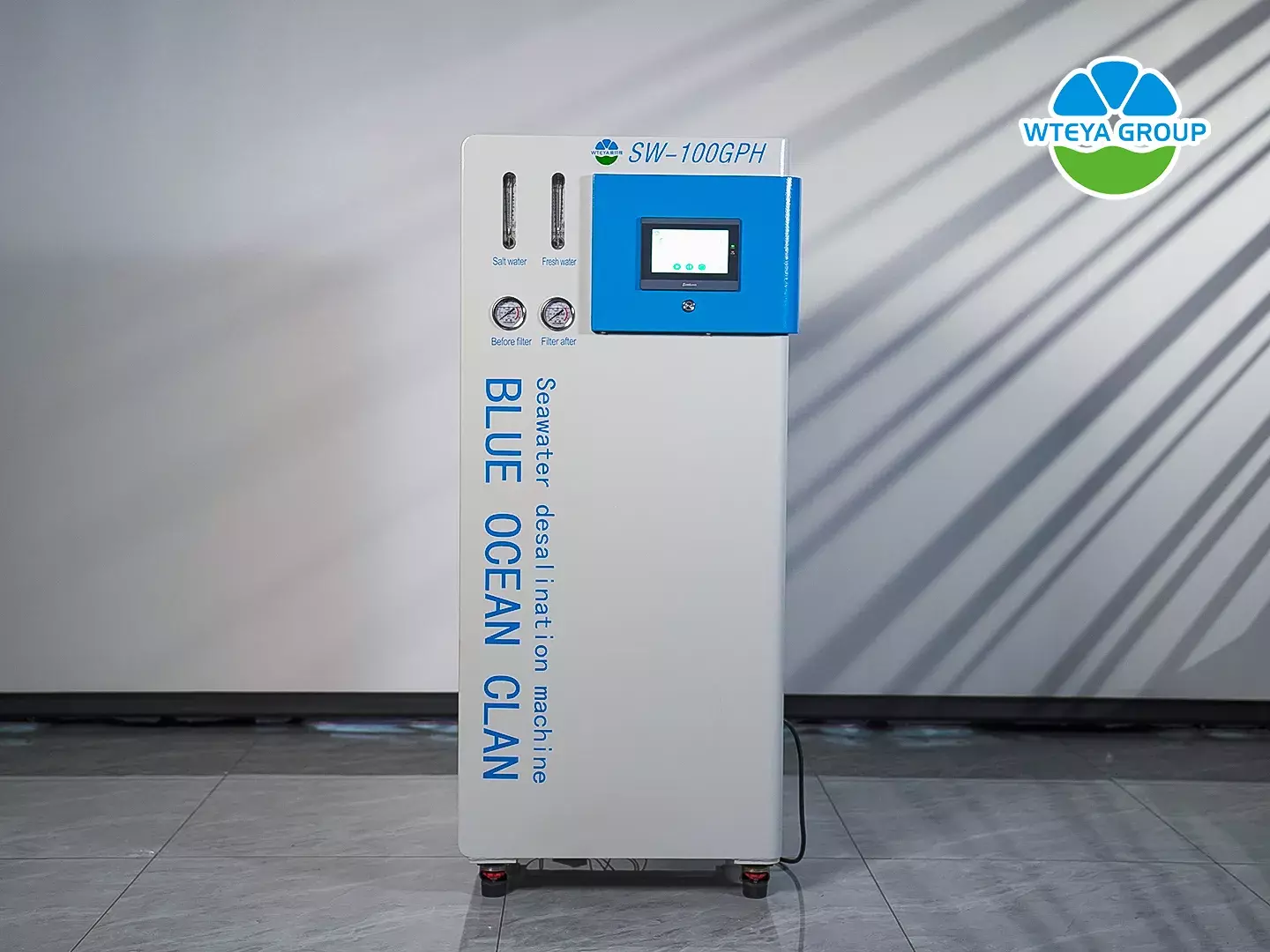
A small seawater desalination unit (4040 series) runs on single-phase AC220V power with an input current of at least 16A (about 3.5 kW). For 60 Hz custom units, the requirement rises to at least 25A (about 5.5 kW) with a direct connection from a circuit breaker. Three-phase power must never be used — it can burn out the electrical system.
🔌 Power Supply Requirements
The standard power supply is single-phase AC220V / 50 Hz with an input current of at least 16A. The acceptable voltage range is AC200V-240V; if your site voltage is outside this range, a transformer or voltage stabilizer is required. For 60 Hz destinations, the input current must be at least 25A and the unit should be wired directly from a dedicated circuit breaker of 25A or higher.
Before installation, prepare a dedicated power circuit rated above 16A, add a voltage stabilizer if the local grid fluctuates, and fit a residual-current (leakage) protection switch for safety.
⚡ How Much Electricity Does It Use?
The specific energy consumption of a 4040 small desalination unit is only 3-4 kWh per cubic meter of fresh water. A unit producing 10 tons per day therefore consumes about 30-40 kWh per day, or roughly 18-40 yuan in electricity cost per day. Installed power ranges from about 4-6 kW for the 5-7 t/d model to 12-18 kW for the 15-20 t/d model.
Daily consumption is simply daily output multiplied by specific energy use. For example, a 10 t/d unit at 3.5 kWh/m³ uses 35 kWh per day — about 28 yuan per day at 0.8 yuan/kWh.
💡 Why It Stays at 3-4 kWh/m³
Energy recovery is the key. The high-pressure brine stream (about 60% of the feed) still carries pressure, and an energy recovery device (ERD) transfers that pressure to the incoming seawater, recovering 30%-60% of the pumping work. Systems without ERD consume 5-6 kWh/m³. A high-efficiency multi-stage centrifugal pump with variable-frequency control, a recovery rate kept at 35%-45%, and low-energy pretreatment complete the picture.
🏝️ Power Options by Site
Where grid power is available, 380V three-phase direct supply is the most economical option, preferably with a stabilizer. On islands without mains power, a diesel generator sized at 1.5-2 times the unit's rated power works well. In sunny regions, a hybrid of solar PV, battery storage, and diesel lets the unit produce water during the day and store it, cutting fuel costs substantially. Fishing boats can run the unit from ship power or an auxiliary generator.
💰 How to Save on Electricity
Fit an energy recovery device — specific consumption drops from 5-6 to 3-4 kWh/m³, saving 30%-40% on long-term electricity bills. Use off-peak tariff periods to produce and store water, cutting power costs by 30%-50%. On islands with strong sunshine, solar-powered production brings electricity costs close to zero. And keep the membranes clean — fouled membranes force higher pressure for lower output, which is pure waste.
🏆 Why Choose WTEYA
WTEYA builds seawater desalination equipment with nearly 20 years of manufacturing experience. Our small desalination units are factory-tested, delivered with full installation guidance, and backed by responsive after-sales support. We also welcome distributor partnerships — exclusive territories, competitive pricing, and full factory support are available for qualified partners.
🔗 Related FAQs
How Much Does a Portable Seawater Desalination Machine Cost?
Can a Portable Seawater Desalination Machine Run on Solar Power?
How Long Does an MVR Evaporator Last?
Schedule a video call with our engineers to explore your options.
📲 WhatsApp: +86-1800 2840 855
📧 Email: info@wteya.com
🌐 Website: www.wteya.com