







How Does a Boat Water Maker Work?
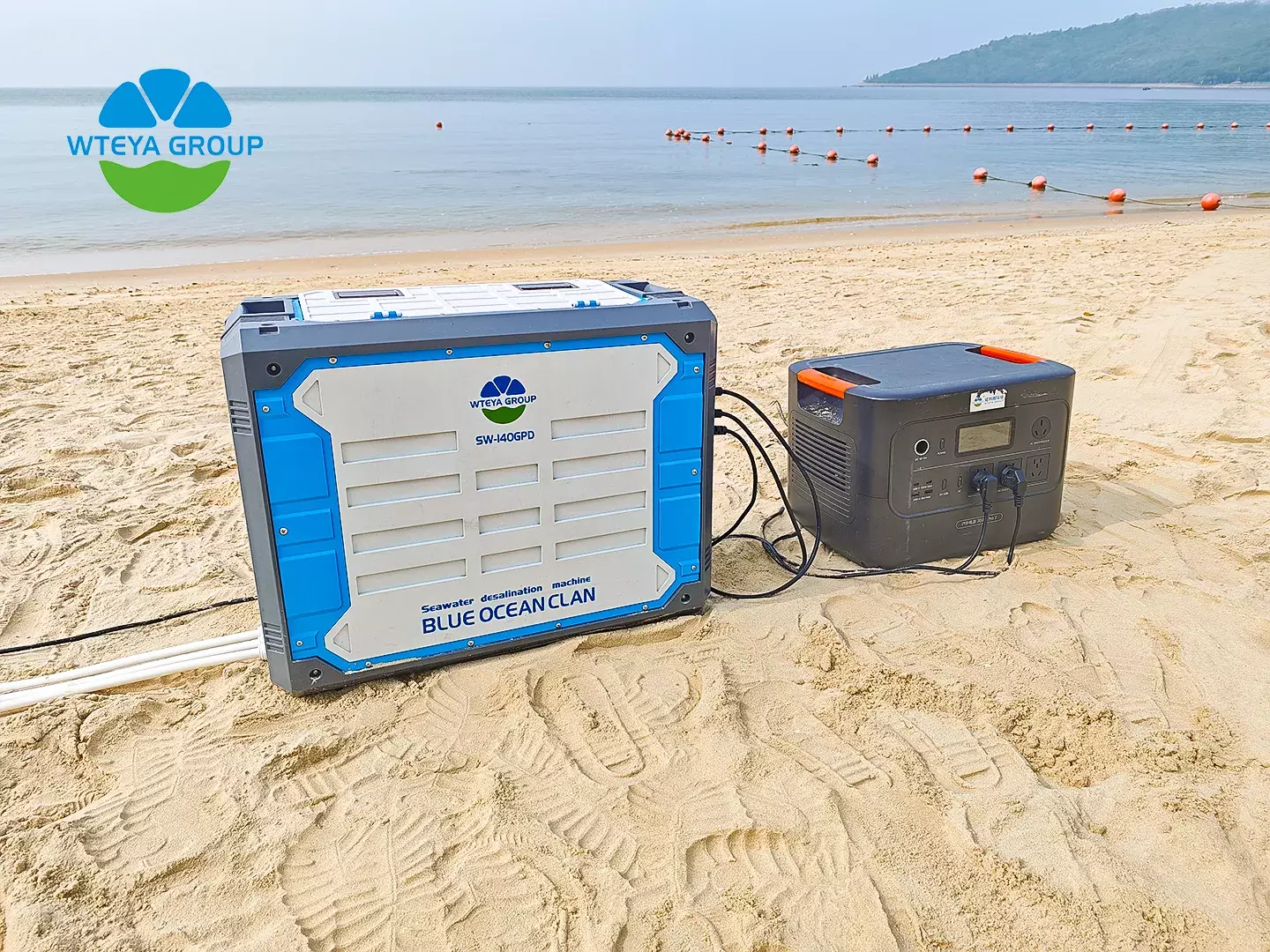
A boat water maker is a compact reverse osmosis desalination plant that turns seawater into drinking water while the vessel is underway or at anchor. It is not a filter: the membrane removes dissolved salt at molecular level, so the product is fresh water rather than simply clearer seawater.
The WTEYA 4021 platform produces 300 GPD, or about 1,200 litres per day, from a unit measuring 610 × 320 × 497 mm and weighing 40 kg. Understanding its five stages explains why installation on board is straightforward and why maintenance is limited to a short list of consumables.
🔧 Stage 1 and 2: Intake and Pre-Filtration
A feed pump rated at 2,000 LPH with 20 m of head and 0.15 kW draws seawater from a sea chest, hull fitting or dedicated seawater tank. The water then passes a 10 micron cartridge followed by a 5 micron cartridge, which remove silt, suspended solids and algae.
This stage protects everything downstream. A clogged first-stage cartridge shows up as low feed pressure and falling output long before the membrane is affected, which is why it is the first item on any weekly check.
⚙️ Stage 3: Pressurisation to 100 bar
A high-pressure plunger pump rated at 360 LPH and 100 bar, drawing 1.1 kW, raises the seawater above its osmotic pressure. Seawater at 35,000 ppm has an osmotic pressure of roughly 27 bar, so the applied pressure has to be several times higher to drive water through the membrane at a useful rate.
Because the pump is the largest electrical load in the system, it is also where energy consumption is decided. The complete unit draws 1.35 kW, equivalent to roughly 3–4 kWh per cubic metre of product water.
💧 Stage 4: Membrane Separation at 99% Rejection
The 4021 membrane element has 3.1 m² of active area and runs at 10% recovery with rejection above 99%. Fresh water passes through the membrane; the concentrated brine that does not pass is returned to sea.
A recovery of 10% is deliberate on a small single-pass unit. It keeps the concentration factor low, limits scaling on the concentrate side and allows the system to run on a single membrane element without a circulation loop.
☀️ Stage 5: UV Disinfection and Delivery
Permeate passes a 254 nm UV lamp before entering the fresh water tank or the tap. Product quality is TDS at or below 1,000 mg/L with total coliforms not detected, which is inside the WHO acceptability limit for drinking water.
The UV stage is the final barrier rather than a substitute for membrane integrity. If product TDS starts to climb, the cause is a membrane, seal or O-ring issue, not the lamp.
⚡ Power, Output and Footprint on Board
Output is 300 GPD, about 50 litres per hour. The unit accepts either 200–240 V single-phase AC or 24 V DC, which allows it to run from a generator, shore power or a battery bank. Three-phase power must not be connected.
At 40 kg and under half a metre tall, the machine fits in an engine room locker or a lazarette. No concrete plinth and no building work are required — the unit is delivered ready to connect.
🌊 Feed Water Limits That Decide Performance
The membrane is rated for TDS up to 35,000 ppm, water temperature of 5–45 °C, pH 4–9 and turbidity at or below 1 NTU. Free chlorine must stay below 0.1 ppm, because oxidants attack the polyamide layer permanently.
Harbour water carrying oil, bilge discharge or heavy algae is a different problem. In those conditions a settling tank or an additional pre-filter is used, and the intake is placed away from the discharge of other vessels.
🛠️ What Maintenance Looks Like at Sea
Consumables set the routine: the first-stage cartridge lasts 5–60 hours depending on feed quality, the second stage 15–30 days, pump oil is changed every 500 hours and the UV lamp after 3,000 hours. The membrane itself typically lasts three to five years, or about 3,600 operating hours.
For lay-up, the system is flushed with fresh water and preserved with a 1–1.5% sodium metabisulphite solution. That single step prevents the most common failure mode on seasonal boats: biological growth on an idle membrane.
🏆 Why Choose WTEYA
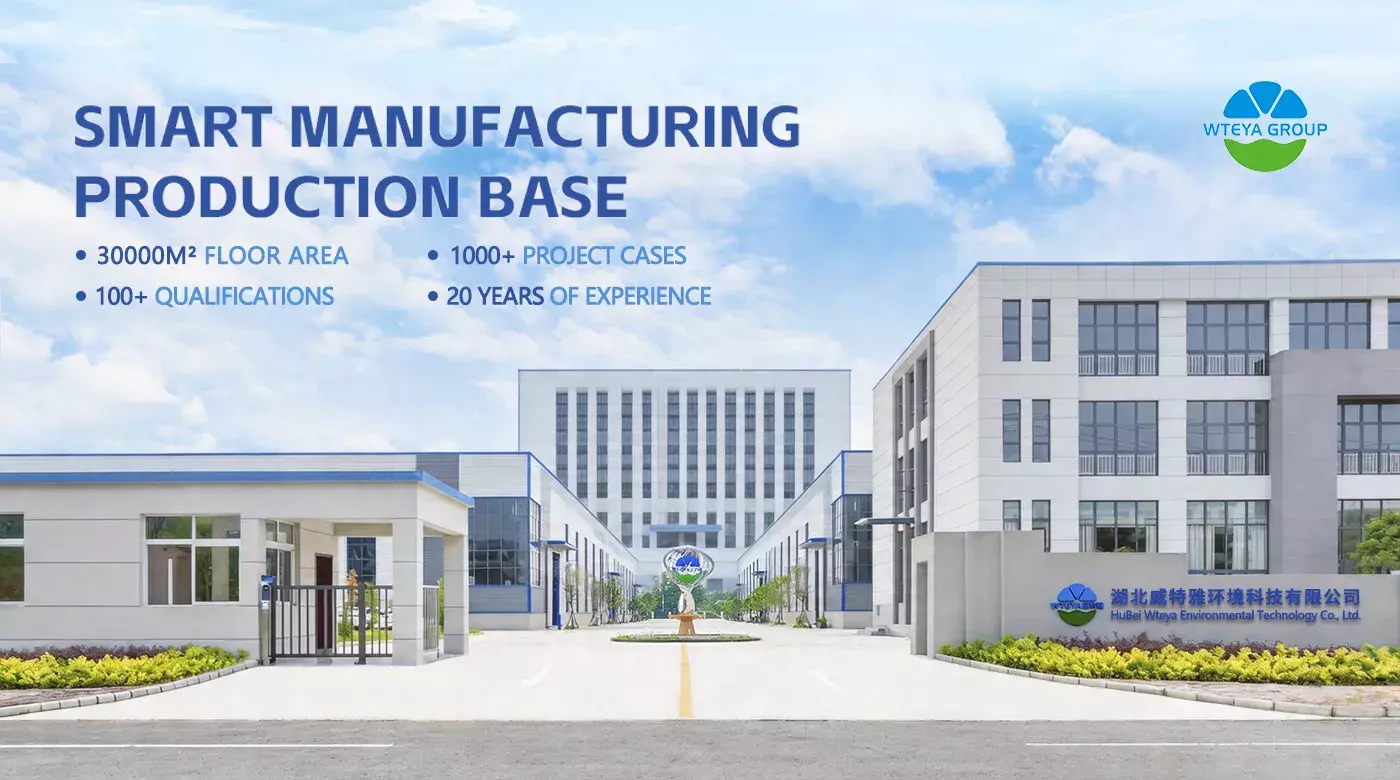
WTEYA has manufactured water treatment equipment since 2009, with a 30,000 m² production base, 42 branches, more than 500 employees and over 2,000 customers. The company holds close to 200 patents and reports equipment stability above 99%.
The seawater range covers the 300 GPD portable unit described here, the 4040 small system and containerized plants from 5 to 10 t/h. Units are wet-tested before shipment and supplied with a commissioning report, spare cartridge set and operating manual.
❓ Related FAQs
Can a Portable Seawater Desalination Machine Run on Solar Power?
How Much Does a Portable Seawater Desalination Machine Cost?
How Much Power Does a Small Seawater Desalination Unit Need?
How Does a Seawater Desalination Plant Work?
How Much Water Does a Zero Liquid Discharge System Recover?
Become a WTEYA authorized dealer for desalination equipment — exclusive territories, competitive pricing and full factory support.
Schedule a video call with our engineers to explore your options.
📲 WhatsApp: +86-1800 2840 855
📧 Email: info@wteya.com
🌐 Website: www.wteya.com
Previous: MVR Evaporator Site Requirements: Space and Layout
Next: No More