






Seawater Desalination and Zero Discharge: Combined Solutions
Coastal industry and island communities depend on the sea for water, but taking water from the sea creates a second problem: what to do with the concentrated brine that is left behind. A seawater desalination plant solves the freshwater side of the equation, rejecting over 99.5% of dissolved salts and delivering water below 200 ppm TDS. Adding a zero discharge stage solves the brine side, lifting total water recovery to more than 95% and turning the remaining salt into a saleable product instead of a disposal cost.
This combined approach is increasingly the default for coastal industrial parks, islands and projects with strict discharge limits. It is not simply "a desalination plant plus an evaporator" — the two stages have to be designed together so that brine volume, salinity and pretreatment are matched to the evaporation and crystallization duty.
🌊 Two Problems That Share One Answer
A conventional RO desalination train recovers only 40%-50% of the seawater it takes in. The other 50%-60% leaves the plant as brine with a salinity roughly double that of the feed, typically 60,000-90,000 mg/L TDS. Discharging that stream back to sea is under growing restriction in many regions, and inland or enclosed-water sites often have no discharge option at all.
At the same time, many of the same sites need process water, boiler feed or irrigation water that the desalination plant alone cannot fully guarantee. Treating the brine with an evaporation and crystallization stage recovers most of the remaining water and produces solid salt, so the site gets both higher water yield and a compliant, discharge-free operation.
⚙️ How the Combined System Works
A well-integrated plant follows a clear sequence, with each stage preparing the next one:
1. Seawater intake and pretreatment. Multi-media filtration removes suspended solids and turbidity. For high-turbidity or algal-bloom seawater, ultrafiltration and air flotation are added so the RO membranes are protected.
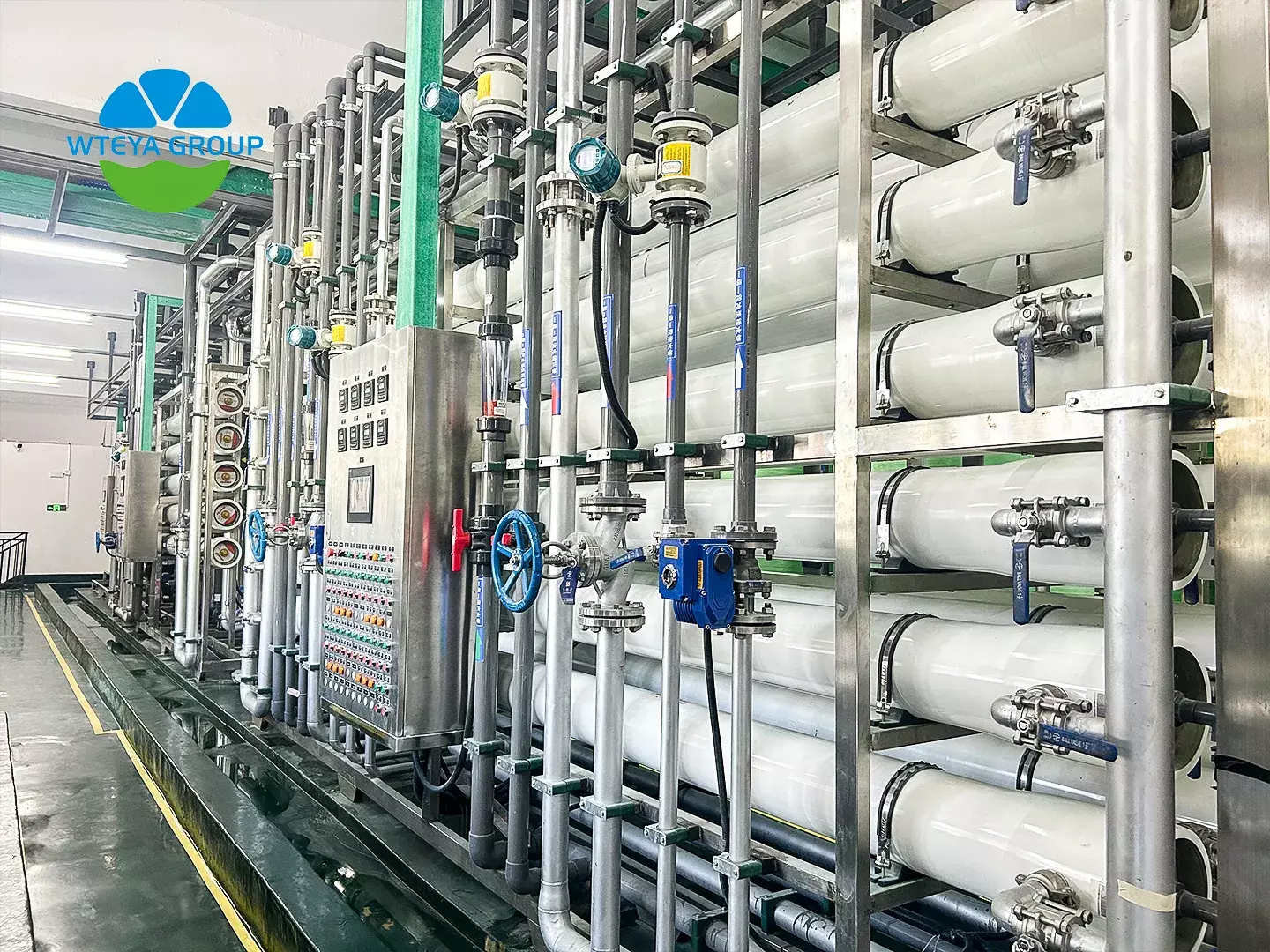
2. Reverse osmosis desalination. High-pressure pumps push seawater through RO membranes at 5.5-7.0 MPa. Energy recovery devices are standard and cut the pumping power by around 30%, bringing product water consumption to 3-4 kWh/m³. Output TDS stays below 200 ppm, meeting WHO drinking water standards after re-mineralization.
3. Brine concentration. The RO reject stream is further concentrated, either by a second RO/nanofiltration stage or directly fed to the evaporator. Nanofiltration can separate monovalent from divalent salts so that sodium chloride and sodium sulfate crystallize separately.
4. MVR evaporation. The concentrated brine enters an MVR evaporator, where mechanical vapour recompression raises the brine from 50,000-80,000 mg/L to near saturation. MVR units are available from 0.5 to 10 t/h evaporation capacity, and the technology saves 30%-40% of the energy of a conventional multi-effect train.
5. Crystallization and salt recovery. Saturated brine passes to a crystallizer, where controlled supersaturation precipitates salt crystals. After centrifuging and drying, the product can meet the industrial salt standard GB/T 5462. Only a small mother liquor stream remains, and it is recycled or solidified so that no liquid leaves the site.
6. Water reuse by grade. RO permeate, evaporator condensate and wash water are routed to different users according to quality, which reduces the site's fresh water intake and improves the payback of the whole system.
📊 Key Performance Data
The numbers below reflect typical WTEYA configurations and are the main reason combined plants are specified:
• Feed seawater TDS: 30,000-45,000 mg/L
• RO salt rejection: ≥99.5%, permeate TDS <200 ppm
• RO stage recovery: 40%-50%, product energy 3-4 kWh/m³ with energy recovery
• Combined (RO + zero discharge) total water recovery: >95%
• Integrated energy demand: 30-60 kWh per m³ of brine treated, versus 100-150 kWh/m³ if evaporation is used alone — a saving of 50%-70%
• Nanofiltration salt separation can reduce crystallization energy by a further 15%-25%
Standard desalination modules are offered at 5 m³/h (about 120 t/day) and 10 m³/h (about 240 t/day), and can be supplied skid-mounted, containerized or fully integrated to suit the site layout.
🏭 Where Combined Systems Make Sense
The combination pays off wherever fresh water is scarce and brine discharge is difficult or forbidden:
• Islands and remote coastal communities that need drinking water and cannot discharge concentrated brine into enclosed bays
• Coastal industrial parks where desalinated water feeds boilers and processes while the brine is mineralized for salt recovery
• Power plants and chemical plants that already operate a zero liquid discharge train and want to secure their own water supply
• Mining and metallurgical sites near the coast that must avoid any liquid discharge under local permits
In each case the engineering task is the same: size the desalination stage so that the brine it produces matches the evaporation and crystallization capacity, and choose materials — duplex stainless steel, titanium or higher alloys — that will survive warm, high-chloride service.
🏆 Why Choose WTEYA
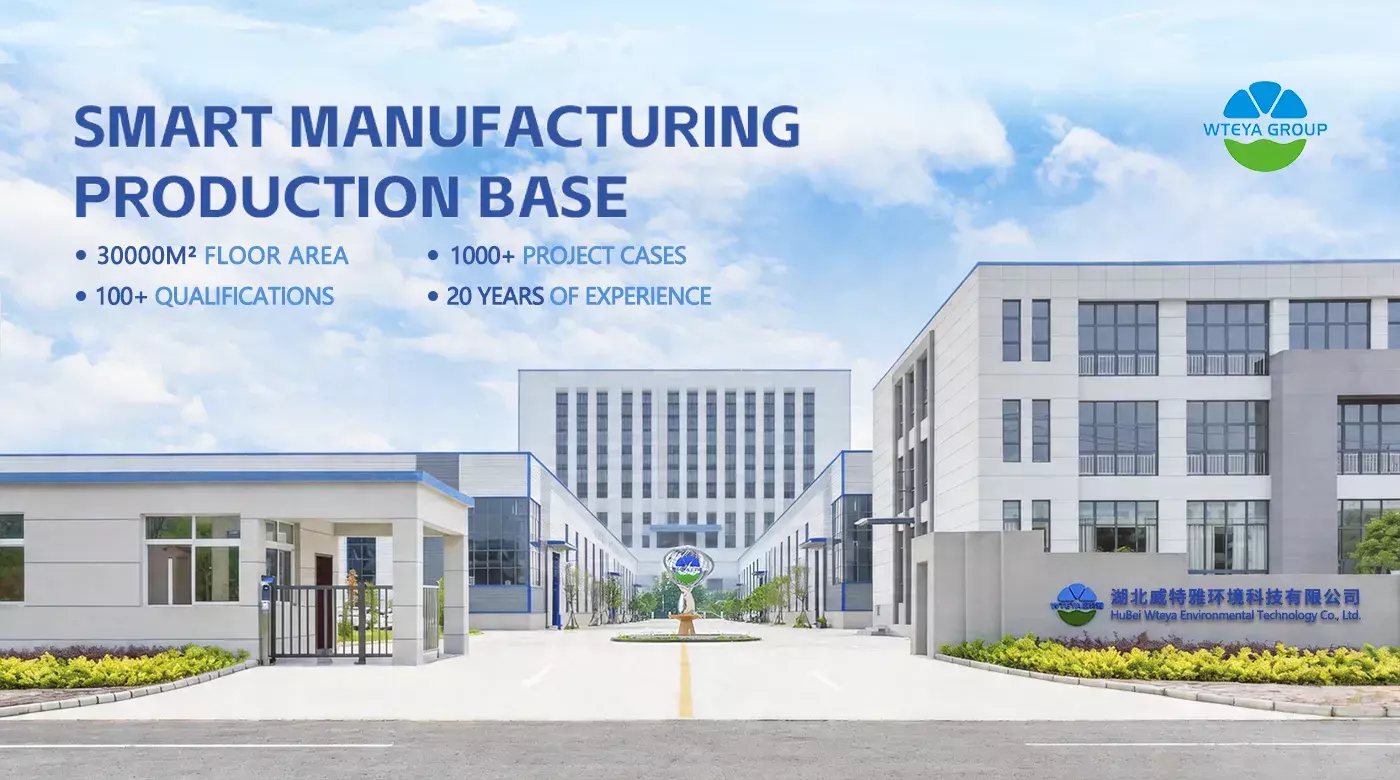
WTEYA has nearly 20 years of experience in evaporation, crystallization and membrane water treatment, and has delivered systems to more than 2,000 customers. Because we build both the desalination and the zero discharge sections in our own factory, the two stages are designed as one system rather than two separate purchases.
Every project starts with a water analysis and a mass balance, so capacity, materials and control strategy are matched to real site conditions. Equipment is supplied skid-mounted or containerized for fast site installation, and PLC control with remote monitoring is standard. For partners and distributors, we also provide full factory support and training.
❓ Frequently Asked Questions
Why combine desalination with zero liquid discharge instead of discharging the brine?
Discharging RO brine is increasingly restricted and can damage sensitive coastal environments. Adding a zero discharge stage raises total water recovery above 95% and converts the salt into an industrial product, so the plant avoids discharge fees and compliance risk.
What is the energy cost of the combined system?
Desalination itself consumes only 3-4 kWh/m³. The energy-intensive part is the evaporation stage, which is why the brine is first concentrated by membranes. With this approach the integrated demand falls to 30-60 kWh per m³ of brine, a saving of 50%-70% compared with evaporating the feed directly.
Can the recovered salt be sold?
Yes. With nanofiltration separation and controlled crystallization, the recovered sodium chloride and sodium sulfate can meet the industrial salt standard GB/T 5462, turning a waste stream into a revenue stream.
Become a WTEYA authorized dealer for desalination and zero discharge equipment. Exclusive territories, competitive pricing, and full factory support.
📲 WhatsApp: +86-1800 2840 855
📧 Email: info@wteya.com
🌐 Website: www.wteya.com