






How Seawater Reverse Osmosis (SWRO) Systems Optimize Water Resource Utilization and Environmental Sustainability?
Seawater reverse osmosis (SWRO) is currently the most cost-effective and mainstream seawater desalination technology. Optimization focuses on four key directions: enhancing freshwater recovery, reducing energy consumption, minimizing marine environmental impact, and implementing closed-loop water reuse—achieving the principle of “more water, less energy, lighter ecological footprint, and circular use.”
I. Core Objectives
- Water Resource Utilization: Increase freshwater recovery, reduce seawater intake, enable tiered water use, and reuse concentrated brine.
- Environmental Sustainability: Lower energy consumption and carbon emissions, reduce the impact of brine, chemicals, and solid waste on marine ecosystems.
- System Longevity: Extend membrane life, reduce operational costs, and ensure green operation throughout the system lifecycle.
II. Optimizing Water Resource Utilization (Key: More Water, Less Waste, Tiered Use)
1. Improve Freshwater Recovery in SWRO Systems
- Conventional SWRO recovery: 35–45%
- Optimized SWRO recovery: 50–60%
Measures: - Implement two-stage or three-stage RO with brine recirculation and further concentration
- Use anti-fouling, high-salt rejection RO membranes capable of withstanding higher concentration polarization
- Precisely dose eco-friendly antiscalants to inhibit CaSO₄, SrCO₃, and SiO₂ scaling
Benefits:
- Reduces seawater intake by over 20% for the same water output, lowering energy use and ecological disturbance
2. Tiered Water Quality Supply for Maximum Utilization
- Primary water: Drinking water or high-purity industrial water
- Secondary water / mildly desalinated water: Municipal purposes, landscaping, street washing, cooling water makeup
- Avoid “using high-quality freshwater for low-quality purposes,” enhancing overall water value
3. Brine Resource Recovery / Reuse
- Direct reuse: Brine for seawater cooling, toilet flushing, ice production, firefighting reserves
- Resource extraction: Recover salts, bromine, magnesium, lithium, and other chemical raw materials from brine
- Near-zero discharge: Combine with evaporation crystallization to achieve zero liquid discharge (ZLD)
III. Environmental Sustainability Optimization (Key: Low Energy, Low Emission, Minimal Ecological Impact)
1. Significantly Reduce Energy Consumption
- Use high-efficiency energy recovery devices (e.g., PX pressure exchangers) to recover over 90% of brine pressure energy, reducing specific energy consumption from 4.5 kWh/m³ to 2.5–3.0 kWh/m³
- Deploy high-efficiency high-pressure pumps with variable frequency control for demand-driven flow and pressure
- Integrate renewable energy: solar, wind, or tidal power directly supply SWRO, achieving low-carbon or carbon-neutral desalination
2. Minimize Marine Ecological Impact
- Optimize seawater intake from deep offshore sources, avoiding surface plankton and fish eggs/larvae; install fine screens and anti-bio suction devices
- Safe brine discharge with multi-stage diffusers to ensure salinity increase <2‰, and control temperature difference to protect marine ecosystems
3. Green Chemicals and Waste Reduction
- Replace highly toxic chemicals with non-oxidizing disinfectants and bio-based antiscalants
- Use UF (ultrafiltration) + security filtration instead of traditional coagulation + sand filtration, reducing sludge by over 70%
- Recycle and safely dispose of used RO membranes instead of direct landfill
4. Low-Carbon and Lifecycle Environmental Protection
- Choose durable materials such as duplex steel and FRP, extending equipment lifespan to 15–20 years
- Reduce carbon emissions: with renewable energy and high-efficiency operation, carbon footprint is reduced by over 60% compared to multi-stage flash (MSF) desalination
IV. System Process Optimization (Stable + Efficient = Sustainable)
- Pre-treatment upgrade: Use UF as SWRO pretreatment instead of conventional sedimentation filtration; achieve SDI <3 to fully protect RO membranes and reduce cleaning frequency
- Intelligent operation control: Online monitoring of pH, turbidity, SDI, membrane pressure difference, recovery rate, and energy consumption. AI predicts membrane fouling and automatically optimizes chemical dosing, cleaning cycles, and operational pressure
- Anti-fouling & long-life design: Select fouling-resistant membranes and wide-channel membrane elements to slow fouling rate and extend chemical cleaning intervals
V. Comprehensive Optimization Logic: Full Chain “Intake → Desalination → Use → Discharge”
- Reduce water intake: High recovery → less seawater extraction
- Lower energy consumption: Energy recovery + renewable power → low-carbon operation
- Increase water production: Tiered water supply → maximize freshwater value
- Careful brine discharge: Dilution / reuse → protect the ocean
- Minimize waste: Green chemicals + membrane recycling → reduce solid and chemical waste
VI. Summary
Optimized SWRO systems can:
- Solve freshwater scarcity in coastal areas and provide stable water sources
- Reduce over-extraction of groundwater and protect inland water resources
- Support long-term sustainable water resource management for urban and industrial applications with low energy use and minimal ecological impact
WTEYA’s Expertise in Seawater Desalination
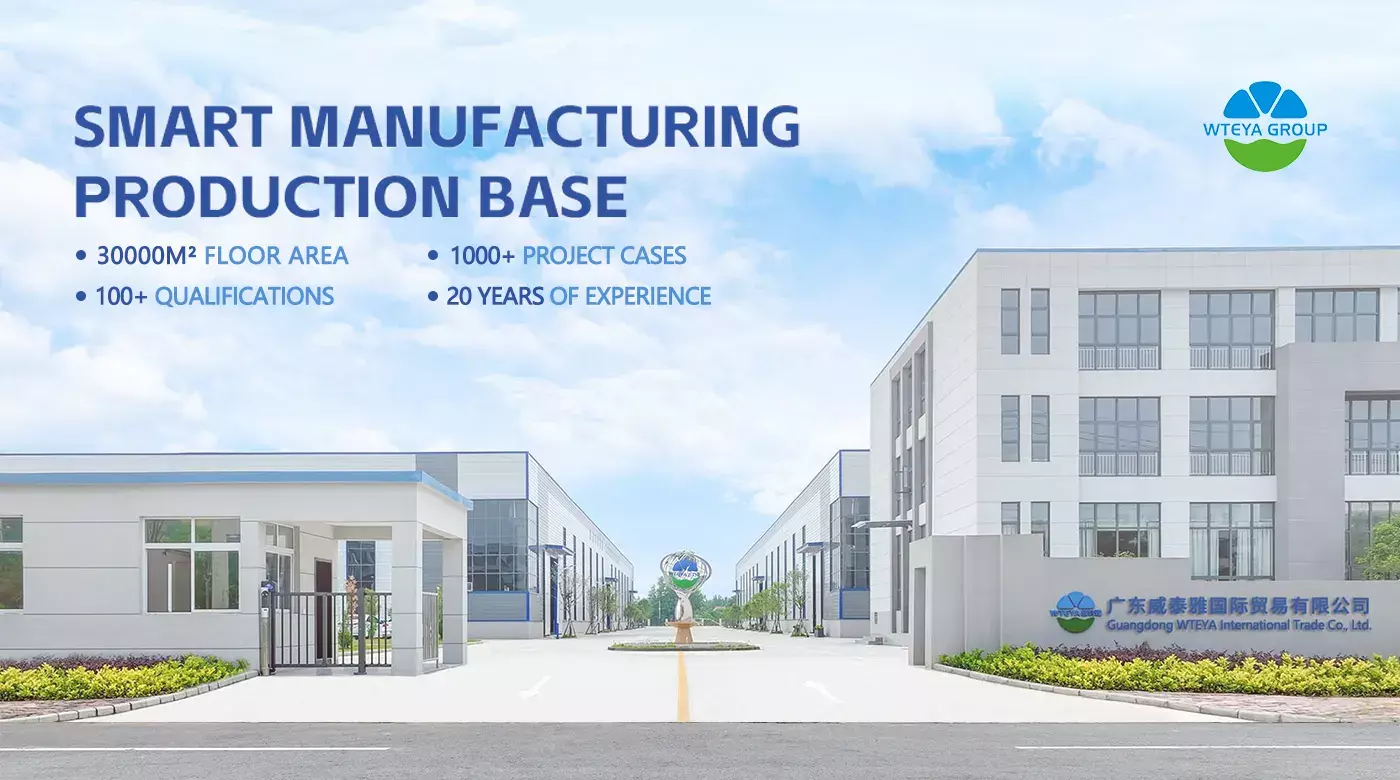
With over 15 years of experience in RO system design, production, and maintenance, WTEYA delivers customized solutions for industrial, urban, and coastal communities. Our systems can be tailored to treatment capacity, water quality, and recovery requirements.
Using advanced RO membranes, high-efficiency pumping stations, energy recovery technologies, and intelligent control systems, WTEYA effectively manages brine for maximum water resource utilization, helping clients achieve sustainable development goals.
We provide complete services including system design, installation, commissioning, and maintenance, ensuring long-term stable operation and optimal ROI. WTEYA SWRO systems are widely used in chemical, power, municipal water, and seawater cooling applications, achieving high water recovery, low energy consumption, and minimal environmental impact.
Conclusion: Turning Brine into a Valuable Resource
Modern SWRO systems are more than water treatment tools—they are core technologies for sustainable water resource management. By optimizing freshwater recovery, reducing energy use, and properly managing brine, RO systems transform potential wastewater into usable resources.
With WTEYA’s advanced RO technology, industrial and municipal projects can implement seawater desalination efficiently, safely, and environmentally responsibly—achieving long-term stable operation, regulatory compliance, economic benefits, and contributing to global water sustainability.
Why Partner with WTEYA?
• Nearly 20 years of industry experience
• Trusted by global leaders including Foxconn, Huawei, Ganfeng Lithium, Ronbay Technology
• 100+ success cases worldwide
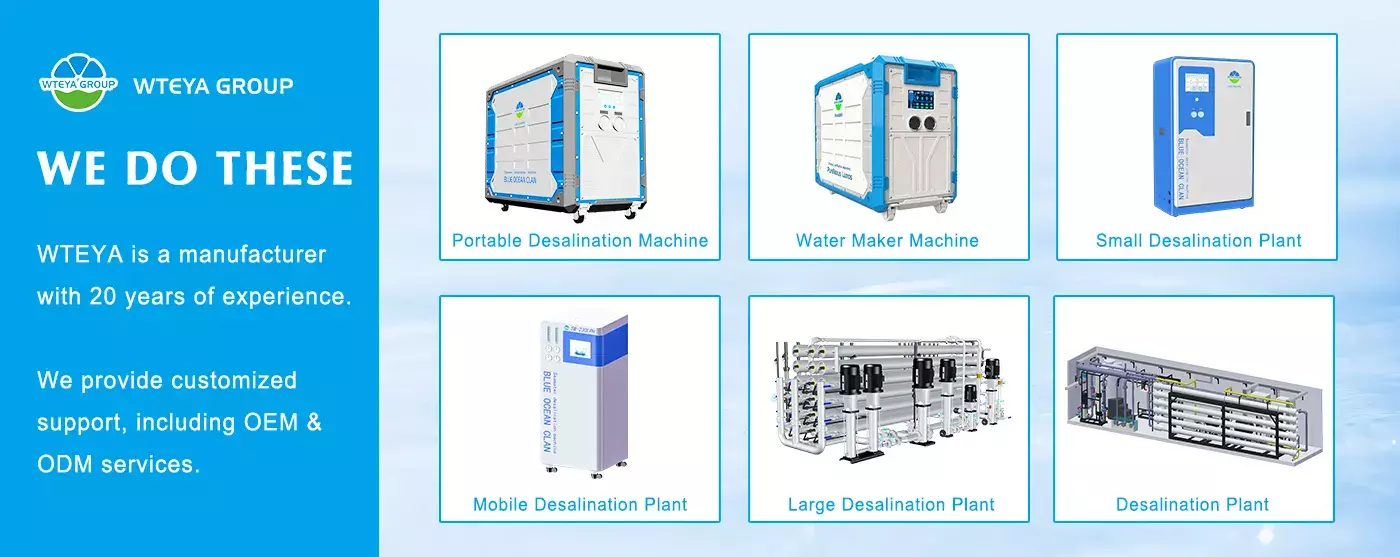
• OEM & ODM customization available
Become a WTEYA Distributor!
We are expanding global partnerships:
• Preferential policies
• Professional training
• Full technical support
Let us help you achieve exceptional water quality and operational sustainability!
📲 WhatsApp: +86-1800 2840 855
📧 Email: info@wteya.com
🌐 Website: www.wteya.com