






What Does MVR Stand For?

In industrial evaporation, few abbreviations cause as much confusion as MVR. It stands for Mechanical Vapor Recompression, and in Chinese it is called 机械蒸汽再压缩 — literally "mechanical steam recompression". Rather than a type of boiler or a brand of compressor, MVR is a heat-recovery strategy: it takes the low-grade vapour that a conventional evaporator would simply condense and throw away, compresses it, and puts the same vapour back to work as the heating medium. That single idea is why MVR has become the mainstream route for high-salinity wastewater concentration and for zero liquid discharge (ZLD) projects.
🔤 What the Letters Actually Mean
M — Mechanical: the energy that drives the process is supplied mechanically, by an electric motor turning a compressor, instead of by a steam boiler.
V — Vapour: the working fluid being recompressed is not fresh steam but the secondary vapour boiled off from the feed liquid inside the evaporator.
R — Recompression: the vapour is compressed to a slightly higher pressure, which raises its saturation temperature and its enthalpy, allowing it to be reused as a heat source instead of being wasted.
♻️ How the Vapour Loop Works
In a conventional single-effect evaporator, the vapour produced from the liquid is routed to a condenser and rejected — around 1 ton of fresh steam is consumed for every ton of water evaporated. An MVR system replaces that steam with a closed loop. The secondary vapour is drawn into a steam compressor (Roots-type or centrifugal) and raised in pressure so that its temperature climbs by roughly 5-20°C. This hotter, higher-enthalpy vapour is returned to the heating chamber, where it condenses against the feed liquid and gives up its latent heat. The condensate leaves as high-purity distilled water, while the vapour quantity inside the system is maintained by only a small amount of make-up energy — essentially the electricity consumed by the compressor.
⚙️ What a Complete MVR System Includes
A full MVR evaporator train is built from several tightly matched pieces: a heating chamber (shell-and-tube or plate heat exchanger); a vapour-liquid separation vessel; the steam compressor itself; a forced-circulation pump; a vacuum system; a condensate recovery circuit; and a PLC-based automatic control system. Because the compressor and the heat exchanger must be sized together, MVR units are engineered per project rather than picked from a catalogue.
💡 Why MVR Is Worth the Investment
The economics of MVR come from three numbers. First, energy: compared with single-effect evaporation it saves 60%-70% of energy, and compared with triple-effect evaporation around 30%-40%. Second, power draw: electricity consumption is typically only 30-80 kWh per ton of water evaporated, with almost no purchased steam. Third, water quality: the condensate has a conductivity below 10 μS/cm, clean enough to be reused in the process. Add one-button start/stop, unattended operation and a compact footprint — a 1 t/h unit occupies roughly 10-20 m² — and the appeal for constrained industrial sites becomes obvious.
🏭 Where MVR Evaporators Are Used
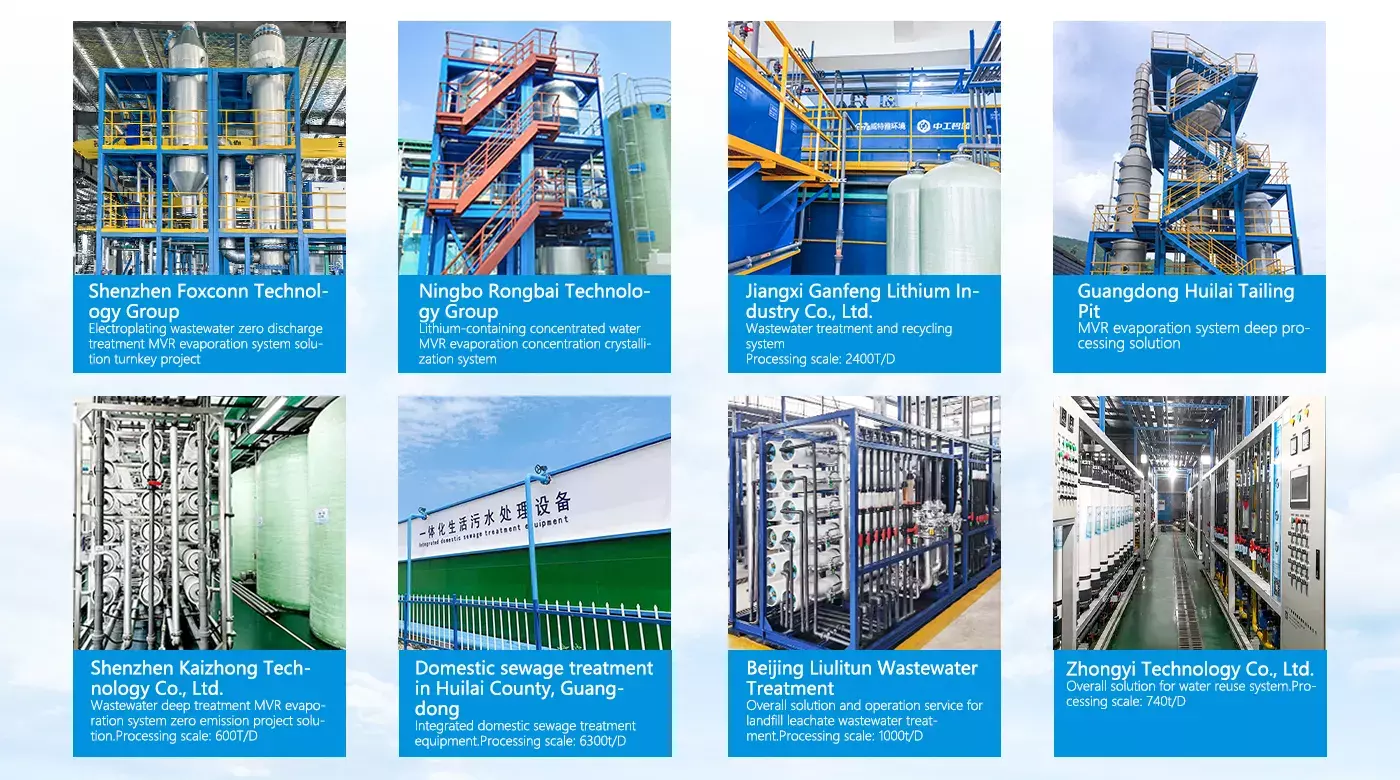
MVR evaporators handle high-salinity, high-concentration wastewater across some 27 industry sectors — including industrial liquid waste, fertiliser, municipal, petroleum, chemical, new energy, electronics, food, coal chemical, electroplating, leachate, environmental protection, lithium battery, rare earth, battery, surface treatment, landfill, cutting fluid, metallurgy, hazardous waste, PCB, heavy metals, salt-lake lithium, lithium carbonate, copper foil, photovoltaic, lithium iron phosphate and advanced materials — as well as the evaporation and crystallisation of products such as sodium chloride, sodium sulphate and ammonium nitrate.
🏆 Why Choose WTEYA
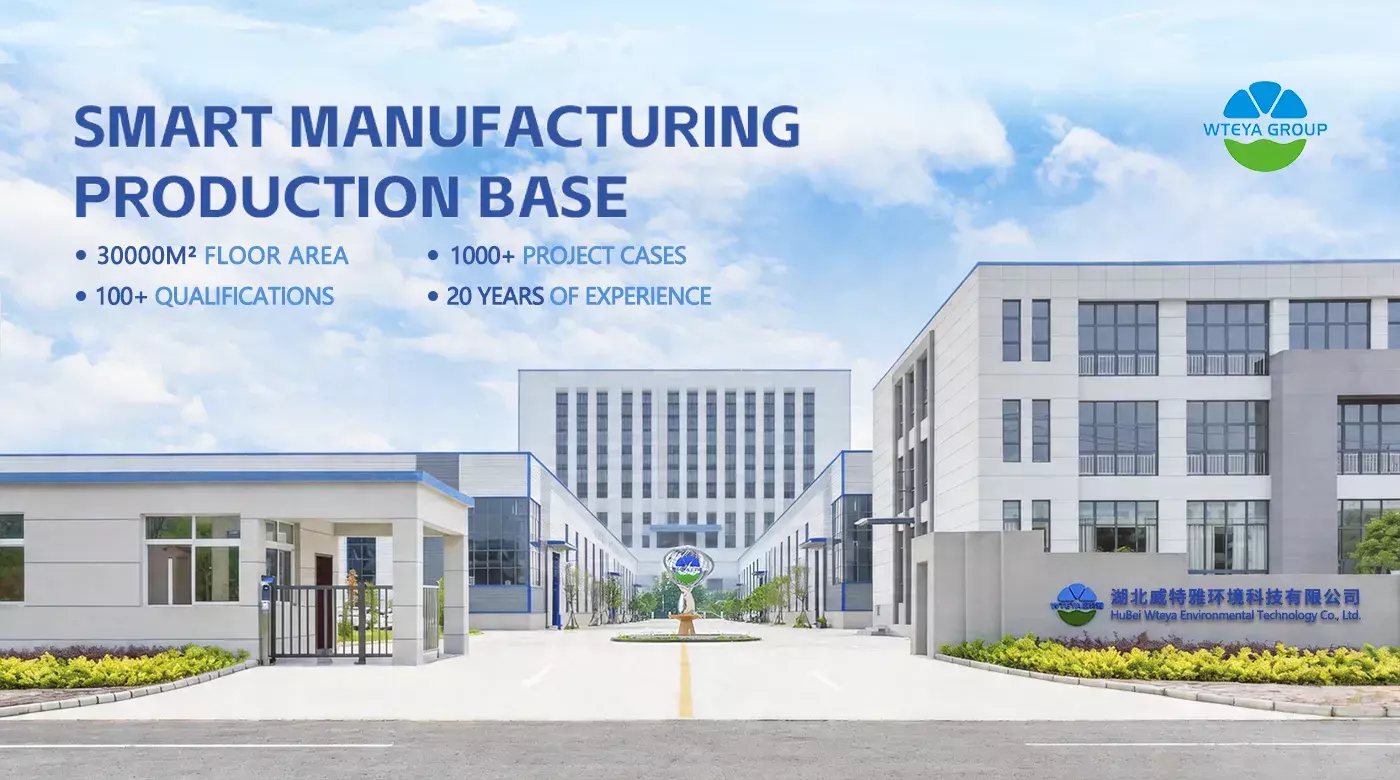
WTEYA has focused on evaporation and crystallisation for nearly 20 years and has completed more than 100 MVR projects. Materials are selected to suit the duty — 316L stainless steel, 2205 duplex stainless steel or titanium — and every system is customised around your water quality, capacity and site conditions, with full OEM and ODM services available. The complete unit carries a 1-year warranty, core components 2 years, and a design life of 15-20 years, backed by training, spare parts and remote diagnostics.
🔗 Related FAQs
Can a Portable Seawater Desalination Machine Run on Solar Power?
How Long Does an MVR Evaporator Last?
How Much Does a Portable Seawater Desalination Machine Cost?
How Much Water Does a Zero Liquid Discharge System Recover?
How Much Power Does a Small Seawater Desalination Unit Need?
How Does a Seawater Desalination Plant Work?
How Much Energy Does a Seawater Desalination Plant Use?
What Is the Delivery Time for an MVR Evaporator?
Schedule a video call with our engineers to explore your options.
📲 WhatsApp: +86-1800 2840 855
📧 Email: info@wteya.com
🌐 Website: www.wteya.com