







Desalinated Water Quality: TDS, WHO Standards and Post-Treatment
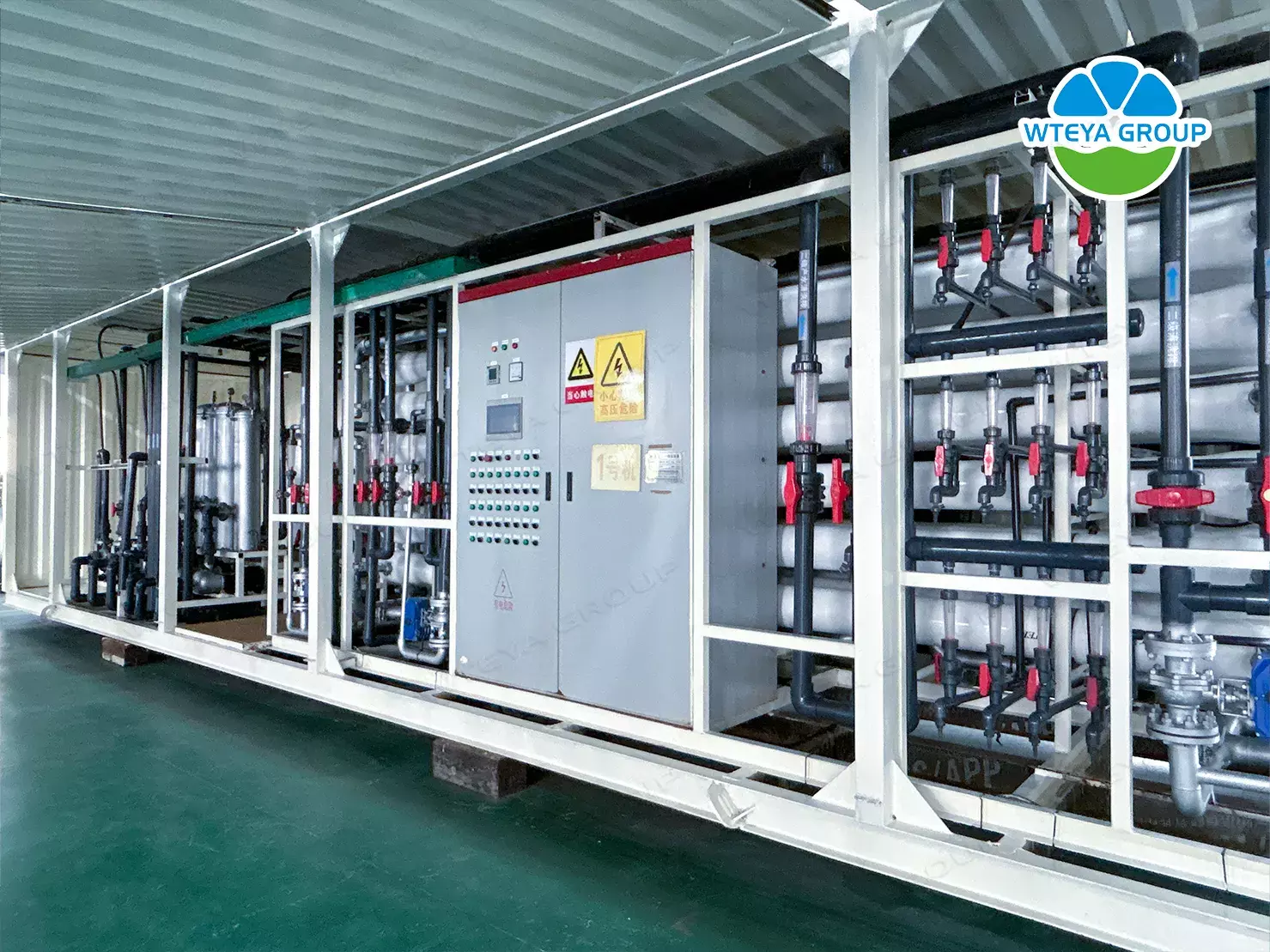
Desalinated seawater is often judged on one number: how much salt is left in it. In a well-run membrane plant that number is low — reverse osmosis membranes reject about 99.5% of dissolved salts, so seawater carrying 35,000–45,000 mg/L of total dissolved solids leaves the membrane at less than 200 mg/L TDS. That is roughly one-fifth of the WHO drinking water limit of 1,000 mg/L.
But TDS alone does not describe drinking water. Stability, pH, hardness and turbidity decide whether the water tastes flat, corrodes piping, or simply fails a customer's specification. This article breaks down what a desalination plant actually delivers, why it stays stable, and how the same membrane train can be tuned for drinking, boiler feed, irrigation or industrial duty.
💧 The Water Quality Numbers
A typical seawater reverse osmosis plant produces water at TDS below 200 ppm, pH adjusted to 7.0–8.5 after remineralisation, and turbidity close to 0 NTU; the WHO guideline for turbidity is under 5 NTU. Conductivity tracks TDS closely and is the value operators watch on the panel minute by minute.
Salt rejection is the headline figure because it sets everything downstream. Sodium, chloride, sulfate and magnesium are removed at 99.5% or better, which is what makes the product water usable for drinking at all. Boron is the usual exception — it passes membranes more readily and may need a second pass or a higher-pH stage for irrigation duty.
🔬 Why the Quality Stays Stable
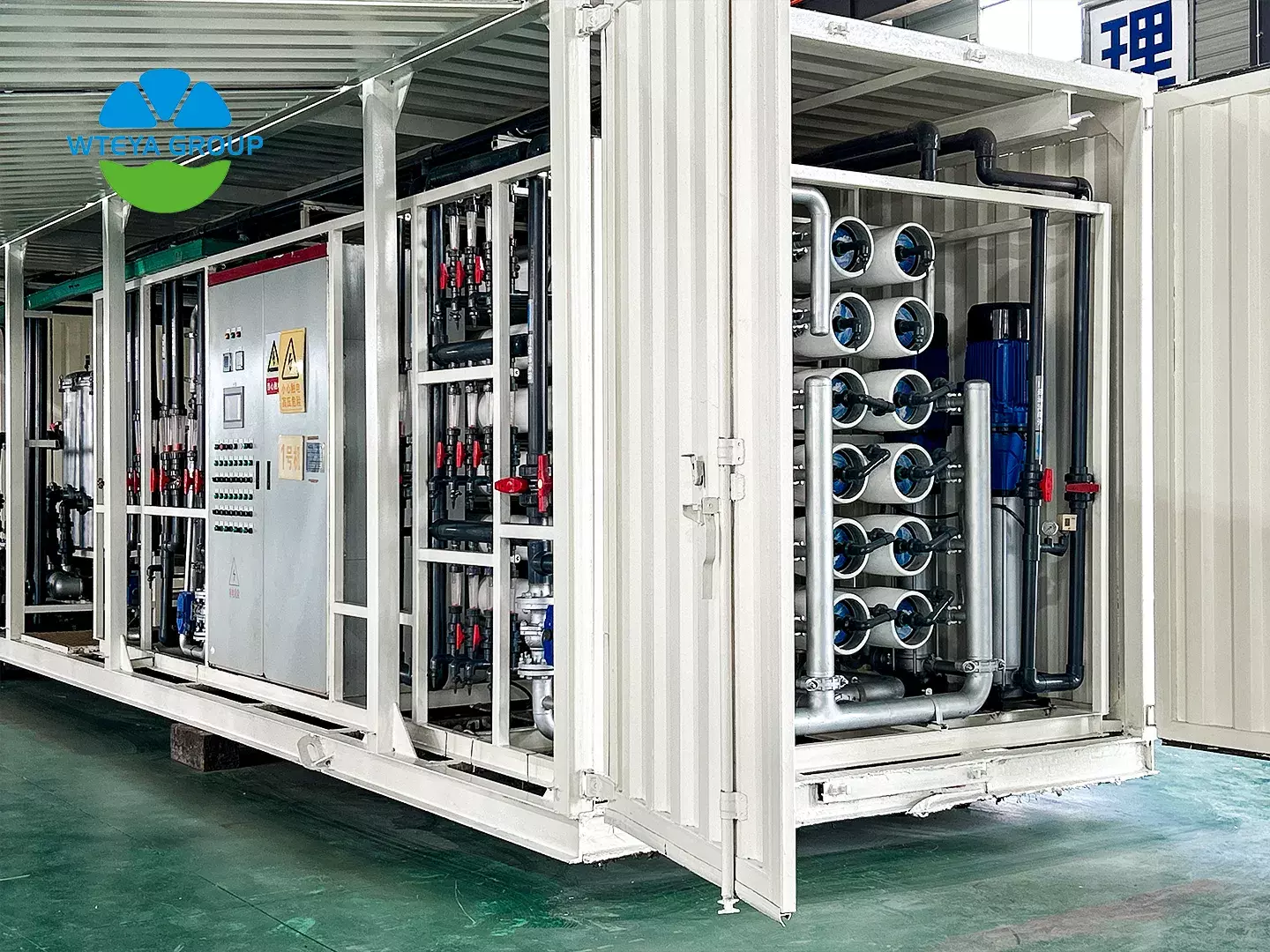
Three layers keep the number steady. First, pretreatment — multimedia filtration and cartridge filtration — holds the membrane feed clean, so the element is not asked to reject silt as well as salt. Second, the membrane itself is specified with a realistic flux and recovery, which limits concentration polarisation and scaling on the surface.
Third, post-treatment. Reverse osmosis water is aggressive: it is low in hardness and slightly acidic, so it attacks cement-lined pipe and tastes flat. Remineralisation adds a controlled amount of calcium and magnesium and lifts pH into the 7.0–8.5 band. For boiler feed the same stream may instead pass through mixed bed or EDI polishing to reach ultra-low conductivity.
🎯 Matching the Same Water to Different Uses
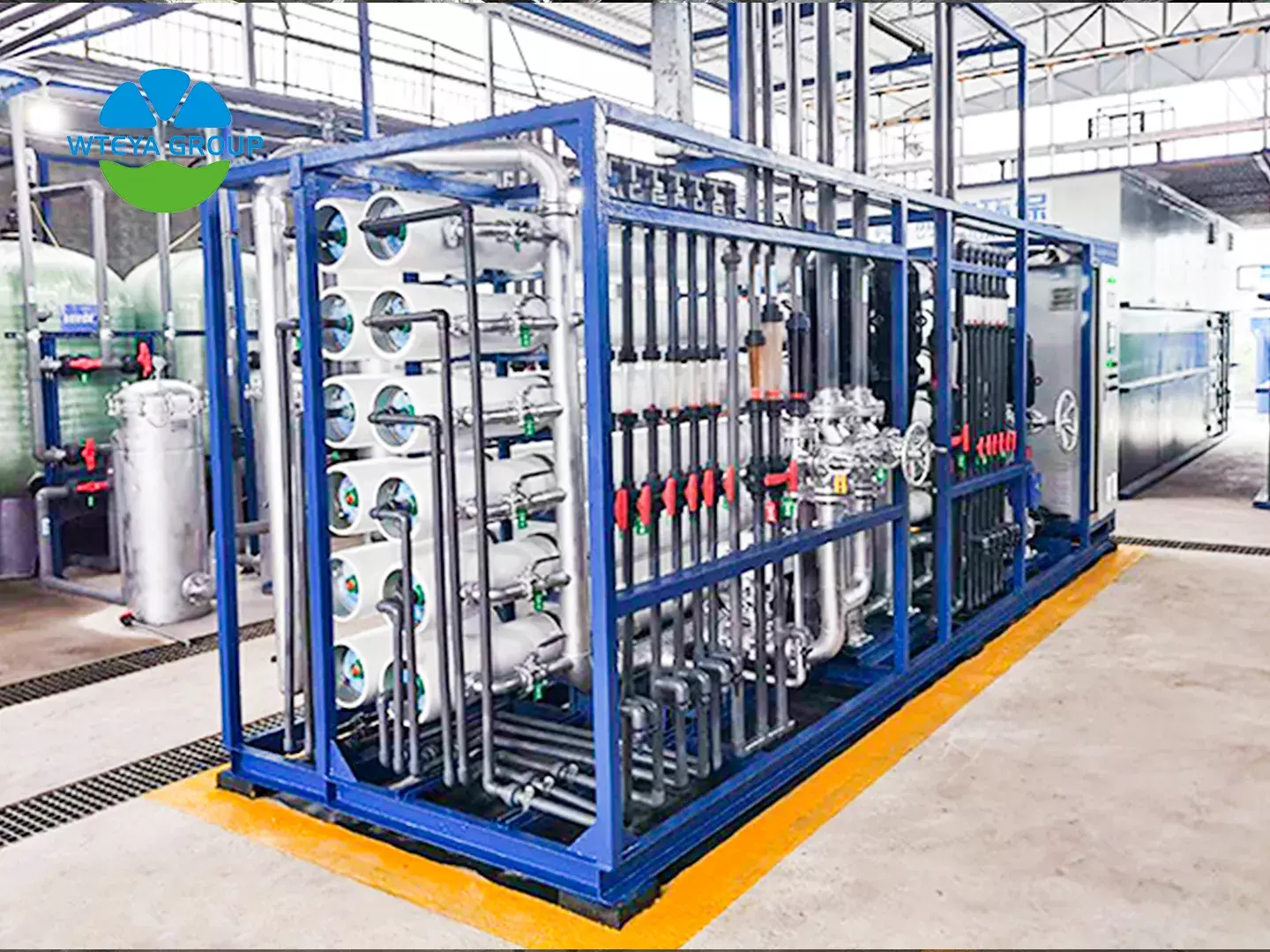
Drinking water: the standard two-stage train with remineralisation already meets WHO guidelines and is the default configuration for municipal supply.
Boiler make-up: add mixed bed or EDI after the RO stage. Conductivity, not TDS, becomes the controlling specification, and silica limits tighten as boiler pressure rises.
Irrigation: keep boron and chloride in view, adjust pH, and remineralise so the water does not strip nutrients from soil. Low-salinity water is a benefit here, but sodium adsorption ratio still has to be checked.
Industrial process water: turbidity and conductivity stability matter more than mineral content. Most plants take the permeate directly, or after a light polishing step, because the RO stage has already removed the salt load that would otherwise carry through the process.
📊 Keeping the Numbers Where They Belong
Online instrumentation — product conductivity, flow, pressure drop across each stage — gives the early warning. A slow rise in product conductivity at constant feed usually means a seal or O-ring has failed; a rise in differential pressure means fouling or scaling. Normalised data, not raw readings, is what tells you whether the membrane has actually degraded.
Membrane elements typically last 2–5 years, depending on pretreatment quality, cleaning frequency and operating discipline. Cleaning is triggered by a drop in normalised permeate flow, a rise in salt passage, or a specified pressure differential — not by the calendar. Monthly third-party laboratory checks on TDS, pH and microbiology close the loop between the panel and the certificate.
🏆 Why Choose WTEYA
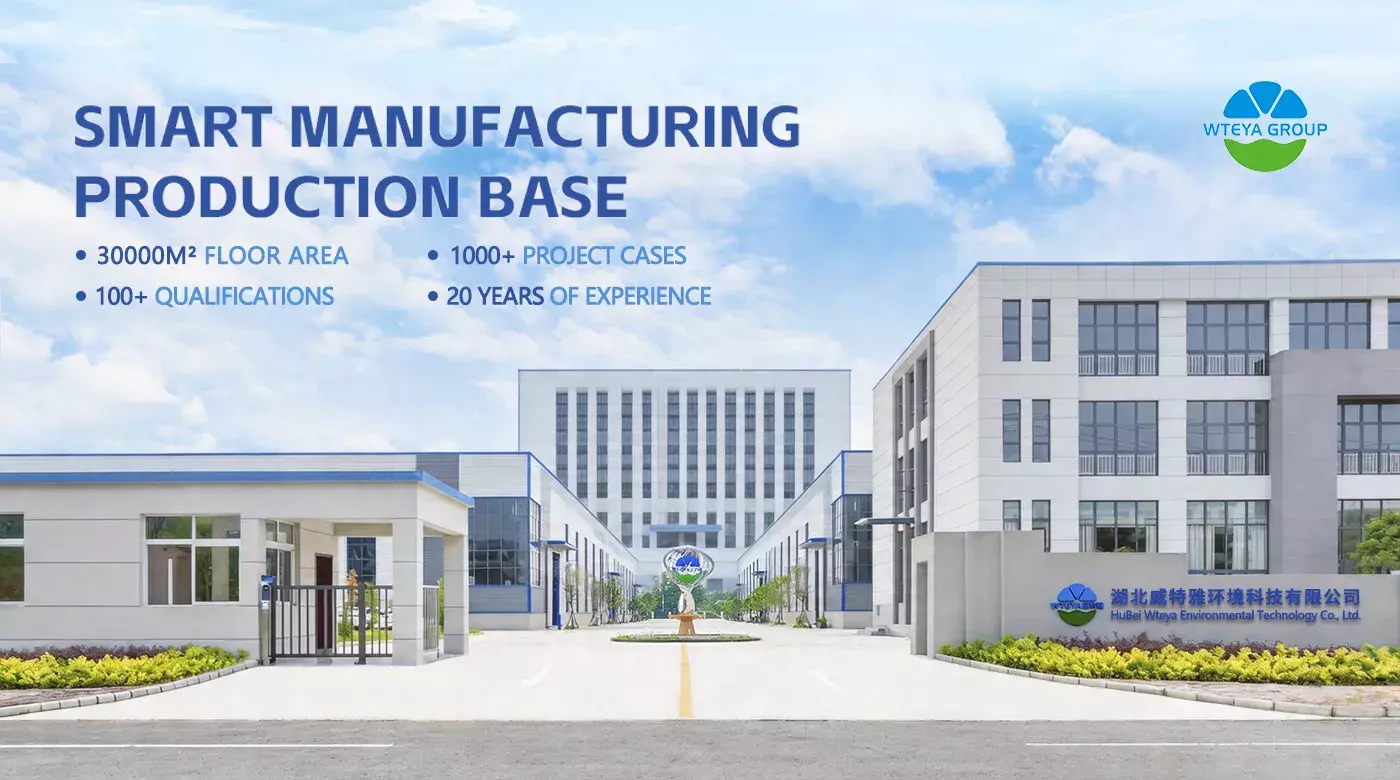
WTEYA has built water treatment and evaporation systems since 2009, operating a 30,000 m² production base in Jingshan, Hubei with more than 500 employees and 42 branches across China. More than 2,000 customers in 30 provinces run our membrane, MVR and crystallization systems.
For desalination projects we deliver the complete train — intake, pretreatment, RO racks, energy recovery, remineralisation and controls — sized around the actual feed analysis and the water quality the customer must guarantee. OEM and ODM services are available for partners, and standard skid configurations ship within 30–60 days.
Send us your feed water analysis and target water quality, and our engineers will return a preliminary design with expected permeate TDS, recovery and post-treatment scope.
WTEYA is a professional water treatment and evaporation equipment manufacturer with nearly 20 years of experience, offering customized desalination solutions and full OEM & ODM services.
Schedule a video call with our engineers to explore your options.
📲 WhatsApp: +86-1800 2840 855
📧 Email: info@wteya.com
🌐 Website: www.wteya.com
Previous: MVR Evaporator Automation: What Can Be Automated?
Next: No More